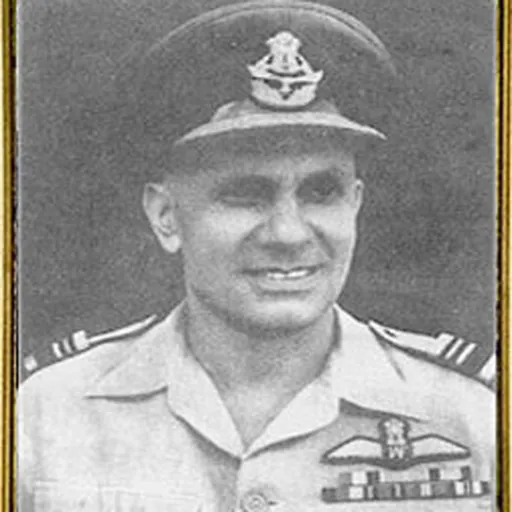
Harjinder Singh
Air Officer in the Indian Air Force
About Harjinder Singh
Lived 1909 – 1971 (aged 62).
Air Vice Marshal Harjinder Singh, PVSM, MBE (4 February 1909 – 6 September 1971) was an Air Officer in the Indian Air Force. He was one of the earliest to join the newly created Indian Air Force (IAF) in 1933 in the lowest rank of 'Hawai sepoy'. In a career spanning over three decades and two wars, he rose from the lowest enlisted rank to the then second-highest rank in the Indian Air Force. Hailed as technical wizard and innovator, he is considered a legend of the IAF.
Born in Village Sarhala Khurd, Hoshiarpur district of Punjab Province, Singh became an orphan at the age of 11, having lost his father and siblings to plague very early and his mother a few years later. Raised by his aunt in Jalandhar, he joined the MacLagan Engineering College, Lahore at the age of 17. Graduating five years later, he left a potentially comfortable life as a graduate engineer in civil service and joined the Royal Air Force (RAF) as a 'hawai sepoy'. After his apprenticeship, he joined the Indian Air Force at RAF Drigh Road. He served in the Northwest Frontier Province during the Waziristan campaign. In World War II, he led the enlisted men as the warrant officer of No. 1 Squadron IAF in the Burma Campaign.
Singh was commissioned as a Flying Officer after his return from Burma. In June 1943, Singh was appointed a Member of the Order of the British Empire (MBE). He then served at RAF Station Kohat and as the Chief Technical Officer of the RAF Operational Training Unit at Peshawar. After the partition of India, he led the technical and maintenance ability of the IAF. He ensured a high serviceability of aircraft during the Indo-Pakistani War of 1947. In 1948, he was appointed Station Commander at Kanpur in the rank of Group Captain.
In April 1950, at the age of 41, Singh earned his wings after completing his flying training. In January 1955, Singh took command of the newly created Maintenance Command. He would be at the helm of the command for about nine years, until his retirement. In 1958, the post was upgraded to Air Commodore, and in 1959, to Air Vice Marshal. During this stint, he designed and built a light communication aircraft which he test-flew, he launched the first Indian-built jet engine and manufactured the Hawker Siddeley HS 748 aircraft at Kanpur.
He had many firsts to his credit - the first Indian corporal, the first Indian sergeant, the first Indian warrant officer, the first Indian engineering commissioned officer and the first Indian to be awarded the MBE in the IAF.
Early life and education Singh was born on 4 February 1909 in a Bains Jat Sikh family in Sirhala Khurd village in Hoshiarpur district of Punjab Province now his village lies in Sub tehsil of Mahilpur, tehsil Garhshankar district hoshiarpur of modern Punjab. The youngest of three children, he lost his father and siblings to the plague very early. By the time he was 11, he lost his mother as well, and was raised by his paternal aunt in the village of Mahil Gaila, near Banga, Jullundur where his uncle Sampuran Singh Mahal was a zaildar. He was successful in the competitive entrance examination and joined the MacLagan Engineering College, Lahore. The Lysander had an issue with tail wheel tyres getting damaged during landing. Singh designed, fabricated and installed wooden wheels on the aircraft!
In January 1942, No. 1 Squadron under Squadron Leader KK Majumdar received orders to move to Burma. The squadron moved by train to Rangoon via Calcutta while the twelve Lysanders were to fly from Peshawar via Lahore, Delhi, Kanpur, Calcutta and Chittagong into Burma. A day before they were to fly, three aircraft crash landed on the runway. The technical crew along with their equipment were on the train. Singh, without equipment or technical crew, led the pilots and their gunners to repair the aircraft and make them flight-worthy within 36 hours. Majumdar promoted Singh to acting Warrant Officer Class I.
In February, No. 1 Squadron executed multiple bombing raids on Japanese airfield in Mae Hong Son. The Japanese retaliated with raids of their own almost every day. Singh led his team to keep the Lysanders serviceable throughout this time. After returning from Burma, the squadron moved to Secunderabad and then to Trichinopoly. In June 1942, it moved to Risalpur and converted to the Hawker Hurricane II B. Later that year, he was featured in a propaganda film with his former CO Majumdar and in a recruitment poster along with Flying Officer A.M.O. Pring with the caption "This is Pring and this is Singh."
On 1 December, Singh embarked for England since he was selected to undertake higher technical training. He visited various establishments and manufacturing companies and during his visit. In June 1944, he returned to India and was posted to the IAF Base Kohat. In February 1945, Majumdar was leading a display flight which was performing in Walton, Lahore. Singh was present and saw Majumdar crash during a dive. Singh later wrote the obituary of his friend and mentor that a part of him died that day. After an 18-month stint at Kohat, Singh was promoted to the rank of squadron leader and appointed chief technical officer of the RAF Operational Training Unit at Peshawar. He had Indian as well as British airmen under him. In early 1947, he moved to Air headquarters having been appointed Head of Technical training in the rank of wing commander.
Post-Independence After the partition of India, majority of the technical equipment as well as the repair depots were in Pakistan. Singh went about building maintenance and technical know-how in India. During the Indo-Pakistani War of 1947, he reorganised the entire maintenance cover and ensured high serviceability. He also trained at the Delhi Flying Club and obtained a commercial pilot license. He then flew his personal civilian aircraft into Kashmir and hopped from base to base on the small aircraft.
On 9 August 1948, Singh was promoted to the rank of Group Captain and was appointed Station commander at Kanpur. In 1951, the Chief of the Air Staff (CAS) Air Marshal Sir Ronald Ivelaw-Chapman offered Singh the position of Chairman of HAL with a promotion to the rank of Air Commodore. Singh declined the offer opting to stay in the IAF. On 26 January 1955, the Maintenance Command was established at Kanpur with Singh at the helm.
Air rank On 24 March 1958, Singh was promoted to the rank of Air Commodore and with his air rank, the appointment was re-designated Air Officer Commanding (AOC) Maintenance Command. During this time, the IAF and the Indian Airlines Corporation (IAC) were looking for a replacement for the Douglas C-47 Skytrain. The three aircraft in the fray were the Hawker Siddeley HS 748, the Fokker F27 Friendship and the Lockheed CL-49. In 1959, he led a team to the United Kingdom to select an aircraft to be manufactured in India. The Hawker Siddeley HS 748 was ultimately selected. On 15 May 1959, he received an out-of-turn promotion to the rank of Air Vice Marshal and was re-designated Air Officer Commanding-in-Chief (AOC-in-C). Singh led his command in designing and building a four-seater light communication aircraft christened 'Kanpur-I'. He acted as the test pilot as well, flying the aircraft himself.
In April 1961, the Maintenance Command under Singh launched the first jet engine built in India. Later that year, in November, the first HS 748 aircraft christened 'Subroto' was assembled and later dedicated to the nation by the Prime Minister Jawaharlal Nehru. On 26 January 1962, he was awarded the Param Vishisht Seva Medal (then called Vishisht Seva Medal, Class I) for distinguished service of the highest order.
Singh retired from the IAF on 4 November 1963 after 32 years in service. He was offered the position of Controller General Aircraft Production by the CAS Air Marshal Aspy Engineer. He was also offered an extension in service which he declined. Learning that Singh planned to settle down in Chandigarh after his retirement, the Prime Minister wrote to the Chief Minister of Punjab Partap Singh Kairon that he had a very high opinion of Singh and that he did not want him to retire from government service.
Personal life Singh married Beant Kaur on 31 May 1934. Beant was born on 9 April 1917 in Lyallpur (now in Pakistan). She completed her matriculation from Lyallpur Khalsa College. After marrying Harjinder, she developed an interest in flying as well and in 1952, became the first Indian woman to hold a private pilot's license. After Singh's retirement, the couple settled down in Chandigarh, where she would fly almost every day. The couple did not have children of their own. They adopted Beant's sister's son, Manmohan. Manmohan joined the Indian Army and retired as a colonel.
Later years After retiring, Singh served in many advisory positions with governments as well as large companies. He was an advisor to General Electric, Himalayan Helicopters and Avro Atlantic. He also served as an advisor to the Government of Punjab for multiple departments - technical education, industrial training, general education, civil aviation and child protection.
Death and legacy In September 1971, while giving a speech at the DAV College, Chandigarh, Singh suffered a heart attack and died aged 62. His coffin was carried by multiple serving air officers of the IAF. Singh is regarded as an engineering genius and a visionary who was ahead of his time. He was considered to be technical wizard and an innovator. Today, he is regarded a legend of the Indian Air Force. He was considered to be the "blue-eyed boy" of the Defence Minister V. K. Krishna Menon. With the manufacturing of the HS 748 aircraft at the Maintenance Command in Kanpur under the direction of Singh, Chief of Air Staff Air Chief Marshal Pratap Chandra Lal noted that the "HS" could well stand for "Harjinder Singh" as for "Hawker Siddeley." Harjinder Nagar near the Air Force Station in Chakeri, Kanpur is named for him. In 1976, the village Sarhala Khurd, district Hoshiarpur where he was born paid tribute to him by building a memorial gate named after him.
Awards and decorations
Source: 1 October 1951 (substantive)
Don’t just read it —
keep it.
Full-length biographies made to live with: read them, listen on the way to work, watch them tonight.
- E-book
- Audio
- Video
Instant download · yours to keep · every purchase keeps this site free
Important facts
People in Harjinder Singh's life
Named in this biography and alive at the same time
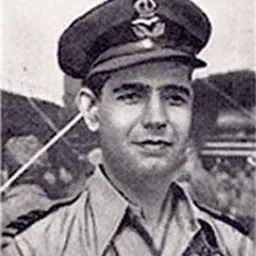



Contemporaries
People whose lives overlapped Harjinder Singh's


Frequently asked questions
Who was Harjinder Singh?
Air Officer in the Indian Air Force (1909-1971)
When was Harjinder Singh born?
Harjinder Singh was born on 4 February 1909 in Hoshiarpur District.
When did Harjinder Singh die?
Harjinder Singh died on 6 September 1971 in Chandigarh.
Sources & further reading
· DBpedia: Harjinder Singh (air vice marshal)
Cite this page
APA: Biography.guide. (2026). Harjinder Singh. https://biography.guide/harjinder-singh-1909/
MLA: "Harjinder Singh." Biography.guide, https://biography.guide/harjinder-singh-1909/.
Chicago: "Harjinder Singh." Biography.guide. https://biography.guide/harjinder-singh-1909/.
Data last updated: 2026-09-23 · Spot an error? Report a correction.
Portrait: Wikimedia Commons · author & licence
Page generated 2026-09-27 05:05 UTC