
About Hans Springinklee
Lived 1495 – 1540 (aged 44–45). Hans Springinklee was a German printmaker, painter and xylographer.
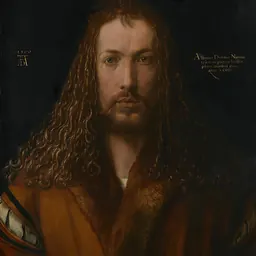
Hans Springinklee (c.1490/c.1495 – c.1540) was a German artist from Nuremberg, best known for his woodcuts. He was a pupil of Albrecht Dürer.
Life Little written evidence remains of Springinklee's life, and neither his exact dates of birth or death are known. He was born in Nuremberg between 1490 and 1495, was alive in 1524, and died no later than 1540. In 1547, Johann Neudörffer the Elder wrote that Springinklee had lived with, and learned his craft from, Albrecht Dürer. His first woodcuts date from 1512–1513, but there is no evidence of his presence in Nuremberg after 1524, and it is presumed that he had left Nuremberg by that date. The first documentary evidence dates to 1520, when the council of Nuremberg commissioned him to decorate rooms in Nuremberg Castle before a visit of the Holy Roman Emperor Charles V. On 10 September 1527, his two daughters mentioned that he had left them in Nuremberg three years before, and his father, Jörg Springinklee, had been paying for their maintenance. His name is absent from church records, but the astronomer Johann Gabriel Doppelmayr said in 1730 that Springinklee had lived in Nuremberg until 1540.
Works
As a pupil of Dürer, Springinklee was involved in creating a number of works commissioned by Emperor Maximilian I, including the monumental 192-panel woodcut the Triumphal Arch. The first prints with his monogram, HSK, date to 1513: Das Wunder der Heilige Wilgeffortis (The Miracle of Saint Wilgefortis), and a sheet from Maximilian's Weißkunig entitled Kaiser Maximilian ehret das Andenken der Vorväter (Emperor Maxamilian honouring the memory of his ancestors).
From 1516, Springinklee mainly produced illustrations for the bibles published by Anton Koberger, mostly of Old Testament scenes. He also created over 100 woodcuts for several editions of the prayerbook Hortulus animae.
Springinklee's paintings are less well known. Some church paintings and altarpieces in the vicinity of Nuremberg have been attributed to Springinklee. The Kunstmuseum Basel holds a chiaroscuro drawing of a standing Man of Sorrows from 1514, in white on a dark brown ground. Nuremberg Castle contains some frescoes by Springinklee.
Footnotes
Don’t just read it —
keep it.
Full-length biographies made to live with: read them, listen on the way to work, watch them tonight.
- E-book
- Audio
- Video
Instant download · yours to keep · every purchase keeps this site free
Important facts
People in Hans Springinklee's life
Named in this biography and alive at the same time
Related people
Same field, nearest in time




Contemporaries
People whose lives overlapped Hans Springinklee's






Frequently asked questions
Who was Hans Springinklee?
German engraver (1495-1540)
When was Hans Springinklee born?
Hans Springinklee was born in 1495 in Nuremberg.
When did Hans Springinklee die?
Hans Springinklee died in 1540 in Nuremberg.
What was Hans Springinklee's occupation?
Hans Springinklee was a printmaker, painter and xylographer.
What nationality was Hans Springinklee?
Hans Springinklee was German.
Sources & further reading
· Wikipedia: Hans Springinklee
Cite this page
APA: Biography.guide. (2026). Hans Springinklee. https://biography.guide/hans-springinklee/
MLA: "Hans Springinklee." Biography.guide, https://biography.guide/hans-springinklee/.
Chicago: "Hans Springinklee." Biography.guide. https://biography.guide/hans-springinklee/.
Data last updated: 2026-09-20 · Spot an error? Report a correction.
Page generated 2026-09-27 05:06 UTC