
About Hans Neumeyer
Lived 1887 – 1944 (aged 56). Hans Neumeyer was a composer.
Hans Neumeyer (13 September 1887 – 19 May 1944) was a German teacher of musical theory, counterpoint and composition, and a pianist and composer. He was from a Jewish family in Munich; his father Nathan Neumeyer for a period owned a gentleman’s clothing store in Munich. Hans Neumeyer suffered from an eye complaint as a child, leaving him blind in one eye, then at the age of 11 lost the sight of the other eye after a scuffle at school with a fellow pupil.
He completed his studies at the Academy of Music in Munich in 1909, being examined by Friedrich Klose and Felix Mottl. From 1911 to 1913 he collaborated with Rudolf Louis on a textbook on harmony before studying in the eurythmics centre in Festspielhaus Hellerau where he met his future wife, Vera Ephraim. In 1915 he set up the Jaques-Dalcroze school in Munich with Valeria Kratina, which they ran until 1925. Hans and Vera married in 1920 and moved into a house in the artistic quarter of Dachau, where they had two children, Ruth (1923-2012) and Raimund (1924-2011). Neumeyer’s pupils included the Waldorf educationalist Konrad Sandkühler, who participated in orchestra rehearsals held at Neumeyer’s house, and the composer Siegfried Kuhn.
Persecution under the Nazis Around the time when the Nazis came to power in 1933 Neumeyer published his ‘new modulated theory’ and was shortlisted for a post lecturing in acoustics at the Academy of Music in Munich, but was prevented from taking up the post or teaching in any public institution because of his Jewish background. on a transport containing sick people. Vera Neumeyer was deported on 13 July 1942 to an unknown destination, possibly Auschwitz.
While incarcerated in Theresienstadt, Neumeyer met the 16-year-old Czech violinist Thomas Mandl who was also imprisoned there but survived. In an interview with Hans Holzhaider, Mandl described finding Neumeyer when delivering food along with his teenage friend Hans Ries to the sick and disabled. Ries was whistling a Bach fugue while visiting the ghetto’s home for the blind. Neumeyer noticed him, and soon he was giving the young men music lessons in exchange for soup or bread. Perhaps as a result of this, Neumeyer survived two years in Theresienstadt until his death on 19 May 1944 from a lung disease he had suffered since 1943, thought to have been tuberculosis brought on by the poor living conditions.
Mandl remarked that Neumeyer’s teaching was methodical and well targeted, covering four-part and eight-part harmony, and rhythmic exercises, and taught harmony and counterpoint together rather than as separate disciplines as was normal for that time. Mandl said that Neumeyer gave the impression of a sharp wit and intelligence, and was a very good listener, asking questions that were short and to the point. Mandl sometimes glimpsed the strain on his face when he saw his teacher trying to read in crowded conditions before he registered his pupil’s arrival – but then he would always smile, put down his braille book and give him his delicate, sensitive hand.
Gradually Mandl understood that behind his smiling tolerance was a great mental toughness – both were complementary elements in a harmonious personality. Neumeyer was nicknamed The Professor by his pupils in Theresienstadt, some of whom saw his coffin placed among others on a truck, which they followed to the barrier on the edge of the ghetto. The barrier came down: “that was the way our dead left us” commented Mandl.
Commemorations Stolpersteine to Hans and Vera Neumeyer, and to their lodger and friend Julius Kohn, were installed outside their house in Dachau in November 2005, commemorating their deaths in the Holocaust.
In November 2018, Neumeyer’s grandsons Tim and Stephen Locke were invited to Dachau to speak at the town hall about the Neumeyers’ lives, when some of Neumeyer’s music was performed.
Neumeyer Weg in Dachau is a street named after Hans and Vera Neumeyer, to commemorate their persecution at the hands of the Nazis. Neumeyer's daughter Ruth (as Ruth Locke) recorded the story of her family before and during the Holocaust and arrival in England in May 1939, in an interview with the Imperial War Museum in 2005.
Neumeyer's grandson, Tim Locke, writes a blog about the family's story during the 20th century, including through the Holocaust, under the title The Ephraims and the Neumeyers.
Weihnachtslied (Christmas song) – voice part only, written late 1939 as a Christmas present for his son Raimund.
Don’t just read it —
keep it.
Full-length biographies made to live with: read them, listen on the way to work, watch them tonight.
- E-book
- Audio
- Video
Instant download · yours to keep · every purchase keeps this site free
Important facts
People in Hans Neumeyer's life
Named in this biography and alive at the same time

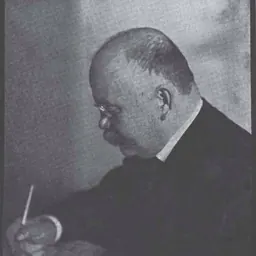
Related people
Same field, nearest in time

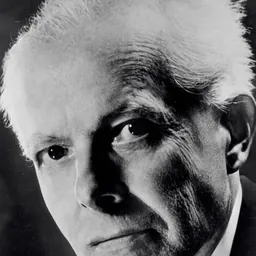

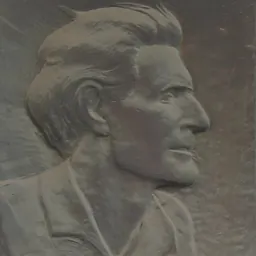
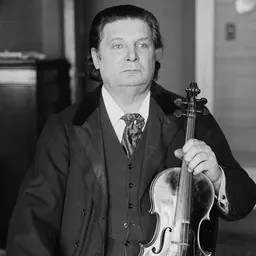
Contemporaries
People whose lives overlapped Hans Neumeyer's



Frequently asked questions
Who was Hans Neumeyer?
holocaust victim, b. 1887-09-13
When was Hans Neumeyer born?
Hans Neumeyer was born on 13 September 1887.
When did Hans Neumeyer die?
Hans Neumeyer died on 18 May 1944 in Theresienstadt concentration camp.
What was Hans Neumeyer's occupation?
Hans Neumeyer was a composer.
Sources & further reading
Cite this page
APA: Biography.guide. (2026). Hans Neumeyer. https://biography.guide/hans-neumeyer/
MLA: "Hans Neumeyer." Biography.guide, https://biography.guide/hans-neumeyer/.
Chicago: "Hans Neumeyer." Biography.guide. https://biography.guide/hans-neumeyer/.
Data last updated: 2026-09-20 · Spot an error? Report a correction.
Page generated 2026-09-27 05:24 UTC