
About Hans Goerth
Lived 1900 – 2000. Hans Goerth was a flying ace and gotthard Sachsenberg.
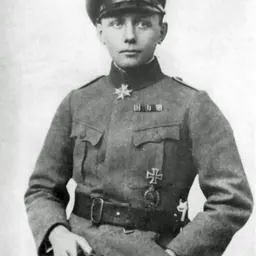
Vizeflugmeister Hans Goerth was a World War I German flying ace credited with seven confirmed aerial victories. He was the top ace of Marine Feld Jasta III (MFJ III) of the German Naval Air Service, and was one of the few aces allowed to fly the Fokker E.V monoplane. Goerth received the Iron Cross First Class and other awards for his service. After the war, in 1919, the pilot participated in Kampfgeschwader Sachsenberg, commanded by fellow World War I ace Gotthard Sachsenberg.
Early military career
Hans Goerth initially served in Kusta III. He was then with Marine Feld Jasta I from 26 February 1918 until 21 June 1918, after which he transferred to Marine Feld Jasta III, which was formed that month. He remained in Marine Feld Jasta III until the end of the war. Goerth was credited with seven aerial victories. Marine Feld Jasta III, established at the Jabbeke aerodrome on 23 June 1918, was commanded by Leutnant der Reserve der Matrosenartillerie (MA-naval artillery) Gustav Brockhoff, who had at least four confirmed victories during World War I. MFJ III remained at Jabbeke airfield, also referred to as Varsenare or Snellegem, until retreat in early October 1918. With seven confirmed victories, Hans Goerth was the top ace of MFJ III. Goerth's second victory was an Airco DH.9 that was taken down over Nieuwpoort, West Flanders, Belgium on 7 July 1918.
On 16 July 1918, over Zevekote, West Flanders, Belgium, Goerth shot down DH.4 (A7868) piloted by British flying ace Lieutenant Lionel Arthur Ashfield of the No. 202 Squadron of the 61st wing of the Royal Air Force. That combat triumph also claimed the life of Irish Lieutenant Maurice Graham English. Goerth's fourth victory took place west of Handzame, West Flanders on 30 August 1918, when he shot down Sopwith Camel (D9482) of the No. 65 Squadron of the Royal Air Force from his Fokker D.VII (Albatros) with serial number 838/18. Pike is also commemorated at Wandsworth Cemetery in Wandsworth, Greater London, England.
Goerth's remaining victories were from D.VII aircraft as well. On 16 September, Goerth shot down Sopwith Camel (B7271) over Zerkegem, West Flanders. Goerth's final two victories (sixth and seventh) both occurred on 1 October 1918. One that saw action at the front was the Fokker E.V, which was later known as the Fokker D.VIII and nicknamed the "Flying Razor." It was regarded as one of the best German fighter aircraft in the war. At the direction of Anthony Fokker, the Dutch founder of the company, the bottom wings were removed from a D.VII. This large unit of about 700 personnel was primarily composed of volunteers who had served in World War I. The unit included several aces, Hans Goerth among them. They fought the Red Army in the Baltic states in 1919. They primarily flew ground support missions to assist the Freikorps units fighting the Russian communists in the Baltic area, and withdrew in December 1919.
Gallery of planes downed
Endnotes
Don’t just read it —
keep it.
Full-length biographies made to live with: read them, listen on the way to work, watch them tonight.
- E-book
- Audio
- Video
Instant download · yours to keep · every purchase keeps this site free
Important facts
People in Hans Goerth's life
Named in this biography and alive at the same time


Related people
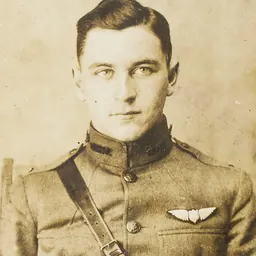
Same field, nearest in time


Contemporaries
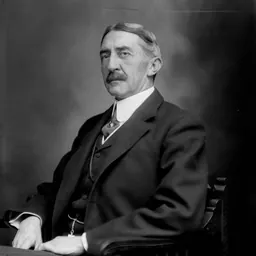
People whose lives overlapped Hans Goerth's




Frequently asked questions
Who was Hans Goerth?
German flying ace
When was Hans Goerth born?
Hans Goerth was born in 1900.
When did Hans Goerth die?
Hans Goerth died in 2000.
What was Hans Goerth's occupation?
Hans Goerth was a flying ace and gotthard Sachsenberg.
Sources & further reading
Cite this page
APA: Biography.guide. (2026). Hans Goerth. https://biography.guide/hans-goerth/
MLA: "Hans Goerth." Biography.guide, https://biography.guide/hans-goerth/.
Chicago: "Hans Goerth." Biography.guide. https://biography.guide/hans-goerth/.
Data last updated: 2026-09-20 · Spot an error? Report a correction.
Page generated 2026-09-27 05:12 UTC