
About Hans Friedrich Secker
Lived 1888 – 1960 (aged 72). Hans Friedrich Secker was an art historian.
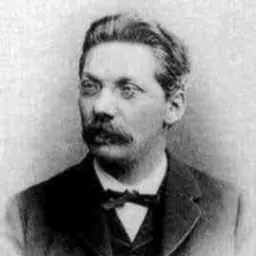
Hans Friedrich Secker (8 April 1888 – 7 August 1960) was a German art historian and museum director. He was the Director of the Danzig Stadtmuseum from 1912 to 1922 and Director of the Wallraf–Richartz Museum in Cologne (with Karl Schäfer) from 1922 to 1928.
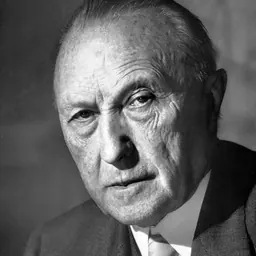
Life He was born on 8 April 1888 in Elberfeld, Rhineland (now a district of Wuppertal in western Germany). His father, Franz Ludwig Secker, was the director of the Institute of Scientific Education (Wissenschaftliches Lehrinstitut) in Elberfeld. and became an assistant at the Kaiser-Friedrich Museum in Magdeburg. He had impressed Theodor Volbehr, the founding director and head of the Magdeburg Museum, who recommended him to the Danzig city authorities with particular praise (in 1922, Volbehr recommended Secker to the then mayor of Cologne, Konrad Adenauer, as a ″charming, agile, and energetic person″).
Shortly before he arrived in Danzig, Secker visited the International Art Exhibition of the Sonderbund Westdeutscher Kunstfreunde und Künstler, which was held from 25 May to 30 September 1912, in Cologne. The 634 works in 29 halls offered the first comprehensive overview of modern art in Europe. Secker later remarked that the exhibition had filled him with a storm of excitement: ″There were building blocks for new cathedrals – what color and abundance, what a celebration!″
In Danzig, he learned that the ″rebellious forces″ of the avant-garde would not sweep the more sedate citizenry along, especially since the city council's ambitions were focused on a curator who would reorganize the disorganized collection of paintings and decorative arts, which were managed on a voluntary basis by a city councillor. These collections were stored in an abandoned 15th century Franciscan monastery. Secker, at 24 the youngest museum director in the German Reich, succeeded in bringing the processing of the collections to fruition within a few months. The grand opening of the art gallery in the skylit rooms of the building took place in May 1913. Secker's Führer durch die Öffentlichen Kunstsammlungen in Danzig (Guide to the Public Art Collections in Danzig) was published at the same time. Habich had published his findings on a portrait miniature of an unidentified young man, which he attributed to Hans Holbein the Younger, in the Danzig Stadtmuseum. Secker contested the priority of the attribution to Holbein.
A year later, the decorative arts collections of the Provincial Museum were displayed on the ground and middle floors, and the museum's own collection of artefacts from antiquity was exhibited in the cloisters of the monastery. Donations and endowments from Danzig citizens enabled a rapid expansion of the collections. Within a year, visitor numbers tripled, and by the autumn of 1916, the number of guided tours had reached approximately 350. Visits from the Imperial family, including the Crown Prince and his wife, soon confirmed the monastery's reputation as the most important gallery in eastern Germany. In 1916, Secker petitioned the city authorities to confer on him the title of director of both Danzig museums. This title meant that the Museum of Decorative Arts was subordinated to the Municipal Museum, and in 1921, they were merged into a single institution. In his first year in office, he was able to draw on his experiences in Danzig. Both the structural changes to the gallery and the reorganization of its holdings, the principle of chronological arrangement of the galleries, and even the color scheme of the exhibition walls, corresponded to his Danzig designs. A first conflict with Mayor Konrad Adenauer concerned the redesign of the building. In the months-long dispute over the superior concept (Plan A versus Plan B), the city council finally had to decide in the summer of 1923, with all factions arguing against the mayor's organizational plan (City Councillor Fuchs, a member of the Council of Justice, remarked: "He will never forgive you for this"). Initially available capital, some of it painstakingly obtained from the auction of surplus museum works, had dwindled as a result of the prevailing progressive inflation. The delay in the reorganization was a major factor in the late ceremonial opening of the redesigned gallery in the museum, which finally took place on 1 December 1923.
The museum was under the responsibility of two directors. Secker was in charge of the gallery of 17th to 20th century art, including the graphic arts collections, while Professor Karl Schäfer, appointed from Lübeck in 1920 and also director of the Cologne Museum of Decorative Arts, oversaw the medieval department. The nearly wall-sized painting by artist Otto Dix, a projection of his traumatic front-line experience in World War I, was the main attraction of the newly opened gallery and soon sparked controversy in the Cologne daily press. When the work was loaned to Berlin in the spring of 1924 and exhibited at the Academy of Arts, a nationwide debate ignited, fueled by the rigorous criticism of the renowned art historian and publicist Julius Meier-Graefe. Meier-Graefe attacked Secker as ″the immature gallery director from the provinces″, The painting's powerful imagery (″horror in its purest form″) provoked diametrically opposed interpretations, some viewing it as ″public outrage.″
He completed his habilitation in 1924. Due to disagreements with Mayor Adenauer (ranging from plans for the expansion of the museum building to the format and thematic scope of exhibitions, particularly the Gallery of Contemporary Art he was establishing), he resigned from his full-time position on 1 February 1928, on health grounds. Die Skulpturen des Straßburger Münsters seit der französischen Revolution, mit zwei Nachträgen über gotische Porträts und über Bildnereien der Renaissance und des Barock (1912) Führer durch die öffentlichen Kunstsammlungen in Danzig. Bd. 1: Die städtische Gemäldegalerie im Franziskanerkloster (1913} Die alte Töpferkunst Danzigs und seiner Nachbarstädte (1915) Die Kunstsammlungen im Franziskanerkloster zu Danzig: Wegweiser (1917) Das Danziger Uphagenhaus (1918) Malerei von etwa 1860 bis zur Gegenwart aus Kölner Privatbesitz (1925) Die Galerie der Neuzeit im Museum Wallraf-Richartz (1927) Gebaute Bilder: Grundlage für eine kommende Wandmalerei (1934) Julius Bretz (1956) Diego Rivera (1957) José Guadelupe Posada (1961)
Awards
Red Cross Medal (Prussia), 2nd Class (1919) Bronze Medal of Honor for Services to the Austrian Red Cross (1919) Honorary Member of the Kunstforschenden Gesellschaft in Danzig (1922) Honorary Member of the Wallraf-Richartz Society in Cologne (1928)
Don’t just read it —
keep it.
Full-length biographies made to live with: read them, listen on the way to work, watch them tonight.
- E-book
- Audio
- Video
Instant download · yours to keep · every purchase keeps this site free
Important facts
People in Hans Friedrich Secker's life
Named in this biography and alive at the same time





Related people
Same field, nearest in time


Contemporaries
People whose lives overlapped Hans Friedrich Secker's



Frequently asked questions
Who was Hans Friedrich Secker?
art historian and museum director (1888-1960)
When was Hans Friedrich Secker born?
Hans Friedrich Secker was born on 8 April 1888 in Elberfeld.
When did Hans Friedrich Secker die?
Hans Friedrich Secker died on 7 August 1960 in Pfronten.
What was Hans Friedrich Secker's occupation?
Hans Friedrich Secker was an art historian.
Sources & further reading
· Wikipedia: Hans Friedrich Secker
· DBpedia: Hans Friedrich Secker
Cite this page
APA: Biography.guide. (2026). Hans Friedrich Secker. https://biography.guide/hans-friedrich-secker/
MLA: "Hans Friedrich Secker." Biography.guide, https://biography.guide/hans-friedrich-secker/.
Chicago: "Hans Friedrich Secker." Biography.guide. https://biography.guide/hans-friedrich-secker/.
Data last updated: 2026-09-20 · Spot an error? Report a correction.
Page generated 2026-09-27 05:19 UTC