
About Hans Baluschek
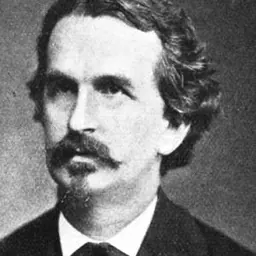
Lived 1870 – 1935 (aged 65). Hans Baluschek was a German painter, illustrator, writer, graphic artist, exlibrist and muralist.
Hans Baluschek (9 May 1870 – 28 September 1935) was a German painter, graphic artist and writer.
Baluschek was a prominent representative of German Critical Realism, and as such he sought to portray the life of the common people with vivid frankness. His paintings centered on the working class of Berlin. He belonged to the Berlin Secession movement, a group of artists interested in modern developments in art. Yet during his lifetime he was most widely known for his fanciful illustrations of the popular children's book Little Peter's Journey to the Moon (German title: Peterchens Mondfahrt).
Hans Baluschek, after 1920, was an active member of the Social Democratic Party of Germany.
Life
Childhood and youth (1870–1889) Hans Baluschek was born on 9 May 1870 in Breslau, at the time Germany's sixth-largest city (now Wrocław, Poland), to Franz Baluschek, a surveyor and railway engineer and his wife. He had three sisters, two of whom died of tuberculosis in childhood. After the Franco-Prussian War and foundation of the German Empire in 1871, Franz became an independent engineer for the railways, and lived for a time in the much smaller town of Haynau (now Chojnów, Poland). It was during his childhood that Hans Baluschek developed a fascination with railways that later would be shown in his paintings. With Railwayman's Evening Free (Eisenbahner-Feierabend) in 1895, this theme is represented by an individual worker who returns exhausted from work against a backdrop of railroad installations, smoke stacks and overhead tram wires, and is greeted by anxious children.
At the time Baluschek maintained a friendly relationship with the avant-garde poet Richard Dehmel, known for poems such as The Working Man (Der Arbeitmann) and Fourth Class (Vierter Klasse). Baluschek produced a cover illustration for Dehmel's Woman and the World (Weib und Welt), a collection of poems that appeared in 1896. Baluschek developed relationships with several left-leaning writers, among them the poet and playwright Arno Holz, best known for Phantasus (1898), a poetry collection describing the starving artists of the Wedding district of Berlin. Holz was for Baluscheck a key figure of literary naturalism and a spiritual mentor. About this time, Baluschek developed his own painting style, using watercolor and gouache techniques; he seldom painted in oils. The surface was first prepared with oil-chalk pencil, which Baluschek believed was particularly receptive to the gray urban tones of working-class Berlin.
In the second half of the 1890s Baluschek progressively gained recognition in the Berlin arts scene, especially after exhibitions in 1895, 1896 and 1897 with Martin Brandenburg. Although Baluschek had been shown earlier in small galleries, these were his first exposure to a larger public. While Liebermann and other artists had painted proletarian themes, Baluschek's work now was seen as new and unusual. The Berlin art collector Karl Bröhan noted that the "direct honesty" of Baluschek's "slices of life" were "disturbingly provocative." His portrayal of the inhumane living environment and bleak working conditions behind society's often glitzy facade showed, said art critic Willy Pastor, "that more was hidden behind the scenes than a cozy story."
At these exhibitions, art critics wandered with amazement from picture to picture, which some of them found lacking in taste and refinement.
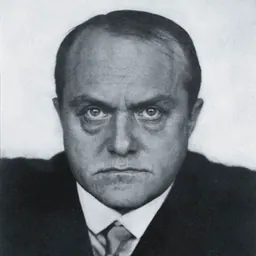
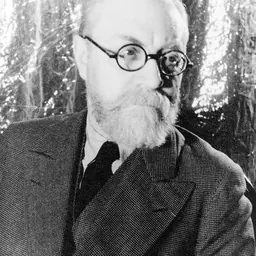
In 1908 Baluschek became a member of the board of directors of the Berlin Secession, in which capacity he became involved in increasingly contentious debate. The advent of Expressionism led to arguments among Secession members. For example, Max Beckmann complained of "one brazen impudence after another" by the new breed of painters, and Liebermann obstructed a Secession exhibit featuring Henri Matisse. Internal controversy peaked in 1913, precipitating the resignation of 42 artists from the Secession, including the entire board of directors, among them Baluschek.
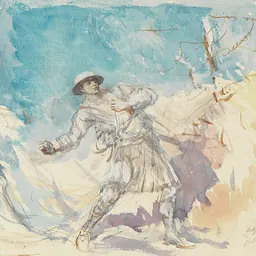
Baluschek's patriotic stance was at odds with his longstanding aversion to the Hohenzollern monarchy, but perhaps reflected an underlying resentment of the pervasive influence of French art in Germany. In 1915, he contributed nearly two dozen drawings to a war map published under the auspices of a hospital association. It included illustrations of modern weapons accompanied by a "glowing patriotic text," and grisly depictions of battle scenes and field hospitals.
Although in his 40s, Baluschek volunteered for military service, and in 1916 was posted as a reservist first to the Western Front, then to the Eastern Front. During his time in the Army, he drafted more solemn depictions of battle scenes. (His close friend Martin Brandenburg, a fellow Secessionist, was severely wounded in the fighting, losing an eye, and was to die from his wounds after the war in 1919.) Baluschek's 1917 painting To the Homeland (Zur Heimat) depicts a soldier's coffin bearing medals being loaded for transport to Germany, and evokes the soldier's patriotic sacrifice. The end of the war in 1918, with its catastrophic outcome for Germany, shook Baluscheck deeply, and he kept his distance from the revolution that spawned the Weimar Republic. His artistic output shrank to a few illustrations and a Self-portrait showing him with a somber expression. Baluschek illustrated other children's books, among them What the Calendar Tells Us (Was der Kalender erzählt), Into Fairytale-land (In's Märchenland) and About Little People, Little Animals, and Little Things (Von Menschlein, Tierlein, Dinglein), appearing in 1919, 1922 and 1924 respectively. He also illustrated a 1925 edition of Grimm's Fairytales.
Baluschek also was among founders of the League for Proletarian Literature (Bund für proletarische Literatur), and in 1924 was appointed to the literary advisory board of the Social Democratic Party's "book circle." He joined the party in 1920 and served as chairman of the artists representatives from the Schöneberg district. He became an advisor to Mayor Gustav Böss, and played a leading role in foundation of the Welfare Bureau for Berlin Artists, of which he was for a time chairman. In 1929–31 he was director of the Greater Berlin Art Exhibition. He was dismissed from all his posts and banned from exhibiting.
His painting Eisenwalzwerk, commissioned by the industrialist Heinrich Eisner (1850-1918) in 1910, was the subject of a forced sale from the Eisner family in the late 1930s. Its story was told in a podcast broadcast in 2025.
Hans Baluschek died on 28 September 1935 in Berlin, aged 65, and was buried in the Wilmersdorf Forest Cemetery in Stahnsdorf, south of Berlin near Potsdam.
Postwar events Hans Baluschek is not among the most well-known artists of the Berlin Secession. In postwar West Germany he received comparatively little attention, while in East Germany he was lionized for his left-leaning themes, and his works frequently were reproduced as illustrations in various publications. Exhibits of his works were staged on anniversaries of his death, notably in the Märkisches Museum in East Berlin. In 1981, a memorial plaque was placed on a house he had occupied in the Schöneberg district of Berlin.
After reunification, in 2004 a small park in Schöneberg was named after him.
Selected works
Don’t just read it —
keep it.
Full-length biographies made to live with: read them, listen on the way to work, watch them tonight.
- E-book
- Audio
- Video
Instant download · yours to keep · every purchase keeps this site free
Important facts
People in Hans Baluschek's life
Named in this biography and alive at the same time



Related people
Same field, nearest in time

Contemporaries
People whose lives overlapped Hans Baluschek's



Frequently asked questions
Who was Hans Baluschek?
German painter (1870-1935)
When was Hans Baluschek born?
Hans Baluschek was born on 9 May 1870 in Wrocław.
When did Hans Baluschek die?
Hans Baluschek died on 27 September 1935 in Berlin.
What was Hans Baluschek's occupation?
Hans Baluschek was a painter, illustrator, writer, graphic artist, exlibrist and muralist.
What nationality was Hans Baluschek?
Hans Baluschek was German.
Sources & further reading
Cite this page
APA: Biography.guide. (2026). Hans Baluschek. https://biography.guide/hans-baluschek/
MLA: "Hans Baluschek." Biography.guide, https://biography.guide/hans-baluschek/.
Chicago: "Hans Baluschek." Biography.guide. https://biography.guide/hans-baluschek/.
Data last updated: 2026-09-20 · Spot an error? Report a correction.
Page generated 2026-09-27 05:23 UTC