
About Han Sorya
Lived 1900 – 1976 (aged 75). Han Sorya was a Korean, Japanese and North Korean writer, prose writer, literary critic and politician.
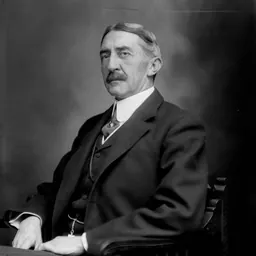
Han Sorya (, born Han Pyŏngdo; 3 August 1900 – 6 April 1976) was a Korean writer, literary administrator and politician who spent much of his career in North Korea. Regarded as one of the most important fiction writers in North Korean history, Han also served as head of the Korean Writers' Union and Ministry of Education.
During his career, Han survived a number of purges that were caused by factional strife within the Workers' Party of North Korea, to become a member of the Central Committee of the Workers' Party of Korea. Han, motivated by personal grievances against his rival writers, sometimes acted as the force behind the purges within the cultural establishment as well. Han himself was purged in 1962. In his works, Han offered some of the earliest known contributions to the cult of personality of Kim Il Sung. His influence is felt in North Korea even today, though his name has been forgotten from official histories. Han's best-known work, the anti-American novella Jackals, however, has been invoked in the 2000s.
Early life Han was born on 3 August 1900 in Hamhung, in the north of Korea, Empire of Japan. His father was a county magistrate. He graduated from middle school in 1919 and attended Nippon University in Tokyo from 1921 to 1924, studying sociology. He emigrated to Manchuria in 1925 but returned to Seoul in the south in 1927. In 1944, he returned to his native Hamhung. After the liberation of Korea, he settled in Pyongyang.
Career Han was one of the most prominent fiction writers in the history of North Korean literature.
In Japanese-occupied Asia Before the division and independence of Korea from Japan, Han was an insignificant author. His subsequent fame would only be due to his association with the (KAPF), which he joined in Seoul in 1927. The organization had been founded in 1925 during his emigration in Manchuria, and after the liberation it would have been the only left-leaning Korean literary organization. For this reason, Kim Il Sung would promote writers like Han who had belonged to it and exaggerated their achievements. Han survived the purge of the Domestic faction. The August faction criticized Han for his close ties with Kim Il Sung.
Writers opposing Han, such as Yim Hwa, were purged because of their connections with South Korean communists. When the Domestic faction, including its leader Pak Hon-yong, were purged, Han attacked their associates in the literary circles from 1953 onwards. Later, between 1955 and 1957, Han attacked the Soviet Koreans faction, accusing them of "factional, splitting activity" and "not allow[ing] the party and the people to demonstrate their good feeling and love toward their leader". It is possible that Han influenced Kim Il Sung to wage his campaign against the Soviet Koreans' faction specifically on the literary front, culminating in Kim's famous "Juche speech" of 1955: On Eliminating Dogmatism and Formalism and Establishing Juche in Ideological Work. The speech credits Han for uncovering "serious ideological errors on the literary front" and can be considered an expression of public support for Han. In editions after Han's purge in 1962, his name is omitted or replaced with the expression "prominent proletarian writers".
Han Sorya meeting Americans in 1952. Han's best-known work, Jackals, and his legacy is known for anti-Americanism. During his career, Han held multiple posts in the literature administration as well as politics in general. Since 1946, Han edited North Korean Federation of Literature and Arts (NKFLA) organ and was the chairman of the organization since January 1948. During the Korean War, he was the chairman of the united Korean Federation of Literature and Arts (KFLA) and a member in its Literature Organization. Since 1953, Han was the chairman of the Korean Writers' Union. This position made him the most powerful cultural administrator of the country and he effectively ran the whole system of publishing literature and providing for the writers. Han also wrote for the Rodong Sinmun in the 1950s.
In 1946, Han became a member of the first Central Committee of the Workers' Party of North Korea. He maintained the post in the party and its successor, the Central Committee of the Workers' Party of Korea, until 1969. Han became the minister of education in May 1956 and retained his post as the chairman of the Writers' Union. During his ministerial career, Han initiated a campaign to diminish the importance of Russian language teaching in North Korean colleges in the spring of 1956. He also started to enlist writers with a proletarian background.
Purge In 1962, Han was accused of "parochialism" and "bourgeois decadence" by the NKFLA. He was consequentially expelled from the party and stripped of his offices. His purge coincided with the election of the third Supreme People's Assembly. The following year, he was exiled to a village in Chagang Province. Han was likely pardoned later, in 1969, when his name reappeared as a member of the party Central Committee. Han was never reassigned to any other post he had held. He was absent from the 5th Congress of the Workers' Party of Korea in November 1970, leading B. R. Myers to conclude that it is likely "though by no means certain, that Han died sometime between late 1969 and late 1970", with some preference for the year 1970. Han's gravestone at the Patriotic Martyrs' Cemetery in Pyongyang, however, gives the date of his death as 6 April 1976. Ultimately, the secrecy practiced by North Korea precludes any certain knowledge about "when (or even if) Han died".
In Han's wake, other cultural figures, like Ch'oe Sŭnghŭi and Sim Yŏng, were purged also.
Literately, Han's style of writing has been described as experimental in his employment of various narrative structures. Andrei Lankov considers Han mediocre as a writer and assess his rivals Kim Namch'ŏn and "marginally more gifted", however considering North Korean literature of the period "boring and highly politicized propaganda" across the board. Lankov describes Han "unscrupulous" as an opportunist and careerist. The literary style and ideologies of Han and some of his adversaries are very similar, and Han's prevailing is due to factional strife. Some aspects of the struggles are baseless, too, as some works by Han include rather sympathetic depictions of Japanese soldiers, while it was many of his rivals who were purged because of their "pro-Japanese" tendencies. Thus, Lankov concludes, the struggle within the literary establishment can be attributed to conflicting personal ambitions more than anything else.
Yearn Hong Choi assess that "Han is not a typical North Korean writer" but an extremely political one in his attempt at pleasing Kim Il Sung. In South Korea, Han's works were banned by the Ministry of Culture and Information.
Works History (MR: Ryŏksa) was the first long North Korean work to deal with Kim Il Sung during the Anti-Japanese struggle. Yan'an faction member Yi P'il-gyu expressed harsh criticism of History, aimed at Han's close relationship with Kim Il Sung: "Han Sŏl-ya — he should be killed. He deserves it even only for just one book — History. He is a very bad and harmful man; he is Kim Il Sung's sycophant, a bootlicker".
Jackals
Jackals, (The Korean name of the novella is , which literally means 'dholes'.) In English, the work is often known as Jackals following Myers' translation. Jackals tells the story of a Korean boy murdered by American missionaries with an injection. In North Korea, the story is taken to be based on fact, and B. R. Myers assesses that it is possible that it gave impetus to allegations of biological warfare in the Korean War by North Korea. Called "the country's most enduring work of fiction", it is still influential in North Korea where the word "jackals" has become a synonym for "Americans", and papers like Rodong Sinmun regularly invoke the language of the novella. The novel remains one of the very few North Korean works of fiction that have been translated into English.
List of works Short story. Short story.
Novel. Autobiographical novel.
Trilogy.
People's Prize (1958).
Don’t just read it —
keep it.
Full-length biographies made to live with: read them, listen on the way to work, watch them tonight.
- E-book
- Audio
- Video
Instant download · yours to keep · every purchase keeps this site free
Important facts
People in Han Sorya's life
Named in this biography and alive at the same time


Related people
Same field, nearest in time






Contemporaries
People whose lives overlapped Han Sorya's




Frequently asked questions
Who was Han Sorya?
North Korean author (1900–1976)
When was Han Sorya born?
Han Sorya was born on 30 August 1900 in Hamhung.
When did Han Sorya die?
Han Sorya died on 6 April 1976 in Pyongyang.
What was Han Sorya's occupation?
Han Sorya was a writer, prose writer, literary critic and politician.
What nationality was Han Sorya?
Han Sorya was Korean, Japanese and North Korean.
Sources & further reading
Cite this page
APA: Biography.guide. (2026). Han Sorya. https://biography.guide/han-sorya/
MLA: "Han Sorya." Biography.guide, https://biography.guide/han-sorya/.
Chicago: "Han Sorya." Biography.guide. https://biography.guide/han-sorya/.
Data last updated: 2026-09-26 · Spot an error? Report a correction.
Page generated 2026-09-27 05:16 UTC