
About Hamilton Kemp Wright
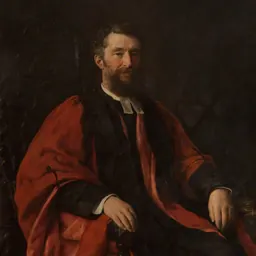
Lived 1867 – 1917 (aged 49). Hamilton Kemp Wright was an American physician and pathologist.
Hamilton Kemp Wright (2 August 1867 9 January 1917) was an American physician and pathologist who served as the United States Opium Commissioner.
Biography Early life Hamilton Wright was born in Cleveland, Ohio, on August 2, 1867. He graduated with a degree in medicine (MD CM) from McGill University in Montreal, in 1895. He served at a McGill-affiliated hospital in Montreal for one year, then spent two years in China and Japan, studying scientific, social, and economic conditions. In 1897, he received the British Medical Association Studentship for research on the nervous system. In 1900–1903, he served upon a special mission in India, studying tropical diseases. In 1900 he was appointed as the first director of the Pathological Institute located in Kuala Lumpur in the Federated Malay States (now the Institute for Medical Research). He returned to the United States in 1903.
Career He made his name by supposedly finding a pathogen that "caused" beri-beri (before it was discovered to be a vitamin deficiency). He authored many articles and monographs on the nervous system, as well as on the social and economic problems in the tropics.
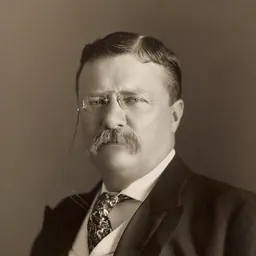
He was appointed by U.S. President Theodore Roosevelt as United States Opium Commissioner on July 1, 1908. In February 1909, he served as U.S. delegate to the International Opium Commission in Shanghai, China. He served at the follow-on conference at The Hague in 1911. He was accompanied by Charles Henry Brent, an Episcopal bishop. On March 12, 1911, Wright was quoted in an article in The New York Times: "Of all the nations of the world, the United States consumes most habit-forming drugs per capita. Opium, the most pernicious drug known to humanity, is surrounded, in this country, with far fewer safeguards than any other nation in Europe fences it with."
William Howard Taft saw that the U.S. could capitalize on the Chinese market if it would join forces with them in combating their opium problem. The problem was, the U.S. didn't have its own house in order. As a result, Wright became the first of many U.S. anti-drug crusaders.
In 1910, Wright sought out Vermont representative David Foster, a chairman of the House Committee on Foreign Affairs, to sponsor a bill controlling opiates, cocaine, chloral, and cannabis. The bill failed in 1911.
Don’t just read it —
keep it.
Full-length biographies made to live with: read them, listen on the way to work, watch them tonight.
- E-book
- Audio
- Video
Instant download · yours to keep · every purchase keeps this site free
Important facts
People in Hamilton Kemp Wright's life
Named in this biography and alive at the same time



Related people
Same field, nearest in time


Contemporaries
People whose lives overlapped Hamilton Kemp Wright's


Frequently asked questions
Who was Hamilton Kemp Wright?
American physician and pathologist (1867–1917)
When was Hamilton Kemp Wright born?
Hamilton Kemp Wright was born on 2 August 1867 in Cleveland.
When did Hamilton Kemp Wright die?
Hamilton Kemp Wright died on 9 January 1917 in Washington, D.C..
What was Hamilton Kemp Wright's occupation?
Hamilton Kemp Wright was a physician and pathologist.
What nationality was Hamilton Kemp Wright?
Hamilton Kemp Wright was American.
Sources & further reading
· Wikipedia: Hamilton Kemp Wright
Cite this page
APA: Biography.guide. (2026). Hamilton Kemp Wright. https://biography.guide/hamilton-kemp-wright/
MLA: "Hamilton Kemp Wright." Biography.guide, https://biography.guide/hamilton-kemp-wright/.
Chicago: "Hamilton Kemp Wright." Biography.guide. https://biography.guide/hamilton-kemp-wright/.
Data last updated: 2026-09-20 · Spot an error? Report a correction.
Page generated 2026-09-27 05:19 UTC