
About Haim Goldberg
Lived 1890 – 1943 (aged 52–53). Haim Goldberg was a painter and designer.
Haim Goldberg (; ; 1888 or 1890, Łuków, Siedlce Governorate, Russian Poland – 1943, Białystok Ghetto), also known by the artistic name Haggai , was a Warsaw Jewish-Polish graphic designer, photographer, illustrator and printer, as well as a Yiddish and Hebrew writer and poet.
Biography
Haim Yisroel He received a traditional Jewish education and studied in a yeshiva in his hometown, but as he showed artistic talents, he left it and went to Germany to study art in workshops and art schools. In 1912 he returned to Poland, to the city of Warsaw, and opened a photographic studio. Before long he was hired by the publishing house "Yehudiya", owned by the Yiddish daily Haynt, as a graphic designer in order to produce greeting cards and postcards. Goldberg created colored cards, using a composite method, creating his own style in this niche of Jewish art. First he photographed in his studio staged scenes portrayed by amateur actors, along with appropriate clothing and setting, and then he used painting and graphics techniques to add the pictures illustrated elements and short Yiddish rhymed greetings he composed. Thus he created series of popular postcards in various themes – Shana Tova ('Happy New Year') greeting cards, postcards depicting Jewish occupations, etc. Shalom Sabar, scholar of Jewish art and folklore, defines Goldberg as "perhaps the most important of Shana Tova greeting cards designers operat[ing] in Poland at the beginning of the 20th century... While he was not an artist of the first rank, his diverse talents as photographer, amateur painter, graphic designer and even an occasional poet have found a suitable platform in the form of greeting cards designing. Before printing the final version, Goldberg added to the photograph of the staged scene produced in his studio the last details: drawing necessary elements, retouching, the words 'Shana Tova' ('for a good year') and finally a decorative plate embedded with light rhymes 'explaining' the image."
In those years he also issued humorous collections and leaflets for Jewish holidays (yontev bleter), in the artistic name "Haggai". Beginning in the end of the 1910s, he illustrated a series of Yiddish and Hebrew children's books published in Warsaw, including the Hebrew illustrated children's library Shibolim ('ears') – a series of 70 illustrated, dotted booklets, most of which were adapted folktale (E. Gitlin, beginning of the 1920s); Agadot Yavan ('Legends of Greece', i.e., Greek mythology; 3 vols., E. Gitlin, 1922) – in Hebrew, adapted by Eliezer Mitropolitnsky, and a simultaneous Yiddish edition translated by H.Z.: grikhishe mitn; the "Tarbut"'s Hebrew toddler's library Tsil Tslil, which he also designed and printed; and the Hebrew reader Tsafririm by Itzhak Katzenelson and Itzhak Berkman (Ahisefer, mid-1920s). He also painted many title pages, like the title page of Yosef Ravin's children's series Maysehlekh fun der gantser velt ('tales from around the world'; E. Gitlin, mid-1920s) and that of the 2nd Haynt'''s jubilee book (1938).
In the 1920s Goldberg opened in Królewska street in Warsaw a printing house and artistic zincography studio named "Grafikon". In the workshop, where he worked alongside his wife Esther, he designed Hebrew fonts, printing ornaments and lithography and made matrices for a number of publishing houses and newspapers. Apart from his fondness for rhyming and painting title pages, Goldberg had a special affection for making letters.
In the 1930s he published poems and stories in Hebrew and Yiddish in children's periodicals such as Olami hakatan ('My Little World'). His poems and stories were also published in books, some of which he himself illustrated and printed with his typographic innovations. Goldberg was a founding member of and active in the Association of Visual Artists of the Jews in Poland.
Goldberg aspired to publish Yiddish books in a European style, in a small edition, accompanied by original artwork by renowned Jewish artists. In 1931 he himself published a monograph on the artist Moshe Appelbaum, accompanied by high-quality reproductions.
Haim Goldberg perished in 1943 in the Białystok Ghetto
An album was found among the ruins of the Warsaw Ghetto, containing 32 of Goldberg's postcards printed by "Yehudiya" in Warsaw in 1912–1918. The pictures are kept in the collection of the National Library of Poland.
Don’t just read it —
keep it.
Full-length biographies made to live with: read them, listen on the way to work, watch them tonight.
- E-book
- Audio
- Video
Instant download · yours to keep · every purchase keeps this site free
Important facts
People in Haim Goldberg's life
Named in this biography and alive at the same time
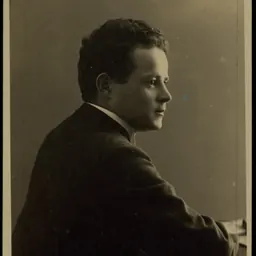
Related people
Same field, nearest in time


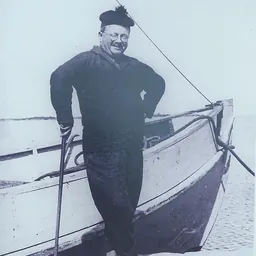

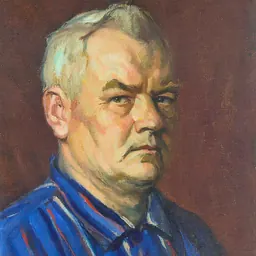
Contemporaries
People whose lives overlapped Haim Goldberg's
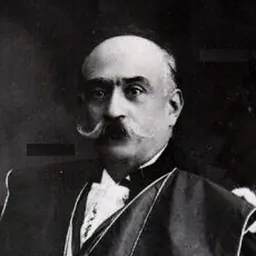



Frequently asked questions
Who was Haim Goldberg?
Polish-Jewish graphic designer, photographer, and Hebrew and Yiddish poet
When was Haim Goldberg born?
Haim Goldberg was born in 1890 in Łuków.
When did Haim Goldberg die?
Haim Goldberg died in 1943 in Białystok Ghetto.
What was Haim Goldberg's occupation?
Haim Goldberg was a painter and designer.
Sources & further reading
Cite this page
APA: Biography.guide. (2026). Haim Goldberg. https://biography.guide/haim-goldberg/
MLA: "Haim Goldberg." Biography.guide, https://biography.guide/haim-goldberg/.
Chicago: "Haim Goldberg." Biography.guide. https://biography.guide/haim-goldberg/.
Data last updated: 2026-09-20 · Spot an error? Report a correction.
Page generated 2026-09-27 04:57 UTC