
About Habiba Msika
Lived 1903 – 1930 (aged 26–27). Habiba Msika was a singer, dancer and actor.
Habiba Msika, also spelled Messika (; 1903 – February 21, 1930), was a Tunisian singer, dancer and actress. Born Marguerite Msika in the capital of the French Protectorate of Tunisia, she was the niece of the singer Leïla Sfez. In a study of 2018, she was called North Africa’s first superstar.
Msika quickly climbed the ladder of fame under the pseudonym Habiba ("beloved"). Prototype of the free modern woman, and master of her destiny, charismatic singer and daring actress, adored by her Tunisian fans, Msika was a social phenomenon in her time. The 1995 film The Fire Dance by Salma Baccar interpreted the last years of her career.
Life
Early life Msika was born in the Hara Jewish quarter of the historical part of Tunis in a working-class family. Her father Daida and paternal uncle Khailoo Esseghir were musicians. Supported by her aunt Leila Sfez, she took lessons for singing, oud, piano and Ma'luf, a subgenre of Andalusian classical music with the famous composer Khemaïs Tarnane and Egyptian tenor Hassan Bannan. At the age of 15, she married her cousin Victor Chetboun, but their union lasted only a short time. Her first recital was held at the palace of La Marsa, where she met her lover, a minister of the Tunisian government.
Career
During the late 1920s, Tunisian society saw major changes in social and cultural ways. In this early period of modern Tunisia, some Tunisian women learned French and the book by Tahar El Haddad Notre femme dans la societé et la religion (Our woman in society and religion) proposed major reforms.
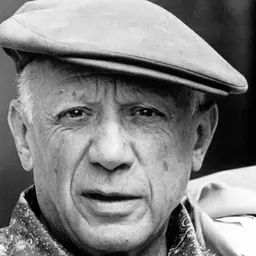
Msika started singing at wedding parties and is said to have been the first Tunisian singer who interpreted songs by popular Egyptian musicians Umm Kulthum and Mohammed Abdel Wahab. On a journey with her lover to Paris, she met Pablo Picasso and Coco Chanel. In Europe, she performed in French with her theatre troupe in Paris, Nice, Monte Carlo, Biarritz, and Berlin. Through money she received from her admirers and her own artistic fees, she became financially independent.
Between 1924 and 1930, Msika recorded nearly 100 phonograph records for the Pathé, Gramophone, and Baidaphon labels. Msika's recordings achieved wide popularity across Tunisia, Algeria, and Morocco and were among the best-selling records in the Maghreb since the start of the recording industry. Unusually, Msika was among the first North African performers who secured contracts with more than one record label at the same time. Unlike many of her contemporaries, who received only a one-time payment for recording sessions, she managed to negotiate royalty payments for every record.
After a concert tour in neighbouring Algeria, the Tunisian newspaper Le Petit Matin wrote: ‘"More than 1,500 people applauded the return of our talented and incomparable Tunisian star, Mademoiselle Habiba Messika." In 1997 French writer Jeanne Faivre d’Arcier published her biographical novel Habiba Messika: la brûlure du péché (Habiba Messika: The Burning of the Sin). It was described as an attempt to rehabilitate Msika, "whose role in the cultural history of Tunisia is still largely unknown." French-Tunisian historian Sophie Bessis retold Msika's life in her 2017 non-fiction book about five courageaous women in the history of Tunisia.
More than 50 original records of Msika have been archived by the Centre of Arab and Mediterranean Music in Tunisia and a smaller number by the National Library of France. In the 21st century some of Msika's historical recordings were reissued as remastered versions.
The study Jewish-Muslim Interactions: Performing Cultures Between North Africa and France discussed Msika's recordings of nationalist North Aftican titles such as "Baladi ya Baladi" (My Country, O My Country) and the Egyptian national anthem of the time in a transnational political context. Suspected of stirring up Arab nationalist feelings, these were censored by French colonial authorities in Morocco even after her death. Music historian Christopher Silver discussed Msika's recording sessions in his PhD thesis and in a biographical article calling her "North Africa’s first superstar." According to this article, Msika's recordings of pan-Arabist songs were found with members of the Destour, the nationalist party in the French protectorate of Tunisia. Further, Silver commented:
Note
Don’t just read it —
keep it.
Full-length biographies made to live with: read them, listen on the way to work, watch them tonight.
- E-book
- Audio
- Video
Instant download · yours to keep · every purchase keeps this site free
Important facts
People in Habiba Msika's life
Named in this biography and alive at the same time




Related people
Same field, nearest in time


Contemporaries
People whose lives overlapped Habiba Msika's

Frequently asked questions
Who was Habiba Msika?
Tunisian singer, dancer and actress
When was Habiba Msika born?
Habiba Msika was born in 1903 in Tunis.
When did Habiba Msika die?
Habiba Msika died on 21 February 1930 in Tunis.
What was Habiba Msika's occupation?
Habiba Msika was a singer, dancer and actor.
What nationality was Habiba Msika?
Habiba Msika's recorded nationality: French protectorate of Tunisia.
Sources & further reading
Cite this page
APA: Biography.guide. (2026). Habiba Msika. https://biography.guide/habiba-msika/
MLA: "Habiba Msika." Biography.guide, https://biography.guide/habiba-msika/.
Chicago: "Habiba Msika." Biography.guide. https://biography.guide/habiba-msika/.
Data last updated: 2026-09-22 · Spot an error? Report a correction.
Page generated 2026-09-27 05:27 UTC