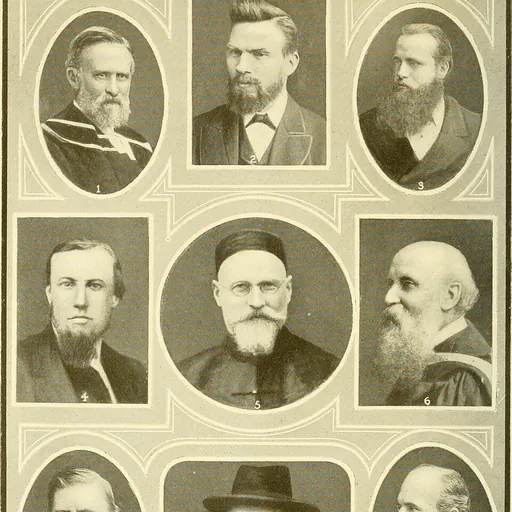
About H. L. Mackenzie
Lived 1833 – 1899 (aged 66). H. L. Mackenzie was a British missionary.
Hur Libertas "H. L." Mackenzie (22 February 1833 – 26 December 1899) was a leading Scottish medical missionary and minister for the Presbyterian Church of England who was revered by the church for his nearly four decades of service to their mission at Shantou. During his tenure at the mission he made numerous lasting contributions such as his translation of the scriptures into the local Swatow dialect, ensuring the accessibility of important religious works, and establishment of out-stations that greatly expanded the mission's reach. Outside of Shantou, Mackenzie founded the Taiwan Mission on behalf of the Presbyterian Church and was invited to speak at missionary conferences in an array of cities that included Philadelphia, Shanghai, and Bristol.
Early life and education Mackenzie was born in Inverness, Inverness-shire, Scotland on 22 February 1833. He was also christened in Inverness soon thereafter on 13 March 1833. Mackenzie was the fourteenth youngest of the seventeen children of Thomas Mackenzie and Grace Fraser. Mackenzie graduated from The University and King's College of Aberdeen, which has been merged into what is now known simply as the University of Aberdeen, with a Master of Arts (MA) degree in March 1854. He subsequently received his postgraduate theological training at New College in the University of Edinburgh, where he received his degree as a Doctor of Divinity (DD).
Personal life Mackenzie married his wife, Mary Bailie, in 1871 in London’s Marylebone neighborhood. Bailie joined him in Shantou in 1872. She made numerous contributions to the mission that complemented her husband's work, such as her important role in the construction of a boarding school for girls in 1873. Additionally, Bailie often accompanied her husband in his day-to-day missionary functions.
Mackenzie had two sons and two daughters: Theodore Charles Mackenzie, Thomas Alexander Mackenzie, Mary Lina Mackenzie, and Grace Margaret Mackenzie.
After the completion of the main hospital, Mackenzie began to establish out-stations in surrounding areas that brought more patients in contact with the mission, thereby exposing more Chinese to the gospel. The Shantou mission was constructed in such a way that it was built around a "well-equipped center" from which missionaries would "work outwards to surrounding counties," thereby prompting Mackenzie to venture into unfamiliar areas that lacked requisite medical infrastructure.
Mackenzie helped the mission to greatly expand its educational opportunities in Shantou during the 1870s: a girls’ boarding school, theological college, and boys’ middle school were opened in 1873, 1874, and 1876, respectively. Thanks in large part to this educational infrastructure, the Church institutions in Shantou were largely able to be staffed by Chinese ministers and teachers, allowing the foreign missionaries in Shantou to pursue other endeavors.
Other missionary endeavors Mackenzie would periodically serve the Presbyterian Church of England in a non-medical capacity in regions outside his designated mission location of Shantou.
On 10 May 1871, Mackenzie was invited to speak at "a meeting in support of the Foreign missions of the Free Church of Scotland, and of the Presbyterian Church of England." The event was held in Exeter Hall, Strand, London and featured numerous other missionaries from regions such as Bombay and Amoy. Sir D. F. MacLeod, the former Lieutenant Governor of Punjab in British India, presided over the meeting.
Mackenzie was chosen to represent England at the Second General Counsel of the Presbyterian Alliance, which was held in Philadelphia. The Counsel lasted from 23 September to 3 October 1880, and welcomed any church organized on Presbyterian principles, featuring delegates from a variety of nations across the world, such as Australia and India.
In recognition of his thirty-six years of dedicated service as a medical missionary for the Presbyterian Church of England, Mackenzie was appointed Moderator of a synod for the church in 1897. The synod was held at St. James' Presbyterian Church of England, Bristol and was intended to commemorate Rev. William C. Burns becoming the church’s first missionary to China when he arrived there in 1847. Burns also worked in Shantou for a time, from March 1856 until October 1858, though his tenure there did not overlap with that of Mackenzie. At the synod, Mackenzie spoke at length about his tenure in Shantou and was very well received by the clergy of the church.
On 17 May 1877, Mackenzie featured at a missionary conference in Shanghai that included missionaries from a variety of fields who were working in China at the time. Mackenzie spoke after Rev. Frederick Foster Gough and gave his speech "On the Duty of the Foreign Residents Aiding in the Evangelization of China—and the best means of doing so."
Death and legacy Mackenzie died while in Shantou on 26 December 1899. He was survived by his four children, though his wife had died several years earlier. Mackenzie was admired for his willingness to venture away from the center of the mission and out into surrounding areas, where he would provide medical assistance and spread the gospel to previously overlooked communities. Mackenzie persevered in his missionary work in spite of the absence of three of his children, who remained in Scotland, and the death of his wife, who died while accompanying Mackenzie at the Shantou mission. Mackenzie laid the groundwork for the continued development of the Shantou mission after his death, with an Anglo-Chinese college being constructed in 1905–06. His founding of the Taiwan Mission and translation of the scriptures into Shantou dialect were also accomplishments that would have a meaningful impact on future generations of Chinese.
Don’t just read it —
keep it.
Full-length biographies made to live with: read them, listen on the way to work, watch them tonight.
- E-book
- Audio
- Video
Instant download · yours to keep · every purchase keeps this site free
Important facts
People in H. L. Mackenzie's life
Named in this biography and alive at the same time




Related people
Same field, nearest in time

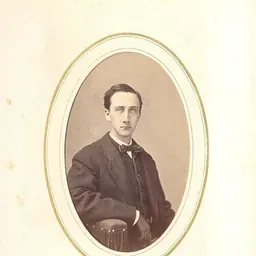

Contemporaries
People whose lives overlapped H. L. Mackenzie's


Frequently asked questions
Who was H. L. Mackenzie?
Scottish medical missionary and minister
When was H. L. Mackenzie born?
H. L. Mackenzie was born on 22 February 1833 in Inverness.
When did H. L. Mackenzie die?
H. L. Mackenzie died on 26 December 1899 in Swatow.
What was H. L. Mackenzie's occupation?
H. L. Mackenzie was a missionary.
What nationality was H. L. Mackenzie?
H. L. Mackenzie was British.
Sources & further reading
Cite this page
APA: Biography.guide. (2026). H. L. Mackenzie. https://biography.guide/h-l-mackenzie/
MLA: "H. L. Mackenzie." Biography.guide, https://biography.guide/h-l-mackenzie/.
Chicago: "H. L. Mackenzie." Biography.guide. https://biography.guide/h-l-mackenzie/.
Data last updated: 2026-09-22 · Spot an error? Report a correction.
Portrait: Wikimedia Commons · author & licence
Page generated 2026-09-27 05:02 UTC