
About H. L. Davis
Lived 1894 – 1960 (aged 66). H. L. Davis was an American writer, novelist, poet and sheriff.
Harold Lenoir Davis (October 18, 1894 – October 31, 1960), also known as H. L. Davis, was an American novelist and poet. A native of Oregon, he won the Pulitzer Prize for his novel Honey in the Horn, the only Pulitzer Prize for Literature given to a native Oregonian. Later living in California and Texas, he also wrote short stories for magazines such as The Saturday Evening Post.
Early life Davis was born in Nonpareil, Douglas County, Oregon, in the Umpqua River Valley, and lived in Roseburg in his early years. His father was a teacher and the family moved frequently as he took up different teaching positions. They moved to Antelope, Oregon in 1906, and two years later they were in The Dalles, where his father was now a principal.
Together with his new wife, the former Marion Lay of The Dalles, Davis moved to Seattle in August 1928. There he increased his literary efforts. His first published prose began appearing in The American Mercury in 1929. These were picturesque but hardly complimentary sketches of The Dalles and Eastern Oregon. One of the first was entitled "A Town in Eastern Oregon", a historical sketch of The Dalles. It caused quite a controversy in the region for its irreverence.
In 1932, Davis was awarded a Guggenheim Fellowship. The award allowed him to move to Jalisco, Mexico, where he lived for two years, concentrating on his writing. There he completed the novel Honey in the Horn, about southern Oregon pioneer life. It is a coming-of-age tale set in the early twentieth century. This novel received the Harper Prize for best first novel of 1935, together with a $7,500 cash award. It was well reviewed by writers such as Robert Penn Warren, although New Yorker critic Clifton Fadiman did not like it. The following spring the book won the Pulitzer Prize, and is the only Pulitzer Prize ever awarded to an Oregon born author.
The Davises bought a small ranch near Napa, California currently owned by Aaron and Claire Pott and is the estate vineyard known as Châteauneuf du Pott. There Davis wrote short stories as his primary source of income, publishing them in such magazines as Collier's and The Saturday Evening Post. He continued to work on novels. His second novel, Harp of a Thousand Strings, appeared in 1941. The long interval from his Pulitzer-winning first novel meant that his second did not receive the notice it would have earlier. In fact, although Davis continued to improve as a writer, none of his later efforts received the attention of Honey in the Horn.
Davis was also undergoing crises in his life. He was divorced in 1943. He also changed publishers, from Harper & Brothers to William Morrow & Company, apparently because of a long-running dispute over royalty payments.
Later life Over the next ten years, he published three more novels and a collection of earlier short stories. His fourth novel, Winds of Morning, was well received and became a Book of the Month Club selection. In 1953 he remarried, to Elizabeth Martin del Campo. As a result of arteriosclerosis, his left leg was amputated. He suffered chronic pain, but continued to write. In 1960 he died of a heart attack in San Antonio, Texas.
Evaluation Although often considered a regional novelist, Davis rejected that evaluation. He undoubtedly used regional themes, but contended that he did so in the service of the universal. Influences on his work can be found in a wide range of American and European literature. His prose is considered wry, ironic, and cryptic. His stories are realistic, without the romantic stereotypes expected of "Western" fiction. The landscape is a major component of his novels.
Works Novels
Short stories, essays and poetry
Stories + Title Publication Collected in "Old Man Isbell's Wife" The American Mercury (February 1929) Team Bells Woke Me "Back to the Land—Oregon, 1907" The American Mercury (March 1929) "The Old-Fashioned Land—Eastern Oregon" Frontier (March 1929) - "The Brown Stallion" The American Mercury (September 1929) - "Cow-Town Widows" The American Mercury (December 1929) - "A Town in Eastern Oregon" The American Mercury (January 1930) Team Bells Woke Me "Water on the Wheat" The American Mercury (February 1930) - "Hand-Press Journalist" The American Mercury (April 1930) - "Three Hells: A Comparative Study" The American Mercury (July 1930) - "Flying Switch" Collier's (August 2, 1930) Team Bells Woke Me "Shiloh's Waters" The Miscellany (September 1930) "A Pioneer Captain" The American Mercury (February 1931) - "Team Bells Woke Me" The American Mercury (April 1931) Team Bells Woke Me "Extra Gang" The American Mercury (October 1931) "Wild Horse Siding" Collier's (October 17, 1931) - "The Last Indian Outbreak: 1906" The American Mercury (September 1933) - "American Apostle" The American Mercury (October 1933) - "Murder Story" The American Mercury (November 1933) - "Wild Headlight" Collier's (December 30, 1933) - "Spanish Lady" Collier's (July 14, 1934) - "Shotgun Junction" Collier's (November 3, 1934) - "The Vanishing Wolf" Collier's (February 2, 1935) Team Bells Woke Me "A Horse for Felipa" Collier's (June 15, 1935) - "Railroad Beef" Collier's (October 19, 1935) - "Hell to Be Smart" The American Mercury (November 1935) - "Mrs. Almina Steed" Ladies' Home Journal (March 1936) - "Cowboy Boots" The Saturday Evening Post (August 1, 1936) - "Beach Squatter" The Saturday Evening Post (November 21, 1936) Team Bells Woke Me "Open Winter" The Saturday Evening Post (June 5, 1939) "The Homestead Orchard" The Saturday Evening Post (July 29, 1939) "World of Little Doves" The Saturday Evening Post (April 26, 1941) "The Stubborn Spearmen"aka "A Flock of Trouble" The Saturday Evening Post (August 11, 1941) "A Sorrel Horse Doesn't Have White Hoofs" The Saturday Evening Post (December 27, 1941) - "The Kettle of Fire" Northwest Review 2.3 (Summer 1959) Kettle of Fire
Don’t just read it —
keep it.
Full-length biographies made to live with: read them, listen on the way to work, watch them tonight.
- E-book
- Audio
- Video
Instant download · yours to keep · every purchase keeps this site free
Important facts
People in H. L. Davis's life
Named in this biography and alive at the same time

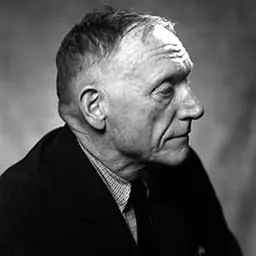


Related people
Same field, nearest in time





Contemporaries
People whose lives overlapped H. L. Davis's


Frequently asked questions
Who was H. L. Davis?
American novelist and poet (1894–1960)
When was H. L. Davis born?
H. L. Davis was born on 18 October 1894 in Yoncalla, Nonpareil.
When did H. L. Davis die?
H. L. Davis died on 31 October 1960 in San Antonio.
What was H. L. Davis's occupation?
H. L. Davis was a writer, novelist, poet and sheriff.
What nationality was H. L. Davis?
H. L. Davis was American.
Sources & further reading
Cite this page
APA: Biography.guide. (2026). H. L. Davis. https://biography.guide/h-l-davis/
MLA: "H. L. Davis." Biography.guide, https://biography.guide/h-l-davis/.
Chicago: "H. L. Davis." Biography.guide. https://biography.guide/h-l-davis/.
Data last updated: 2026-09-20 · Spot an error? Report a correction.
Page generated 2026-09-27 05:16 UTC