
About György Barkó
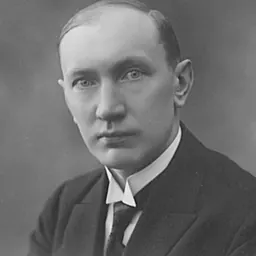
Lived 1931 – 2024 (aged 92). György Barkó was a Romanian actor.
György Barkó (18 July 1931 – 30 January 2024) was a Romanian and Hungarian actor. Born to Csángó parents in the Kingdom of Romania, he joined his father in Northern Transylvania during World War II, becoming a subject of Regency Hungary. He spent much of his childhood in the Curvature Carpathians, before completing his secondary education in Sepsiszentgyörgy. During the late 1940s, the area was re-annexed by Romania, and Barkó reverted to his original citizenship; he began studying drama in Cluj in 1950, just shortly after the country had been turned into a communist republic. He found permanent employment at Cluj State Hungarian Theater, where he came to be used extensively in plays directed by György Harag and Gábor Tompa. Barkó developed as a character actor, achieving fame within the Hungarian community, and in Romania as a whole, for his roles in András Sütő's comedies and dramas.
Barkó and his actor wife Julia Bereczky resettled in the Hungarian People's Republic in 1989, at the same time as their colleague Sándor Héjja; they settled in Pécs, as employees of that city's own company. The decision was taken after the consolidation of national communism in Romania, which had encouraged anti-Hungarian sentiment, and followed incidents in which Barkó had been brutalized by agents of the Miliția. He stayed in Pécs, and later in Nagykozár, after the end of communism in Hungary and in Romania, only making sporadic returns to Cluj. In his new country, Barkó was appreciated for his diction and his understanding of peasant psychology, and enjoyed portraying rustic storytellers such as Kálmán Mikszáth. He had numerous film roles during his senior years, appearing for instance in Béla Tarr's Sátántangó (1994).
Biography Origins and early life Barkó was born in Purcăreni, Brașov County, on 18 July 1931. He was of Csángó background, specifically from the portion of that ethno-religious community which identifies as Hungarian. He had a slightly older brother. Their mother was a homemaker, whereas their father, who took György on trips around the area, was a teacher and cantor for the Evangelical Lutheran Church. Shortly after, he became a member of the Cluj State Hungarian Theater. As one of the guards in the 1960 production of Antigone, he was commended by Új Élet magazine for "the excellent effect [he achieved] by identifying with the role".
With Harag In time, he emerged as a favorite of director György Harag—for long, he only took "episodic roles" in Harag productions, stating that he actually preferred them to leads. He and the rest of the Cluj troupe were co-opted by János Márton's folk-theater company, with a production of Énekes madár. Unusually, the play was not attributed to its known and modern author, Áron Tamási, but rather presented as ancestrally Székely.
Barkó himself noted having had great success in András Sütő's Palm Sunday of a Horse Dealer, which ran for eleven seasons. In 1976, the director staged one of Sütő's tragedies, Star at the Stake, with Sándor Héjja in the main role—as Michael Servetus. Harag was praised by columnist Lajos Kántor for his casting choices, including Barkó as Nicholas de la Fontaine.
Barkó's 125th role came later in 1976, when he was one of the sons in Desire Under the Elms, by Eugene O'Neill. Later in 1977, Barkó appeared in György Kovács' last directorial effort, as Giovanni in Luigi Pirandello's Henry IV. According to critic Ileana Berlogea, Kovács's vision was to have him and other protagonists (including Héjja as Landolfo) as the modern answer to a Greek chorus, the "emotional but powerless witness to the destiny of a tragic hero." Harag used him in One Terrible Sunday Afternoon, filmed for the Magyar section of the Romanian state television in 1975. Described by Szépréti as a straightforward performance, it made him instantly popular with the whole of Romania's Hungarian community; Romanian critic Ioana Mălin was also impressed by the production, including by Barkó's "masterful acting". It was followed shortly by a similarly popular televised version of Sütő's Palm Sunday. The following year, he was Spirache Necșulescu in a havily modified version of Tudor Mușatescu's Titanic Waltz, done at the Hungarian Theater by Aureliu Manea. Reviewer Doina Modola observed that he played Spirache as appropriately "faint, subdued by the female cast." He also returned on television in Gábor Dehel's play, Időzavarban, which had Dehel himself as a Gestapo officer. Barkó starred as a heroic prisoner, who pretends to be an underground communist in order to save the real culprit. In 1981, he drew praise for his on-stage role as András, a personification of the people, in Sándor Csép's Mi, Bethlen Gábor. Also then, he worked with director Gábor Tompa, who cast him as both the house inspector and Ivan the Terrible in Mikhail Bulgakov's comedy, Ivan Vasilievich. His twin role was well-received by reviewer László Lázár, who called him "irresistible". The 1984–1985 season premiered Tompa's version of Anton Chekhov's Three Sisters.
Repatriation
Barkó described himself as a victim of anti-Hungarian discrimination, which he saw as actively encouraged by the Romanian communist leader, Nicolae Ceaușescu. According to reports in the Hungarian American paper Katolikus Magyarok Vasárnapja, by December 1984 the communist Miliția was proclaiming arbitrary curfews in Sfântu Gheorghe, and imposing them with brutality. Barkó was caught up in the events: in June 1985, after performing in the city and going out for drinks, he was reportedly detained and beaten up by the police force, who broke three of his ribs and both of his arms. This was partly confirmed by Barkó in a 2014 interview: "during a tour of Székely Land in 1989 , four Romanian policemen stopped me on the street and beat me for no reason, breaking both my arms." By 1988, he had been cast as one of The Gravediggers in Tompa's version of Hamlet—the characters were re-imagined as "almost constant companions, assistants, agents, props, and loyal partners of Hamlet". He was also cast in Tompa's version of Sütő's Happy Lament for a Wandering Speck of Dust; according to reviewer István Nánay: "[Tompa added] dominant character traits that made the work itself deeper and more metaphorical. [...] György Barkó plays Fügedes' blindness, his deception, his domination over his family, but above all his tragedy, with poignant power." A representative of the Pécs National Theater (PNSz), Róbert Nógrády, Shortly after his integration with the new troupe, he starred in Galsaláda, adapted by Károly Szakonyi from various texts by Pongrác Galsai. He was cast as Galsai himself. As the Népszabadság columnist wrote, "[he] does not resemble Galsai in the least. However, [...] some of the physical challenges that evoke Galsai will also be presented to the audience." As noted by Szakonyi, he and Héjja came in with a "beautiful diction" that had been the staple of Transylvanian theaters. Barkó also won praise as Pavel in Szakonyi's (otherwise panned) adaptation of Ivan Turgenev's Fathers and Sons.
The relocation was part of a larger phenomenon. Writer Éva Váli argued in 2008 that: "After 1985, almost half of the [Cluj] company [of actors] moved to Hungary, [but] never found their place there, in the vastly different acting style and hierarchy." Barkó also satisfied his desire to act in Hungarian films. He had thirty such credits, beginning with a noted performance in Béla Tarr's Sátántangó (1994). A similar point was made in relation to Man with the Golden Touch, a Mór Jókai novel adapted for the PNSz by Tibor Csizmadia in early 2001. Dramatist Barbara Ary-Nagy argued that Barkó (as Ali Csorbadzsi) provided one of two actors who "work[ed] cleanly", without "false overtones". Later that year, he was used for another production of The Lower Depths, as Luka the pilgrim—redone as a Székely man, with the entire play reset in Central Europe. Theatrologist Imre Nagy calls his moments on stage the "crowning achievement" of László Bagossy Jr's directorial work. For the 2002 season, he was Mr Bódog in Szakonyi's Adáshiba. It was poorly received by Melinda Sőregi of Criticai Lapok journal, largely because the text seemed antiquated and conventional play, allowing only for "the usual actors with their usual gestures." A similar critique came from columnist László Zappe, regarding a new production of Hamlet, done by Iván Hargitai in 2003. Barkó reappeared as a Gravedigger, but was also The Player King and The Ghost; according to Zappe, only the first role matched his talents, whereas his decision to play The Ghost as "decrepit" was both conventional and questionable.
In 2005, Barkó also appeared on national television's Big Read, which promoted classical books. According to critic Klára Varga, he was the only contributor to that campaign who fit in with his role—namely, as Tüskevárs Uncle Matula. At the PNSz, he was used by director János Vincze in a critically acclaimed rendition of Samuel Beckett's Endgame (as Nagg). After a sabbatical caused by health issues, Pécs City Arts Award, 2006
Don’t just read it —
keep it.
Full-length biographies made to live with: read them, listen on the way to work, watch them tonight.
- E-book
- Audio
- Video
Instant download · yours to keep · every purchase keeps this site free
Important facts
People in György Barkó's life
Named in this biography and alive at the same time


Related people
Same field, nearest in time



Contemporaries
People whose lives overlapped György Barkó's

Frequently asked questions
Who was György Barkó?
Romanian and Hungarian actor (1931–2024)
When was György Barkó born?
György Barkó was born on 18 July 1931 in Purcăreni.
When did György Barkó die?
György Barkó died on 30 January 2024 in Pécs.
What was György Barkó's occupation?
György Barkó was an actor.
What nationality was György Barkó?
György Barkó was Romanian.
Sources & further reading
Cite this page
APA: Biography.guide. (2026). György Barkó. https://biography.guide/gyorgy-barko/
MLA: "György Barkó." Biography.guide, https://biography.guide/gyorgy-barko/.
Chicago: "György Barkó." Biography.guide. https://biography.guide/gyorgy-barko/.
Data last updated: 2026-09-25 · Spot an error? Report a correction.
Page generated 2026-09-27 05:13 UTC