
About Gwen Patton
Lived 1943 – 2017 (aged 73). Gwen Patton was an American activist.
Gwendolyn Marie Patton (October 14, 1943 – May 11, 2017) was a prominent civil rights activist and educator. Patton's first steps into the civil rights movement were with the Montgomery Improvement Association (MIA) where she helped African Americans register to vote with her grandparents. During this time, she also participated in the Montgomery bus boycott. After her time with the MIA, Patton could be seen working with the Student Nonviolent Coordinating Committee (SNCC) at Tuskegee University and the Lowndes County Freedom Organization. Following her time at Tuskegee University, she assisted in establishing both anti-war and human rights organizations that furthermore supported the feminist and Black Power movements, as well as communism, the Cuban Revolution, and marxism. In the 1984 presidential debates, she started her political career as a delegate for Jesse Jackson’s campaign. Then in 1986 as a candidate for Alabama legislature, and finally in 1992 in the U.S. Senate. Patton was also a historian, which helped her to construct the H. Councill Trenholm State Technical College, which is now called the Trenholm State Community College.
Early life Patton was born to Robert and Jeanetta (Bolden) Patton in Detroit, Michigan. Robert was a union representative that worked for the United Auto Workers Union, and Jeanetta was a Lewis Business College graduate. Both parents encouraged Gwen and her brother, Robert, Jr., to focus on school and to learn as much as they could. Their parents had taught them to have a purpose in life, and that part of the meaning of life was to “uplift the race.” After her mother had passed when she was 16, Patton moved to Montgomery to live with some relatives that she had visited occasionally in the past during the summers. While visiting in Montgomery, prior to the passing of her mother, Patton would often work with her father's parents in their home to help Black voters prepare for the literacy test when they were getting ready to vote. The literacy test would often be the prerequisite test that would be what denied Black people their right to vote, which prompted Patton's grandparents to turn their home into a “citizenship school” to combat this barrier. Through working with her relatives, Gwen found a deep passion for the civil rights movement, especially with voting rights.
Education
Tuskegee University Patton attended Tuskegee University, where she was described as an outstanding student, a cheerleader, and the first woman president of the Student Government Association (SGA). During the mid-1960's, she worked through the Tuskegee Institute Advancement League (TIAL) to help other Tuskegee students become an aligned, but separate section of the Black activism movement. Many of her classmates found Patton to be a capable and dynamic leader, and they would often join her at different segregation boycotts, or anti-war organizing. They also agreed with Patton's views on voting rights and partnered with SNCC, as well as created the Black Panther Party for Lowndes County.
Graduate education Patton went on to further her education in 1972 by receiving a master's degree in history and education from the Antioch School of Law (now the University of the District of Columbia). After receiving her master's degree, she then went on to work towards a doctorate degree in political history and higher education administration from Union Graduate School (now Clarkson University) in New York. Patton's involvement began as an organizer for the Montgomery Bus Boycott, assisting with the collection of shoes, grocery shopping for black people in the neighborhood, and organizing efforts on the transportation committee to ensure the boycott's success. Patton was able to excel as an activist as a result of her experiences when she went to Tuskegee Institute for her undergraduate study in 1962. Patton's background and experience as a volunteer with Montgomery's boycott activities taught her the importance of analyzing and locating the Tuskegee campus's basis of student strength. Tuskegee's student body government served as the epicenter of student power and control. Patton and others, aligned with a militant group of students on campus, aimed to remove the SBG out of the hands of Tuskegee's fraternities and social types. Patton immediately realized that if the revolutionary students acquired control of the SBG's funds, they could implement a strategy to "change the SBG and direct the programs that could generate social consciousness" (Patton 1969–1973). In 1965, Patton was elected student body president after a satisfactory conclusion for the militant student faction on campus through the democratic procedure. Patton was ecstatic to discover that the level of political awareness among Tuskegee students paralleled the changing national landscape for students committed to social change.
Work with the NSA Patton attended USNSA conferences and regional gatherings as president of the SBG. By 1964, students from all around the country had joined the "Fast for Freedom" food boycott, which was a nationwide effort to link an anti-poverty initiative to the Civil Rights movement's momentum. Students from all over the country would forgo meals for an evening and contribute the proceeds to help poor Black people in the South and the broader civil rights movement (Michel 2004). Patton began visiting the NSA national headquarters, motivated to take a proactive position on the NSa's accountability procedures. Patton was met with an unexpected response from NSA officials when she began challenging the national organization's procedures and protocol. Along with Birmingham mayor Richard Arrington Jr., Selma lawyer J. L. Chestnut Jr., Selma politician Hank Sanders, University of Alabama at Birmingham faculty member Virginia Volker, who founded the Unitarian Universalist Church of Birmingham (the city's first church to open its doors to people of all races), and Greene County education activist and co-founder of the Greene County Democrat Carol Zippert, Patton helped found the Alabama New South Coalition. The group aims to increase voter registration, education, and leadership development in the community. Patton then founded the Southern Regional Africa Peace Coordinating Network in 1987 to raise awareness of anti-apartheid violence in South Africa among southerners.
Publications
Don’t just read it —
keep it.
Full-length biographies made to live with: read them, listen on the way to work, watch them tonight.
- E-book
- Audio
- Video
Instant download · yours to keep · every purchase keeps this site free
Important facts
People in Gwen Patton's life
Named in this biography and alive at the same time


Related people
Same field, nearest in time
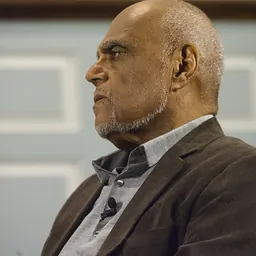

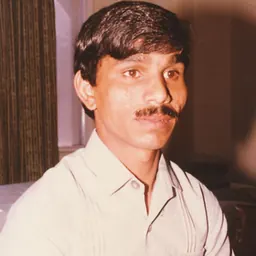



Contemporaries
People whose lives overlapped Gwen Patton's
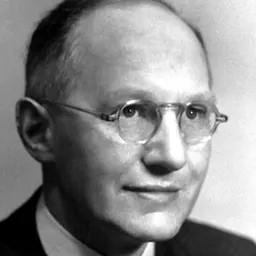

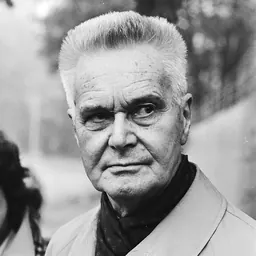

Frequently asked questions
Who was Gwen Patton?
activist and founder of National Association of Black Students (1943-2017)
When was Gwen Patton born?
Gwen Patton was born on 14 October 1943 in Detroit.
When did Gwen Patton die?
Gwen Patton died on 11 May 2017.
What was Gwen Patton's occupation?
Gwen Patton was an activist.
What nationality was Gwen Patton?
Gwen Patton was American.
Sources & further reading
Cite this page
APA: Biography.guide. (2026). Gwen Patton. https://biography.guide/gwen-patton/
MLA: "Gwen Patton." Biography.guide, https://biography.guide/gwen-patton/.
Chicago: "Gwen Patton." Biography.guide. https://biography.guide/gwen-patton/.
Data last updated: 2026-09-20 · Spot an error? Report a correction.
Page generated 2026-09-27 05:12 UTC