
About Guy Lombardo
Lived 1902 – 1977 (aged 75). Guy Lombardo was a Canadian and American conductor, bandleader, jazz musician, actor, violinist and aircraft pilot.
Early life Lombardo was born in London, Ontario, Canada. Gaetano Sr. was employed as a tailor but was also an amateur baritone singer. He encouraged four of his five young sons to study musical instruments so that they could serve as his accompanists. Consequently, even as a young student in grammar school, Lombardo joined with his brothers to form their first orchestra. Rehearsals took place behind the family's tailor shop. Lombardo's first public appearance with his brother Carmen occurred during an outdoor lawn party at a church in London, Ontario, in 1914. The Lombardo quartet made its first significant debut at an outdoor dance pavilion in Grand Bend, Ontario, during the summer of 1919. played lead saxophone in the distinctive four saxophone sound, led the reed section while also composing many songs, Lebert, who played lead trumpet, and subsequently Victor who played baritone sax. Guy played violin but not with his orchestra.
Royal Canadians Subsequently, Lombardo's orchestra recorded twice for Brunswick. The first session took place in Cleveland in late 1926 but the recording was rejected. The second recording was accepted for the Vocalion label in early 1927. Lombardo's ensemble left the Cleveland area in 1927 for Chicago, where it appeared at the Granada Cafe and broadcast on the radio station WBBM. Soon thereafter, several lucrative recording contracts emerged. Between 1927 and 1931 Lombardo made 45 recordings on 78's for the Columbia label. thumb
Between 1927 and 1954, Lombardo & His Royal Canadians sold well above 100 million records on all labels, including Columbia, Brunswick, Decca, and RCA Victor and estimates place his total worldwide record sales between 100 and 300 million copies. This figure makes the band one of the highest selling recording groups of all time, despite the low population base and family incomes of Lombardo's prime decades.
In 1929, Lombardo began a series of appearances at the Roosevelt Grill in the Roosevelt Hotel which lasted for over three decades. He also performed in Los Angeles during the 1930s, and became a naturalized citizen of the United States in 1938. He continued to tour in major cities within both Canada and the United States after leaving the Roosevelt Hotel in 1962. Yet, despite his success as a recording artist, some jazz critics described Lombardo's "sweet" big-band style as "boring, mainstream pap." The legendary jazz trumpeter Louis Armstrong disagreed and often described Lombardo's band as his favorite orchestra. In fact, Lombardo's band enjoyed remarkable broad appeal which crossed racial boundaries.
After Guy Lombardo's death in 1977, his surviving brothers Victor and Lebert took over the Royal Canadians, though Victor left the band early in 1978 over creative differences. From 1980, the name was franchised out to various band leaders. Lebert died in 1993, passing rights to the band name to three of his six children. The band was revived in 1989 by Al Pierson and remained active .
New Year's Eve radio and TV programs
Lombardo is perhaps best remembered for his big band remote broadcasts which were carried on several national radio and television networks for nearly fifty years. Starting in 1929, the Royal Canadians began broadcasting live from the Roosevelt Grill in the Roosevelt Hotel in New York City as "radio's first nationwide New Year's Eve broadcast". Invariably, each broadcast closed with Lombardo's rendition of the song Auld Lang Syne as part of the annual New Year's Eve tradition. The broadcasts proved to be immensely popular and continued from this venue until 1959 when they were transferred to the Grand Ballroom at the Waldorf Astoria Hotel where they continued until 1976. These radio and television broadcasts soon played a central role in New Year's celebrations across North America as millions of celebrants enjoyed the festivities within the comfort of their own homes.Time magazine even reported that the American public would simply not believe it was New Year's Day until Guy Lombardo heralded its arrival from the Waldorf-Astoria Hotel. Due to his widespread popularity, Lombardo was nicknamed "Mr. New Year's Eve" and received a citation of recognition from the United States Congress for his musical message of hope, peace and happiness for all mankind.
The band's first New Year's Eve radio broadcast was in 1929; within a few years, they were heard live on the CBS Radio Network before midnight Eastern Time, then on the NBC Radio Network after midnight. As a result, by 1954 Lombardo's popularity soared and sales of his recordings with the Royal Canadians Orchestra soon exceeded 100 million copies. He and the band played in Washington D.C. at the inaugural balls for every U.S. president from Franklin Roosevelt to Dwight Eisenhower, and the Royal Canadians would later play at Ronald Reagan's inaugural ball in 1985.
On December 31, 1956, the Lombardo's first New Year's TV special aired on the CBS network. The program showcased live segments from New York City's Times Square and continued on New Year's Eve for two decades. CBS continued to broadcast most of Lombardo's New Year's television specials on its national network between 1965 and 1970 and the special was also syndicated live to individual TV stations. By the mid-1970s, however, competition emerged for younger audiences who preferred Dick Clark's New Year's Rockin' Eve. Nevertheless, Lombardo remained popular among older viewers.
Following Lombardo's death in 1977, his New Year's TV specials continued for an additional two years on CBS. Subsequently, Dick Clark's New Year's Rockin' Eve came into prominence. The Royal Canadians' recording of the traditional song "Auld Lang Syne" is also played as the first song of the new year in Times Square followed by "Theme from New York, New York" by Frank Sinatra, "America the Beautiful" by Ray Charles, "What a Wonderful World" by Louis Armstrong, "Over the Rainbow" by Israel Kamakawiwoʻole, and Kenny G's rendition of "Auld Lang Syne". The 1979-80 edition of New Year's Eve with Guy Lombardo's Royal Canadians moved back to syndication and only featured the celebration at the Waldorf-Astoria Hotel, with nephew Bill Lombardo leading the band for the second year. Independent station WPIX in New York City was among the local stations that aired the final Royal Canadians' New Year's Eve special to air live on television.
In September 1994, PBS taped New Year’s Eve with Guy Lombardo and His Royal Canadians, a one-hour special that was a tribute to Lombardo with clips of previous Lombardo New Year's Eve specials. Albert Pizzamiglio, better known as Al Pierson, led the Royal Canadians for this special, which aired on December 31, 1994 (no live countdown leading into 1995 was featured). Gavin MacLeod (formerly of The Love Boat) was the emcee for the special, which was taped at the Manhattan Center Studios in New York City. It also doubled as a benefit for the deaf.
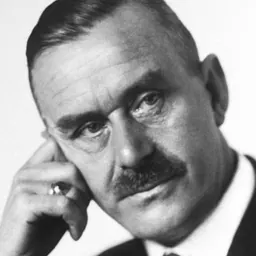
Other radio In the early 1940s Lombardo appeared as a guest on NBC's Red Network in the weekly broadcast of the "I'm An American" radio show. Presented by the United States Immigration and Naturalization Service, the program included interviews with prominent naturalized American citizens of diverse ethnic and cultural backgrounds who made exceptional contributions to American society within literature, politics, the arts and sciences. When asked to reflect upon the advantages of citizenship within America's democracy, Lombardo adeptly replied, "You don't have to be millionaires or even well-to-do to dance to good dance music in America". Also included among the honorees on the program were: Frank Capra, Albert Einstein, Thomas Mann and Kurt Weill.
Other television In 1954, Lombardo briefly hosted a half-hour syndicated series called The Guy Lombardo Show, and in 1956 Lombardo hosted a show on CBS for three months called Guy Lombardo's Diamond Jubilee.
Guy Lombardo played himself in the hit series Route 66 in the 1963 episode “But What Do You Do in March?” In 1975, Lombardo played himself again, in the first regular episode of Ellery Queen, "The Adventure of Auld Lang Syne," which was set at a Dec. 31, 1946 New Year's Eve gathering.
Film As early as 1933, Lombardo appeared with his brothers Carmen, Lebert and Victor performing in the film Rambling 'Round Radio Row for Warner Brothers' Vitaphone division. Lombardo and his orchestra were also part of the 1934 film Many Happy Returns.
Jones Beach Theater At the express invitation of Robert Moses, Lombardo served for two decades, as the impresario for numerous summer stock revivals of leading Broadway musicals at the Jones Beach Theater on the south shore of New York's Long Island. Beginning in 1954 with a production of "Arabian Nights" starring the operatic tenor Lauritz Melchior, Lombardo also collaborated with the producer Arnold Spector and choreographer June Taylor in 1964 to produce "Around the World in 80 Days" and continued to create opulent revivals of several Broadway musicals until 1977. He would often commute from his home in Freeport, Long Island to the lagoon adjacent to the theater on his yacht "The Tempo IV" to conduct his Royal Canadians Orchestra for dances in the Schaeffer Beer Tent after the shows.
Lombardo's productions at the seaside theater were noted for their glamorous and realistic waterborne set designs as well as their lush musical scores which were sometimes arranged by his brother Carmen. His early revival of "Song of Norway" in 1958 featured an actual iceberg floating down the lagoon toward the stage along with an authentic Viking ship. His 1961 rendition of the Hawaiian musical fantasy "Paradise Island" featured 32 native Hawaiian dancers diving off towers into the lagoon adjacent to the theater along with a 100 foot high waterfall. The 1965 production of "Mardis Gras" incorporated a floating set which ushered Louis Armstrong onstage for musical performances with his own band.
Over the decades, Lombardo also collaborated with leading musical artists in his revivals including: Nancy Dussault in the 1968 production of "South Pacific", Constance Towers in the 1970 production of "The Sound of Music". During the early years, members of Lombardo's fifteen original Royal Canadians were augmented by professional musicians recruited from the New York City area to serve within the pit orchestra as well as on stage. As a result, the orchestra itself often included between thirty and forty accomplished instrumentalists. In 1946, he piloted his speedboat "Tempo VI" to victory, winning the Gold Cup. For a time, Lombardo even reigned as the U.S. national champion (1946–1949), utilizing a boat designed specifically for him and manufactured by John L. Hacker. He subsequently achieved victory in several other important races including: the Ford Memorial competition (1948), President's Cup (1952) as well as the Silver Cup in 1952. By the late 1950s, Lombardo had won every trophy in the field and retired from active competition. These numerous achievements led to his induction into the Canadian Motorsport Hall of Fame in 2002. in accordance with a license from the Skagit Plastics Co. of La Conner, Washington. Several years later, however, in 1961 the project was abandoned and Skagit Plastics discontinued production.
Later in life, Lombardo retired near the seashore at his home on the south shore of New York's Long Island in Freeport, where he docked his speedboats:Tempo, Tempo VI, and Tempo VII. The home has been designated as a historical landmark. In keeping with his nautical interests, he also invested in a nearby seafood restaurant called "Liota's East Point House" that eventually became "Guy Lombardo's East Point House".
Personal life While playing at the Music Box in Cleveland, Lombardo met Lillibeth Glenn. They married in 1926.
Death On November 5, 1977, Lombardo died of a heart attack. Another source says he died "of a lung ailment" following heart surgery. A spokesman from the hospital said it was "respiratory insufficiency" relating to a pulmonary problem. His wife, who died in 1982, was at his bedside when he died in Houston Methodist Hospital.
Don’t just read it —
keep it.
Full-length biographies made to live with: read them, listen on the way to work, watch them tonight.
- E-book
- Audio
- Video
Instant download · yours to keep · every purchase keeps this site free
Important facts
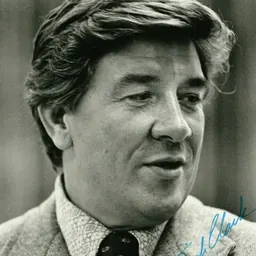
People in Guy Lombardo's life
Named in this biography and alive at the same time





Related people
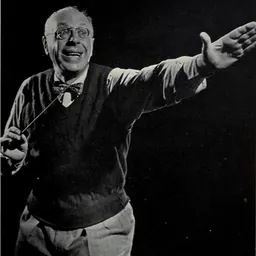
Same field, nearest in time



Contemporaries
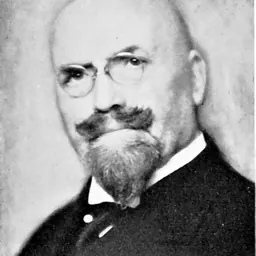
People whose lives overlapped Guy Lombardo's



Frequently asked questions
Who was Guy Lombardo?
Canadian-American bandleader
When was Guy Lombardo born?
Guy Lombardo was born on 19 June 1902 in London.
When did Guy Lombardo die?
Guy Lombardo died on 5 November 1977 in Houston.
What was Guy Lombardo's occupation?
Guy Lombardo was a conductor, bandleader, jazz musician, actor, violinist and aircraft pilot.
What nationality was Guy Lombardo?
Guy Lombardo was Canadian and American.
Sources & further reading
Cite this page
APA: Biography.guide. (2026). Guy Lombardo. https://biography.guide/guy-lombardo/
MLA: "Guy Lombardo." Biography.guide, https://biography.guide/guy-lombardo/.
Chicago: "Guy Lombardo." Biography.guide. https://biography.guide/guy-lombardo/.
Data last updated: 2026-09-26 · Spot an error? Report a correction.
Page generated 2026-09-27 05:15 UTC