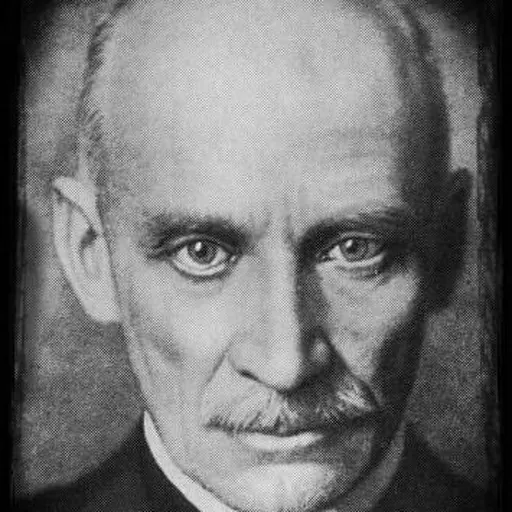
About Gustav Meyrink
Lived 1868 – 1932 (aged 64). Gustav Meyrink was an Austrian writer, translator, novelist, science fiction writer, playwright and screenwriter, known for The Golem (Meyrink).
Gustav Meyrink (19 January 1868 – 4 December 1932) was the pseudonym of Gustav Meyer, an Austrian author, novelist, dramatist, translator, and banker, most famous for his novel The Golem. He has been described as the "most respected German language writer in the field of supernatural fiction".
Childhood
Gustav Meyrink was born with the name Gustav Meyer in Vienna, Austria-Hungary (now Austria) on 19 January 1868. He was the illegitimate son of Baron Karl von Varnbüler und zu Hemmingen, a Württembergian minister, and actress Maria Wilhelmina Adelheid Meier. Meyrink was not, despite the statements of some of his contemporaries, of Jewish descent – this rumor arose due to a confusion of his mother with a Jewish woman of the same name.
Early works
During the 1900s Meyrink started publishing satiric short stories in the magazine Simplicissimus, signing them with his mother's surname. During spring 1903 Meyrink's first book, The Hot Soldier and Other Stories, was published. Approximately at the same time he relocated to Vienna. Almost immediately after his arrival he published another compilation of his short stories, The Orchid. Strange stories.
On 8 May 1905 Meyrink married Philomene Bernt, whom he had known since 1896. On 16 July 1906 his daughter Sybille Felizitas was born. On 17 January 1908, two days before Meyrink's fortieth birthday, the second son, Harro Fortunat, was born. Subsequently, the main character of the second Meyrink's novel The Green Face was given the same name. In 1908 the third compilation of short stories, Waxworks, was published.
Being in need of money, Meyrink started working as a translator, and he became a prolific one; during five years he managed to translate into German fifteen volumes of Charles Dickens, as well as work by Rudyard Kipling and Lafcadio Hearn. He continued translating until his death, including various occult works and even the Egyptian Book of the Dead. Meyrink also edited a series of books on the occult.
In 1911 Meyrink relocated with his family to the little Bavarian town Starnberg, and in 1913 the book Des deutschen Spießers Wunderhorn (The German Philistine's Magic Horn) was published in Munich. It was a compilation of short stories from the previous three books and several new ones; the title is a parody of Des Knaben Wunderhorn. Many of these stories had satirical styles, ridiculing institutions such as the army and the church; Austrian writer Karl Kraus would later describe Meyrink's work as combining "Buddhism with a dislike for the infantry".
Meyrink was opposed to World War I (then called the Great War), which caused him to be denounced by German nationalists; the German "Völkisch" journalist Albert Zimmermann (1873-1933) described Meyrink as "one of the cleverest and most dangerous opponents of the German nationalist ideal. He will influence – and corrupt – thousands upon thousands, just as Heine did". In 1916 Des deutschen Spießers Wunderhorn was banned in Austria. He is buried in Starnberg Cemetery.
Reputation Frenschkowski notes "like those of most other German and Austrian fantastic writers, his books were prohibited during the Nazi era". Later, Meyrink's work enjoyed a revival; Meyrink was discussed in a special edition of the French journal L'Herne (1976), and his work has been translated into Spanish, French, Russian, Portuguese, Dutch and English.
Don’t just read it —
keep it.
Full-length biographies made to live with: read them, listen on the way to work, watch them tonight.
- E-book
- Audio
- Video
Instant download · yours to keep · every purchase keeps this site free
Important facts
Family & relationships
People in Gustav Meyrink's life
Named in this biography and alive at the same time
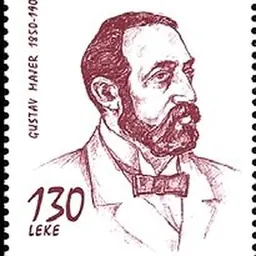
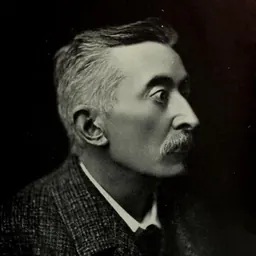
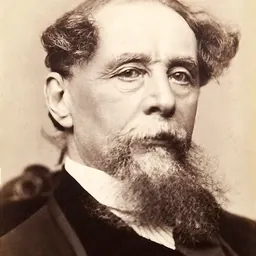


Related people
Same field, nearest in time

Contemporaries
People whose lives overlapped Gustav Meyrink's



Frequently asked questions
Who was Gustav Meyrink?
Austrian writer and translator (1868-1932)
When was Gustav Meyrink born?
Gustav Meyrink was born on 19 January 1868 in Vienna.
When did Gustav Meyrink die?
Gustav Meyrink died on 4 December 1932 in Starnberg.
What was Gustav Meyrink's occupation?
Gustav Meyrink was a writer, translator, novelist, science fiction writer, playwright and screenwriter.
What was Gustav Meyrink known for?
Gustav Meyrink was known for The Golem (Meyrink).
What nationality was Gustav Meyrink?
Gustav Meyrink was Austrian.
Sources & further reading
Cite this page
APA: Biography.guide. (2026). Gustav Meyrink. https://biography.guide/gustav-meyrink/
MLA: "Gustav Meyrink." Biography.guide, https://biography.guide/gustav-meyrink/.
Chicago: "Gustav Meyrink." Biography.guide. https://biography.guide/gustav-meyrink/.
Data last updated: 2026-09-22 · Spot an error? Report a correction.
Portrait: Wikimedia Commons · author & licence
Page generated 2026-09-27 05:04 UTC