
About Gustav Hilger
Lived 1886 – 1965 (aged 78). Gustav Hilger was a German diplomat and church historian.
Gustav Hilger (centre) at a meeting of Molotov and Hitler, Berlin, 1940. Gustav Arthur Hilger (September 11, 1886 – July 27, 1965) was a German diplomat and expert on the Soviet Union. He was best known for his role in German–Soviet relations during the interwar period as a counselor at the German embassy in Moscow. After World War II, he advised the United States and the West German governments on Soviet issues. Hilger worked under the CIA aliases Stephen H. Holcomb and Arthur T. Latter. Joseph Stalin said of Hilger: "German heads of state and German ambassadors to Moscow came and went - but Gustav Hilger remained".
Life Born in Moscow, the son of a German businessman, Hilger spent most of his life in Russia until 1941. After World War I and the Russian Civil War, Hilger advocated German rapprochement with the Soviet Union and helped negotiate closer economic ties and the Molotov–Ribbentrop Pact. In 1941, he warned Adolf Hitler and German Foreign Minister Joachim von Ribbentrop against invading the Soviet Union but to no effect. After Operation Barbarossa, Hilger was expelled from Russia and returned to Berlin, where he served as a deputy to Ribbentrop in the German Foreign Office.
In 1945, Hilger surrendered himself to allied occupation officials in Salzburg.
In 1953, he published The Incompatible Allies: A Memoir-History of German–Soviet Relations, 1918–1941 with support from the Russian Research Center of Harvard University.
Having acted as an unofficial envoy of Konrad Adenauer in Washington, Hilger returned in 1953 to West Germany, where he was a Counselor at the Foreign Office in Bonn until he retired in 1956. He then received a full pension for continuous civil service from 1923 to 1956. Hilger was awarded the Federal Cross of Merit in 1957, and he continued to provide informal advice to West German and American officials until his death in 1965.
Although Hilger was never prosecuted for war crimes or atrocities committed under the Third Reich, controversy has surrounded his complicity in the activities of the Foreign Office during the Nazi period and his postwar employment by the US and the West German governments.
Don’t just read it —
keep it.
Full-length biographies made to live with: read them, listen on the way to work, watch them tonight.
- E-book
- Audio
- Video
Instant download · yours to keep · every purchase keeps this site free
Important facts
People in Gustav Hilger's life
Named in this biography and alive at the same time

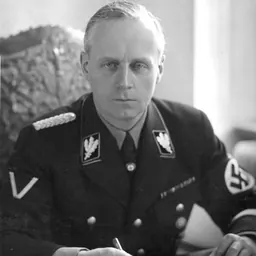
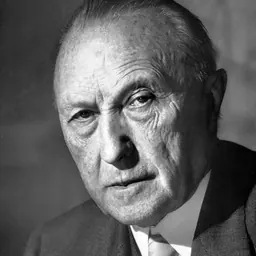
Related people
Same field, nearest in time
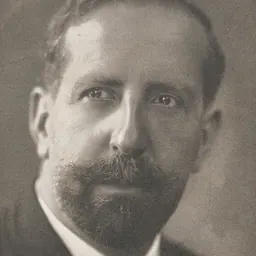
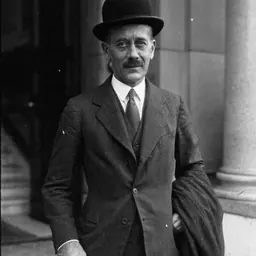

Contemporaries
People whose lives overlapped Gustav Hilger's






Frequently asked questions
Who was Gustav Hilger?
German diplomat
When was Gustav Hilger born?
Gustav Hilger was born on 10 September 1886 in Moscow.
When did Gustav Hilger die?
Gustav Hilger died on 27 July 1965 in Munich.
What was Gustav Hilger's occupation?
Gustav Hilger was a diplomat and church historian.
What nationality was Gustav Hilger?
Gustav Hilger was German.
Sources & further reading
Cite this page
APA: Biography.guide. (2026). Gustav Hilger. https://biography.guide/gustav-hilger/
MLA: "Gustav Hilger." Biography.guide, https://biography.guide/gustav-hilger/.
Chicago: "Gustav Hilger." Biography.guide. https://biography.guide/gustav-hilger/.
Data last updated: 2026-09-26 · Spot an error? Report a correction.
Page generated 2026-09-27 05:15 UTC