
Gürcü Hatun
Princess of Georgia, wife of Sultan Muhammad Ghias ud-din Kaikhushru II, Sultan of Konia
About Gürcü Hatun
Lived 1227 – 1286 (aged 58–59). Gürcü Hatun was a writer and royalty.
Tamar , also known as Gurju Khatun (; also Gürgü Hatun), was the daughter of Rusudan of Georgia and the Seljuk prince Ghias ad-Din Turkanshah. She was a royal princess of the Bagrationi dynasty and principal consort of the Sultanate of Rum as the favorite wife of sultan Kaykhusraw II, whom she married in 1237, after the death of Muhammad II of Khwarazm. After his death in 1246 she married the Anatolian strongman Mu'in al-Din Parwana. She was the mother of sultan Kayqubad II and patron to Rumi.
Her title Gurju Khatun means "Georgian Lady" in Turkic languages.
Biography Tamar was born to the Georgian Queen Rusudan and the Seljuk prince Ghias ad-Din, son of the ruler of Erzerum, Tughril Shah. Their marriage took place , and Ghias ad-Din had been baptized at Rusudan's request, an unprecedented event in the history of the Near East. Named after her grandmother, Queen Tamar I, she was described in the Georgian chronicles as being of sublime beauty. Tamar had a younger brother, David. Rusudan was also raising Tamar's cousin, also named David, the illegitimate son of King George IV, who was next in the line of succession and, despite his illegitimacy, was preferred by some nobles.
The raids conducted by Kayqubad I, the Seljuk sultan of Rum, into Georgian lands alarmed the Georgian queen Rusudan, who sent a letter to the sultan. Among other matters, she offered her daughter Tamar — "of the line of the Seljuks, of the line of David" — in marriage to Kayqubad's son, Kaykhusraw. An agreement was reached, but the wedding took place only after the sultan's death. The vizier Shehabeddin Kermani traveled to Tbilisi bearing gifts, and once preparations were completed, the bridal procession departed for Konya.
Upon reaching Erzincan, Shehabeddin informed the groom, now the reigning sultan, and preparations began in Kayseri. When the bride arrived, a magnificent wedding ceremony was held. This occurred in 1237, when Tamar was about thirteen years old. According to the Centennial Chronicle (Anonymous Chronicle of the 14th century, part of the Kartlis Tskhovreba), Rusudan granted her the city of Atskuri, including its church and fortress, as her dowry.
Kaykhusraw and Tamar's marriage was a political one. Nevertheless, Tamar became his favored wife and bore the prestigious title Malikat al-Malikat ("Queen of Queens"). Among the Turks she was known as Gurju Khatun ("the Georgian Lady"). She spent most of her life in Kayseri.
According to Tamara Talbot Rice, Tamar exerted considerable influence over her husband. Kaykhusraw who was much affectionate to her minted coins depicting himself as a lion and Tamar as a rising sun with a woman's face.
Rusudan married off her daughter on the condition that Tamar would not be compelled to accept Islam, and Kaykhusraw agreed to this promise. Tamar "came from her country wearing Christian garments, accompanied by a catholicos, holy men, and priests of the Church," as well as Georgian attendants. Her cousin David traveled with her as well.
According to the Centennial Chronicle, Rusudan later wrote to her son-in-law Kaykhusraw and to her daughter, urging them to kill David. She died in 1286 at age 65-66 and is buried in Erzurum Kalesi in modern-day Turkey. Her tomb has been recently discovered as reported by Georgian Ambassador Plenipotentiary as in 2019.
Marriages Following a diplomatic peace settlement between the Kingdom of Georgia and the Sultanate of Rum, the approximately 13-year-old princess Tamar arrived at the Seljuk court in Konya in 1237 to wed Sultan Kaykhusraw II. Upon her marriage, she converted to Islam and adopted the name Gurju Khatun (meaning "Georgian Lady"). Despite the marriage being a political one, she rapidly emerged as Kaykhusraw II's favorite consort and was elevated to the premier status of Malikat al-Malikat (Queen of Queens). and a daughter.
Following Kaykhusraw II's death in 1246 and the subsequent execution of her son, Gurju Khatun's position at court destabilized, culminating in a secondary political marriage to the powerful Seljuk grand vizier and regent, Mu'in al-Din Suleyman Parwana. Unlike her first union, contemporary accounts portray this second marriage as a deeply unhappy, forced domestic arrangement. According to the 14th-century chronicler Ahmed Eflâkî, the Parwana's strict, orthodox religious disposition clashed severely with Gurju Khatun's independent wealth and her profound devotion to the unorthodox, mystic Sufi circles of Jalal al-Din Rumi. Eflâkî details numerous instances of bitter marital strife, recording that the Parwana routinely grew jealous of her absolute reverence for Rumi and tried to restrict her financial patronage of the Mevlevi order, though she successfully used her residual royal status to resist his domestic control until his execution by the Mongols in 1277.
Issue The marriage between Gurju Khatun and Sultan Kaykhusraw II produced two children: Ala al-Din Kayqubad II, who later ruled as a triumvirate Sultan of the divided Seljuk realm. Aynu'l-Hayat Khatun: A prominent princess frequently identified in medieval Sufi biographies by her honorific court titles, Hundi Khatun or Havendzâde. According to contemporary accounts by the 14th-century biographer Ahmed Eflâkî in his Menâkıbü'l-Ârifîn, Aynu'l-Hayat Khatun closely mirrored her mother’s famous spiritual devotion to the Mevlevi Sufi order. Following the political upheaval and Mongol invasions that disrupted invasions that disrupted central Anatolia in 1277, Gurju Khatun arranged for Aynu'l-Hayat to be relocated safely eastward to Erzurum—a region tied to the ancestral lands of her paternal family line. Settled in Erzurum, Aynu'l-Hayat Khatun utilized her independent royal status and wealth to operate as an elite institutional patron, funding and sustaining the local Mevlevi dervish networks and maintaining direct ties with Rumi's grandson, Ulu Arif Çelebi.
Don’t just read it —
keep it.
Full-length biographies made to live with: read them, listen on the way to work, watch them tonight.
- E-book
- Audio
- Video
Instant download · yours to keep · every purchase keeps this site free
Important facts
People in Gürcü Hatun's life
Named in this biography and alive at the same time
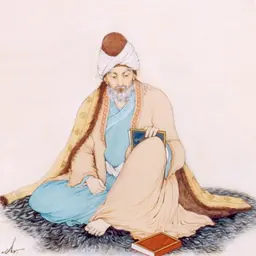

Related people
Same field, nearest in time
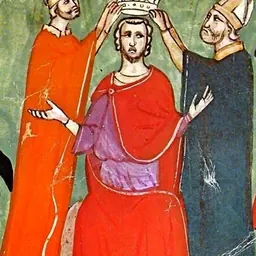

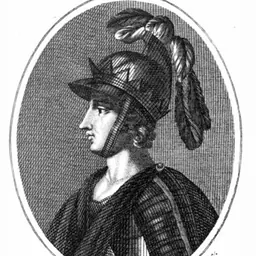


Contemporaries
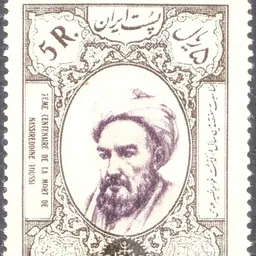
People whose lives overlapped Gürcü Hatun's

Frequently asked questions
Who was Gürcü Hatun?
princess of Georgia, wife of Sultan Muhammad Ghias ud-din Kaikhushru II, Sultan of Konia
When was Gürcü Hatun born?
Gürcü Hatun was born in 1227 in Kingdom of Georgia.
When did Gürcü Hatun die?
Gürcü Hatun died in 1286.
What was Gürcü Hatun's occupation?
Gürcü Hatun was a writer and royalty.
What nationality was Gürcü Hatun?
Gürcü Hatun's recorded nationality: Sultanate of Rum.
Sources & further reading
· DBpedia: Tamar (daughter of Rusudan of Georgia)
Cite this page
APA: Biography.guide. (2026). Gürcü Hatun. https://biography.guide/gurcu-hatun/
MLA: "Gürcü Hatun." Biography.guide, https://biography.guide/gurcu-hatun/.
Chicago: "Gürcü Hatun." Biography.guide. https://biography.guide/gurcu-hatun/.
Data last updated: 2026-09-25 · Spot an error? Report a correction.
Page generated 2026-09-27 05:12 UTC