
About Günther Messner
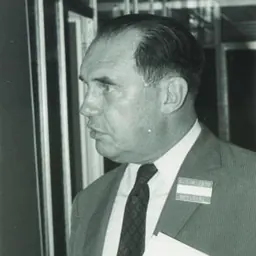
Lived 1946 – 1970 (aged 24). Günther Messner was an Italian explorer and mountaineer.
This article has been translated from German into English, from the German version of Wikipedia.
Günther Messner (18 May 1946 – 29 June 1970) was an Italian mountaineer from South Tyrol and the younger brother of Reinhold Messner. Günther climbed some of the most difficult routes in the Alps during the 1960s, and joined the Nanga Parbat-Expedition in 1970 just before the beginning of the expedition due to an opening within the team.
Death on Nanga Parbat Günther was a member of a 1970 expedition to Nanga Parbat led by Karl Herrligkoffer. Herrligkoffer had already organized six expeditions to Nanga Parbat and was said to be obsessed with the mountain after his half-brother, climber Willy Merkl, along with eight others, died on the peak in 1934.
What happened next was a matter of controversy for many years. According to Reinhold, the two brothers stayed near the summit overnight in an emergency bivouac (with only space blankets) close to the so-called Merkle-notch (named in honor of Herrligkoffer's half brother) since a night descent seemed impossible on the Rupal face due to Günther's exhaustion and altitude sickness. Reinhold states that Günther worried that reversing down the sheer Rupal Face would be dangerous. He says that Günther suggested a descent via the gentler Diamir Face.
The expedition members Max von Kienlin and Hans Saler claimed that Reinhold declined the assistance of others when his brother Günther became ill. The main assertion by Hans Saler and Max von Kienlin was that Reinhold's decision to go down the Diamir face was not born of emergency, as suggested by Günther in his fatigue, but a gambit Reinhold had planned and had openly discussed with members of the team. Reinhold's version of events was that "He (Günther) had to get lower. We couldn't continue along the southwest ridge either, because it is very long and up and down. And we couldn't wait for the others to come, because they couldn't have gotten to us until the following morning, and another day and night at that altitude would have been fatal for Günther. That left only the Diamir Face". Reinhold was subsequently widely quoted as saying "We had a choice between waiting for death and going out to meet it".
Remains and controversy
For the next 30 years the dispute over the events of this expedition became possibly the most controversial fight in modern-day climbing. The dispute spawned more than a dozen lawsuits, countless attacks and counterattacks, a revenge theory (stemming from a post-expedition love affair between Reinhold Messner and von Kienlin's wife), and numerous efforts by Reinhold to find Günther and vindicate himself.
In July 2000, climber Hanspeter Eisendle found a human fibula at the base of the Diamir wall of Nanga Parbat. Due to the decomposition of the DNA, it could not be definitively determined at that time whether the bone belonged to Günther Messner — it was possible that the bone could have come from climbers who died on the mountain in 1962. A subsequent analysis at the University of Innsbruck strongly suggested that the fibula was Günther Messner's.
On 17 July 2005, three local Pakistani guides found the remains of a climber at an altitude of 4,300 metres on the Diamir face, an hour's climb above the Diamir base camp, near where Reinhold had believed Günther was lost. A search of the talus yielded a leather boot entombing a wool-socked foot, and clothing that the climbers quickly realized could be from the body of Günther Messner. Reinhold trekked to the spot and recognised the boot (a brown leather Lowa Triple Boot) and jacket on the body as those of his brother. Reinhold took the boot with him, with the bones still inside. The expedition doctor, Munich-based anesthesiologist Rudolf Hipp, harvested tissue samples for the DNA testing.
Despite the undisputed DNA evidence, controversy persists. Residual argument revolves largely around whether Günther perished in a fall near the summit, upper or middle part of the Diamir Face, versus toward the bottom, where Reinhold said he had last seen his brother. The argument is based on glacial movement over a period of 35 years and the location where the remains were found. Saler has asserted that if Günther had died in the lower third of the face (as described by Reinhold) then the remains would have been found much lower than 14,110 feet (where they were reportedly recovered). The existence of a disputed handwritten note described in the 2003 book by von Kienlin, The Traverse, was allegedly a "confession" recorded by von Kienlin documenting a conversation between Reinhold and von Kienlin in a motel room in Gilgit, Pakistan, before they both returned home. The note says that "I lost Günther" and "For hours I was up there yelling for him. I don't know why, but he couldn't hear me. He was doing very badly. He didn't make it. Maybe he fell."
In June 2022, Pakistani locals found the second shoe belonging to Günther. A picture of the same was also posted by Reinhold on Instagram.
Funeral On 8 September 2005, the remains were burned at the foot of Nanga Parbat on a pyre in Tibetan tradition. Also borrowing from Tibetan tradition, Reinhold and his expedition team of 14 trekkers and two journalists built a chorten, a square-shaped stack of stones, as a monument. The participants sang "yelo Lak, the gods were merciful," and threw rice into the air.
Don’t just read it —
keep it.
Full-length biographies made to live with: read them, listen on the way to work, watch them tonight.
- E-book
- Audio
- Video
Instant download · yours to keep · every purchase keeps this site free
Important facts
People in Günther Messner's life
Named in this biography and alive at the same time


Related people
Same field, nearest in time




Contemporaries
People whose lives overlapped Günther Messner's


Frequently asked questions
Who was Günther Messner?
Italian mountain climber (1946-1970)
When was Günther Messner born?
Günther Messner was born on 18 May 1946 in Brixen.
When did Günther Messner die?
Günther Messner died on 29 June 1970 in Nanga Parbat.
What was Günther Messner's occupation?
Günther Messner was an explorer and mountaineer.
What nationality was Günther Messner?
Günther Messner was Italian.
Sources & further reading
Cite this page
APA: Biography.guide. (2026). Günther Messner. https://biography.guide/gunther-messner/
MLA: "Günther Messner." Biography.guide, https://biography.guide/gunther-messner/.
Chicago: "Günther Messner." Biography.guide. https://biography.guide/gunther-messner/.
Data last updated: 2026-09-20 · Spot an error? Report a correction.
Page generated 2026-09-27 05:25 UTC