
About Günther Jahn
Lived 1930 – 2015 (aged 85). Günther Jahn was a German politician.
Günther Jahn (9 January 1930 – 29 October 2015) was an East German economist, politician and functionary of the Free German Youth (FDJ) and the Socialist Unity Party (SED).
Originally a socialist economist working on Walter Ulbricht's New Economic System, Jahn eventually became First Secretary of the FDJ and later First Secretary of the Bezirk Potsdam SED. Though not known for straying from the party line, he was the first high-ranking SED official to call on Erich Honecker to resign during the Peaceful Revolution.
Life and career Early career Günther Jahn was born in Erfurt on 9 January 1930. His father was the locksmith and Communist Party of Germany (KPD) functionary Hermann Jahn. He was a member of the Jungvolk and the Hitler Youth from 1940 to 1945. After the war, in 1946, he joined the Free German Youth (FDJ) and the KPD. He became a member of the Socialist Unity Party (SED) following the KPD's forced merger with the SPD later that year. He obtained his Abitur in 1948 from the Humboldt School in Erfurt and began studying economics at the University of Jena, graduating in 1952 from the University of Economics Berlin with a diploma in economics (Dipl.-Ök.).
He had already been made a full member of the Central Committee of the SED in April (VII. Party Congress) and joined the Volkskammer in July, then Potsdam and its suburbs.
During his time as the top FDJ official, he was informally mocked as "Jubel-Jahn" due to his impulsive exclamations like "Long live international solidarity" at political events.
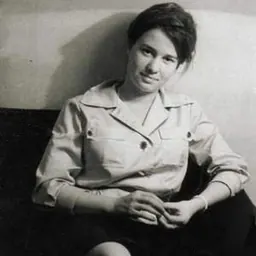
On 17 August 1970, Red Army Faction terrorist Ulrike Meinhof asked for a meeting with Jahn. Though not granted, the attempt marked the beginning of the GDR's covert support of the RAF and their members.
Bezirk Potsdam SED career
Jahn retired as First Secretary of the FDJ in January 1974 and was succeeded by Egon Krenz. He joined the Bezirk Potsdam SED as Second Secretary later that year, rising to First Secretary in January 1976 after longtime incumbent Werner Wittig surprisingly died. At the same time, artists also feared backlash from him regarding political content. For example, Jahn made sure a political satire was stopped to be played in 1989.
Peaceful Revolution Though initially opposed to dialogue with demonstrators and reforms, On 15 November 1989, he resigned as First Secretary, and in December of the same year, he resigned alongside the entire SED Central Committee.
After the Peaceful Revolution, Jahn went into retirement, refusing to give interviews.
Don’t just read it —
keep it.
Full-length biographies made to live with: read them, listen on the way to work, watch them tonight.
- E-book
- Audio
- Video
Instant download · yours to keep · every purchase keeps this site free
Important facts
People in Günther Jahn's life
Named in this biography and alive at the same time


Related people
Same field, nearest in time






Contemporaries
People whose lives overlapped Günther Jahn's

Frequently asked questions
Who was Günther Jahn?
German politician (1930-2015)
When was Günther Jahn born?
Günther Jahn was born on 9 January 1930 in Erfurt.
When did Günther Jahn die?
Günther Jahn died on 29 October 2015 in Fichtenwalde.
What was Günther Jahn's occupation?
Günther Jahn was a politician.
What nationality was Günther Jahn?
Günther Jahn was German.
Sources & further reading
Cite this page
APA: Biography.guide. (2026). Günther Jahn. https://biography.guide/gunther-jahn/
MLA: "Günther Jahn." Biography.guide, https://biography.guide/gunther-jahn/.
Chicago: "Günther Jahn." Biography.guide. https://biography.guide/gunther-jahn/.
Data last updated: 2026-09-20 · Spot an error? Report a correction.
Page generated 2026-09-27 05:34 UTC