
Guillermo Díaz-Plaja
Spanish literary critic and historian
About Guillermo Díaz-Plaja
Lived 1909 – 1984 (aged 75). Guillermo Díaz-Plaja was a Spanish literary critic, historian, writer, art historian, philologist and essayist.
Guillermo Diaz-Plaja Contestí (24 May 1909 – 27 July 1984) was a Spanish literary critic, historian, essayist, and poet.
Biography Guillermo Díaz Plaja was born in Manresa, the son of an army officer, on 25 May 1909. A few weeks later, the family moved to Barcelona. Here he studied at the Colegio de Escuelas Pías, and in Girona, where he spent his adolescence, with the Marist Brothers. He began his studies of Philosophy and Letters at the University of Barcelona when he was living in Lleida, taking the exams as an external student in the first year. Since 1927, by which time he was already established in the city of Barcelona, he was an official student. His university colleagues included Miquel Batllori, Carlos Clavería, Juan Ramón Masoliver and Ana Maria Saavedra. He graduated in 1930 with academic excellence, and went to Madrid the following year to get a doctorate at the Central University, where he was a disciple of, among other teachers, Ramón Menéndez Pidal.
In 1932 he started his career as a teacher at the Institut Escola de Barcelona. At just 26 years old, he won the National Prize for Literature for Introducción al estudio del Romanticismo español (Madrid, Espasa-Calpe, 1936) He was professor at the Jaime Balmes Institute since 1935 and professor at the University School of Business Studies of the University of Barcelona from 1972 until his retirement in 1979.
He was professor at the San Jorge Superior School of Fine Arts and at the Barcelona Provincial Council's School of Commerce, also in that city. He directed the Barcelona Theater Institute from 1939 to 1970 and the Spanish National Book Institute from 1966 to 1970. He belonged to the CSIC, the Royal Spanish Academy and the Reial Acadèmia de Bones Lletres de Barcelona, and the Association of Spanish Writers and Artists from 1979 until 1984. He was a Doctor Honoris Causa of the Universities of San Marcos in Peru (1973), of Cuyo in Argentina (1981), He analyzed the work of relevant authors of Spanish poetry, such as Federico García Lorca, Juan Ramón Jiménez and Valle Inclán. His works on the figure of Eugenio d'Ors deserve special attention. Other literary activities included the creation of anthologies, magazine management, text editing and the coordination of works. In the latter field, his Historia general de las literaturas hispánicas stands out. In this work the studies on the various Spanish literatures carried out by the most accredited specialists are integrated. His didactic work, carried out in universities and from textbooks, trained several generations of Spanish and Hispanic students.
Parallel to his literary studies, he worked in four other major fields: first, there are his autobiographical works, such as his Memoria de una generación destruid (1966); made up of essays on countries from the five continents and, finally, poetry. Regarding his work in the Catalan language, his early studies on cinema or the avant-garde, his poetic work, and his role as a bridge in the dialogue of Spanish cultures deserve special attention.
Major works History of literature Historia General de las Literaturas Hispánicas, Barcelona, Editorial Barna, 1949-1967 (seis vols). Hispanoamérica en su Literatura, Estella, Editorial Salvat, 1970 (Biblioteca Básica Salvat, volumen 67).
Editing Gustavo Adolfo Bécquer, Obras, Barcelona, Vergara, 1962.
Poetry Primer cuaderno de sonetos, Cádiz, Col. Isla (Graf. Salvador Repeto), 1941. Las elegías de Granada, Madrid, Fantasía, 1945. Intimidad, Barcelona, Las ediciones de la Espiga, 1946. Vacación de estío, Madrid, Col. Adonais, 1948. Cartas de navegar, Madrid, Afrodisio Aguado, 1949. Vencedor de mi muerte, Madrid, Ínsula, 1953 (Prólogo de Paul Claudel). Los adioses, Barcelona, Las Ediciones de la Espiga, 1962. Belén lírico, Málaga, Librería Anticuaria El Guadalhorce, 1966. La soledad caminante, Poemas de América del Norte, Málaga, Ángel Caffarena, 1965. El arco bajo las estrellas, Barcelona, Las Ediciones de San Jorge, 1965. Les claus, Barcelona, Les Edicions de l’Espiga, 1965 La soledad caminante, Poemas del Norte de América, Málaga, Librería Anticuaria El Guadalhorce, 1966. Zoo, Málaga, Librería Anticuaria El Guadalhorce, 1966. Poesía junta, Buenos Aires, Losada, 1967. América vibra en mí, Madrid, Cultura Hispánica, 1969. Las llaves, Santander, La isla de los ratones, 1972. Poemas de Oceanía, León, Editorial de la Institución Fray Bernardino de Sahagún, 1972. Poesía en 30 años (1941-1971), Barcelona, Plaza y Janés, 1972. Poemas en el mar de Grecia, Salamanca, Álamo, 1973. Poemas y Canciones del Brasil, Madrid, Cultura Hispánica, 1974. Conciencia del otoño, Madrid, Oriens, 1975. Atlas lírico, Barcelona, Plaza y Janés, 1978.
Essays Epistolario de Goya, Barcelona, Editoria Mentora, 1928. L'avantguardisme a Catalunya, Barcelona, Publicaciones La Revista, 1932. Rubén Darío, Barcelona, Sociedad General de Publicaciones, 1930. Introducción al estudio del romanticismo español, Madrid, Espasa Calpe, 1936. La poesía lírica española, Barcelona, Labor, 1937. La ventana de papel (ensayos sobre el fenómeno literario), Barcelona, Apolo, 1939. El espíritu del Barroco, Barcelona, Apolo, 1940. La poesía y el pensamiento de Ramón de Basterra, Barcelona, Juventud, 1941. Hacia un concepto de la literatura española, Buenos Aires, Espasa Calpe, 1942. El engaño de los ojos, Barcelona, Destino, 1943. Historia de la Literatura Española, Barcelona, La Espiga, Esquema de la historia del teatro, Barcelona, Instituto del Teatro, 1944. Federico García Lorca, Buenos Aires, Guillermo Kraft, 1948. Modernismo frente a noventa y ocho, Madrid, Espasa Calpe, 1951. Defensa de la crítica y otras notas, Barcelona, Editorial Barna, 1953. Veinte glosas en memoria de Eugenio d'Ors, Barcelona, Sección de prensa de la Diputación de Barcelona, 1955. El estilo de San Ignacio y otras páginas, Barcelona, Noguer, 1956. Cuestión de límites, Madrid, Revista de Occidente, 1963. El estudio de la literatura, Barcelona, Sayma, 1963. Las estéticas de Valle Inclán, Madrid, Gredos, 1965. Memoria de una generación destruida (1930-1936), Barcelona, Delos-Aymá S.L., 1966 Los monstruos y otras literaturas, Barcelona, Plaza y Janés, 1967. La letra y el instante, Madrid, Editora Nacional, 1967. Con variado rumbo, Barcelona, Planeta, 1967. África por la cintura, Barcelona, Juventud, 1967. La linterna intermitente: anotaciones a la actualidad cultural, Madrid, Prensa Española, 1967. Trópicos, Valencia, Prometeo, 1968. La literatura universal, Barcelona, Danae, 1968. Soliloquio y coloquio: notas sobre lírica y teatro, Madrid, Gredos, 1968. Tratado de las melancolías españolas, Madrid, Sala, 1975. En torno a Azorín: obra selecta temática, Madrid, Espasa-Calpe, 1975. Estructura y sentido del Novecentismo Español, Madrid, Alianza Editorial, 1975. España en sus espejos, Barcelona, Plaza Janes, 1977. El combate por la luz, Madrid, Espasa Calpe, 1981.
Anthologies Antología mayor de la literatura española, Barcelona, Labor, 1958-1961. Tesoro breve de las letras hispánicas. Madrid, Emesa, 1968-1979.
Autobiographical writings Papers d´Identitat, Barcelona, Ediciones La Espiga, 1959. Memoria de una generación destruida, Barcelona, Delos Aymá, 1966. Retrato de un escritor, Barcelona, Pomaire, 1978.
Don’t just read it —
keep it.
Full-length biographies made to live with: read them, listen on the way to work, watch them tonight.
- E-book
- Audio
- Video
Instant download · yours to keep · every purchase keeps this site free
Important facts
People in Guillermo Díaz-Plaja's life
Named in this biography and alive at the same time
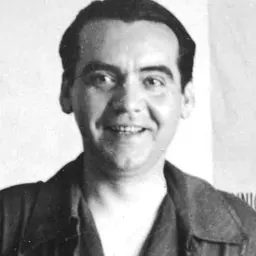



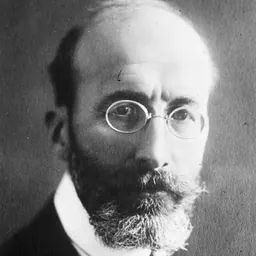
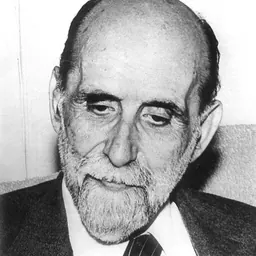

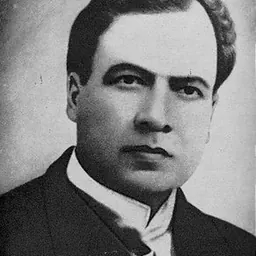
Related people
Same field, nearest in time


Contemporaries
People whose lives overlapped Guillermo Díaz-Plaja's


Frequently asked questions
Who was Guillermo Díaz-Plaja?
Spanish literary critic and historian (1909–1984)
When was Guillermo Díaz-Plaja born?
Guillermo Díaz-Plaja was born on 24 May 1909 in Manresa.
When did Guillermo Díaz-Plaja die?
Guillermo Díaz-Plaja died on 27 July 1984 in Barcelona.
What was Guillermo Díaz-Plaja's occupation?
Guillermo Díaz-Plaja was a literary critic, historian, writer, art historian, philologist and essayist.
What nationality was Guillermo Díaz-Plaja?
Guillermo Díaz-Plaja was Spanish.
Sources & further reading
· Wikipedia: Guillermo Díaz-Plaja
· DBpedia: Guillermo Díaz-Plaja
Cite this page
APA: Biography.guide. (2026). Guillermo Díaz-Plaja. https://biography.guide/guillermo-diaz-plaja/
MLA: "Guillermo Díaz-Plaja." Biography.guide, https://biography.guide/guillermo-diaz-plaja/.
Chicago: "Guillermo Díaz-Plaja." Biography.guide. https://biography.guide/guillermo-diaz-plaja/.
Data last updated: 2026-09-20 · Spot an error? Report a correction.
Page generated 2026-09-27 05:29 UTC