
About Guillaume Lekeu
Lived 1870 – 1894 (aged 24). Guillaume Lekeu was a Belgian composer.
Jean Joseph Nicolas Guillaume Lekeu (; 20 January 1870 – 21 January 1894) was a Belgian composer.
Life Lekeu was born in Heusy, a village near Verviers, Belgium. He originally studied piano and music theory under Alphonse Voss, the director of the brass band at the local conservatory. In 1879, his parents moved to Poitiers, France. especially chamber music, and studied harmony and violin from 1887 under Octave Grisard.
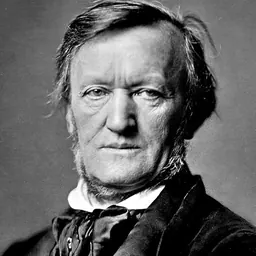
In June 1888, his family moved to Paris where he began to study philosophy. He was introduced to the works of Téodor de Wyzewa and continued his studies under Gaston Vallin. In August 1889, he travelled to Bayreuth to see the operas of Richard Wagner. On his return, he studied counterpoint and fugue privately with César Franck.
Lekeu contracted typhoid fever from a contaminated sorbet in October 1893. He died in his parents' home in Angers on 21 January 1894, the day after his 24th birthday. On 26 January 1894, he was buried in a small cemetery in Heusy.
His style, prophetic of early-twentieth-century avant-garde French composers like Satie and Milhaud, was influenced by Franck, Wagner and (especially in the Trio) Beethoven, though these influences did not manifest themselves as mere imitation. In general, Lekeu is regarded as a highly talented composer whose death cut short a promising musical career.
Compositions
Lekeu composed about 50 works and left a number of unfinished compositions at the time of his death. Two of these, a Cello Sonata and his Piano Quartet, were completed by d'Indy. All have been recorded at least once, and several of them more than once, notably the Violin Sonata in G Major and the Piano Trio in C minor. The first time the Piano Sonata in G minor was completely performed live was by pianist Paweł Albiński in Kraków, Poland on 20 August 2014.
Significant works
Choral Chant lyrique, for chorus & orchestra (poem by Lamartine) (1891) Andromède. Poème lyrique et symphonique, cantata (in 2 acts) for soprano, tenor, baritone, and bass soloists, chorus, and orchestra (text by Jules Sauvenière) (1891)
Songs Two poems of Lamartine, for voice & piano (1887) La Fenêtre de la maison paternelle Les Pavots Two songs with words by Lekeu, for voice & piano (1889) Quelque antique et lente danse L'ombre plus dense Chanson de Mai, song for voice & piano (text by Jean Lekeu) (1891) Plainte d'Andromède, for soprano & piano sextet (string quartet and doublebass) (1892) Trois Poèmes, for voice & piano (also arr. for unaccompanied soprano) (words by Lekeu) (1892) Sur une tombe Ronde Nocturne (also arr. for mezzo-soprano & piano quintet)
Orchestra Introduction symphonique aux Burgraves (Overture after Victor Hugo's Les Burgraves) (2 movements), for orchestra (1889) Barberine, Prélude (Prélude au 2e acte) (Prelude to Act II of the opera Barberine), for orchestra (1889) Chant de triomphale délivrance, Étude symphonique (Première Étude symphonique), for orchestra (1889–90) Hamlet. Étude symphonique (Deuxième Étude symphonique) (Hamlet et Ophélie), for orchestra (2 mvts) (1890) I. Hamlet II. Ophélie Les Fleurs pâles du souvenir, Adagio pour quatuor d'orchestre, for string orchestra (with violin solo) (1891) Fantaisie sur deux airs populaires angevins (Fantasy on two Angers folktunes), for orchestra (also for piano 4-hands) (1892)
Concertante and ensemble works Fantaisie contrapuntique sur un cramignon liégeois (Contrapuntal fantasy on the Liège Cramignon), for chamber orchestra (with choreography for the individual musicians) (1890) Épithalame, for organ & string orchestra (with 3 trombones) (1891) Larghetto, for cello & string orchestra (with 2 horns & bassoon) (1892) Introduction et Adagio pour tuba et orchestre d'harmonie (tuba & wind orchestra) (1892)
Chamber music Quatuor (String Quartet) in G major, (in 6 mvts) (1888) Sonate (Cello Sonata) in F major (in 4 descriptive mvts) (1888) Trio pour piano, violon et violoncelle (Trio à clavier) (Piano Trio) in C minor (in 4 mvts) (1889–91) Sonate pour piano et violon (Violin Sonata) in G major (in 3 mvts) (1892–93) Quatuor a clavier (Piano Quartet) in B minor (2 mvts) (1892–94)
Piano Berceuse et Valse (Pot-pourri), for piano (1887) Morceaux égoïstes, for piano (7 pieces) (1887–88) Morceau (a fantasia on a Cramignon or Walloon folk dance melody), for piano 4-hands (1889) Sonate (Piano Sonata) in G minor (in 5 mvts) (1891) 3 Pièces, for piano (1892) Chansonette sans paroles Valse oubliée Danse joyeuse
Don’t just read it —
keep it.
Full-length biographies made to live with: read them, listen on the way to work, watch them tonight.
- E-book
- Audio
- Video
Instant download · yours to keep · every purchase keeps this site free
Important facts
People in Guillaume Lekeu's life
Named in this biography and alive at the same time


Related people
Same field, nearest in time



Contemporaries
People whose lives overlapped Guillaume Lekeu's


Frequently asked questions
Who was Guillaume Lekeu?
Belgian composer (1870-1894)
When was Guillaume Lekeu born?
Guillaume Lekeu was born on 20 January 1870 in Verviers.
When did Guillaume Lekeu die?
Guillaume Lekeu died on 21 January 1894 in Angers.
What was Guillaume Lekeu's occupation?
Guillaume Lekeu was a composer.
What nationality was Guillaume Lekeu?
Guillaume Lekeu was Belgian.
Sources & further reading
Cite this page
APA: Biography.guide. (2026). Guillaume Lekeu. https://biography.guide/guillaume-lekeu/
MLA: "Guillaume Lekeu." Biography.guide, https://biography.guide/guillaume-lekeu/.
Chicago: "Guillaume Lekeu." Biography.guide. https://biography.guide/guillaume-lekeu/.
Data last updated: 2026-09-20 · Spot an error? Report a correction.
Page generated 2026-09-27 05:34 UTC