Guðrøðr Rǫgnvaldsson
King of the Isles
About Guðrøðr Rǫgnvaldsson
Lived 1200 – 1231.
Guðrøðr Rǫgnvaldsson (died 1231), also known as Guðrøðr Dond, was a thirteenth-century ruler of the Kingdom of the Isles. He was a member of the Crovan dynasty, and a son of Rǫgnvaldr Guðrøðarson, King of the Isles, the eldest son of Guðrøðr Óláfsson, King of Dublin and the Isles. Although the latter may have intended for his younger son, Óláfr, to succeed to the kingship, the Islesmen instead settled upon Rǫgnvaldr, who went on to rule the Kingdom of the Isles for almost forty years. The bitterly disputed royal succession divided the Crovan dynasty for three generations, and played a central role in Guðrøðr's recorded life.
Guðrøðr's mother was Rǫgnvaldr's wife. Whilst the name of this woman is unknown, she appears to have been a member of the Clann Somhairle kindred. Although Rǫgnvaldr was able to orchestrate a marriage between Óláfr and her sister, Óláfr was able to oversee the nullification of this alliance and proceeded to marry the daughter of a leading Scottish magnate. In consequence, Guðrøðr's mother ordered her son to attack Óláfr. Although Guðrøðr is recorded to have ravaged Óláfr's lands on Lewis and Harris, the latter was able to escape to the protection of his father-in-law on the Scottish mainland. In about 1223, Óláfr, and his adherent Páll Bálkason, invaded Skye, defeated Guðrøðr, and blinded and castrated him.
Guðrøðr's maiming marks a turning point in the feud between Rǫgnvaldr and Óláfr. With the escalation of hostilities, Rǫgnvaldr bound himself to Alan fitz Roland, Lord of Galloway. Although Rǫgnvaldr was greatly aided by Alan's military might, Óláfr eventually gained the upper hand, and Rǫgnvaldr was slain in 1229. Afterwards, Alan and his Clann Somhairle allies continued to pressure Óláfr, forcing him from the Isles to Norway where news of the continual warfare had already reached Hákon Hákonarson, King of Norway. As a result, Hákon elevated an apparent Clann Somhairle dynast, a certain Óspakr, as King of the Isles, and outfitted him with a fleet to secure control of the Isles.
Guðrøðr seems to have been one of Óspakr's principal supporters, and accompanied him in the ensuing campaign that reached the Isles in 1230. Óspakr seems to have died from injuries sustained in the midst of the operation after which command fell to Óláfr. Although the latter proceeded to divert the fleet to Mann where he was reinstalled as king, Guðrøðr was recognised as king of the Hebridean portion of the realm. The following year, after the Norwegians vacated the Isles, both Guðrøðr and Páll are reported to have been killed. Although Óláfr consolidated control of the entirety of the Crovan dynasty's realm, ruling it for the rest of his life, Guðrøðr's son, Haraldr, continued the dynastic feud with Óláfr's successors, and temporarily held the kingship at the midpoint of the century.
Antecessors
Guðrøðr was a son of Rǫgnvaldr Guðrøðarson, King of the Isles, and a member of the Crovan dynasty. Guðrøðr's mother was Rǫgnvaldr's wife, a woman who is styled Queen of the Isles by the thirteenth- to fourteenth-century Chronicle of Mann. Although her parentage is uncertain, the chronicle describes her father as a nobleman from Kintyre, which suggests that he was a member of Clann Somhairle. Rǫgnvaldr was a son of Guðrøðr Óláfsson, King of Dublin and the Isles. Other children of this ruler include Affrica, Ívarr, Óláfr, a daughter whose name is unknown, and possibly a son named Ruaidhrí.
Whilst Óláfr's mother was Fionnghuala Nic Lochlainn, an Irishwoman whose marriage to Guðrøðr Óláfsson was formalised (at about the time of Óláfr's birth) in 1176/1177, Rǫgnvaldr's mother appears to have been another Irishwoman named Sadbh. When Guðrøðr Óláfsson died in 1187, the chronicle reports that he left instructions for Óláfr to succeed to the kingship since the latter had been born "in lawful wedlock". Whether this is an accurate record of events is uncertain, as the Islesmen are stated to have chosen Rǫgnvaldr to rule instead, because unlike Óláfr, who was only a child at the time, Rǫgnvaldr was a hardy young man fully capable to reign as king. The fact that Rǫgnvaldr and Óláfr had different mothers may well explain the intense conflict between the two men in the years that followed. This continuing kin-strife is one of the main themes of Rǫgnvaldr's long reign.
At some point after assuming control of the kingdom, the chronicle reports that Rǫgnvaldr gave Óláfr possession of a certain island called "". Whilst the name of this island appears to refer to Lewis—the northerly half of the Outer Hebridean island of Lewis and Harris—the chronicle's text seems to instead refer to Harris—the southerly half. In any case, the chronicle further relates that Óláfr later confronted Rǫgnvaldr for a larger share of the realm, after which Rǫgnvaldr had him seized and sent to William I, King of Scotland, who kept him imprisoned for almost seven years until about the time of the latter's death in 1214. Since William died in December 1214, Óláfr's incarceration appears to have spanned between about 1207/1208 and 1214/1215. Upon Óláfr's release, the chronicle reveals that the half-brothers met on Mann, after which Óláfr set off on a pilgrimage to Santiago de Compostela.
Scandinavian sojourn
In 1210, Rǫgnvaldr appears to have found himself the target of renewed Norwegian hegemony in the Isles. Specifically, the Icelandic annals reveal that a military expedition from Norway to the Isles was in preparation in 1209. The following year, the same source makes note of "warfare" in the Isles, and specifies that the holy island of Iona was pillaged. These reports are corroborated by Bǫglunga sǫgur, a thirteenth-century saga-collection that survives in two versions. Both versions reveal that a fleet of Norwegians plundered in the Isles, and the shorter version notes how men of the Birkibeinar and the Baglar—two competing sides of the Norwegian civil war—decided to recoup their financial losses with a twelve-ship raiding expedition into the Isles. The longer version states that "" (styled "") and "" (styled "") had not paid their taxes due to the Norwegian kings. In consequence, the source records that the Isles were ravaged until the two travelled to Norway and reconciled themselves with Ingi Bárðarson, King of Norway, whereupon the two took their lands from Ingi as a (fief).
The name of Ingi Bárðarson as it appears on folio 139v of AM 47 fol (Eirspennill): "". The thirteenth-century kings of Norway were nominal overlords of the kings of the Isles.
The two submitting monarchs of the saga most likely represent Rǫgnvaldr and Guðrøðr. #tag:ref|Another possibility is that the two named kings instead refer to Rǫgnvaldr's like-named first cousin, Raghnall mac Somhairle, and Rǫgnvaldr himself. This identification rests on the fact that Raghnall and Rǫgnvaldr bore the same personal names —the Gaelic is an equivalent of the Old Norse —coupled with the possibility that the source's "" is the result of confusion regarding Rǫgnvaldr's patronym. and the simultaneous weakening of the Crovan dynasty due to internal infighting. The destructive Norwegian activity in the Isles may have been some sort of officially sanctioned punishment from Norway due to Rǫgnvaldr's recalcitrance in terms of, not only his Norwegian obligations, but his recent reorientation towards the English Crown. The fact that Ingi turned his attention to the Isles so soon after peace was brokered in Norway may well indicate the importance that he placed on his relations with Rǫgnvaldr and his contemporaries in the Isles. There is reason to suspect that Óláfr had earlier approached Ingi in an attempt to garner support in gaining his perceived birthright before Rǫgnvaldr was able to have Óláfr imprisoned by the Scots. With Óláfr thus neutralised, Rǫgnvaldr could well have submitted to the Norwegian Crown in the context of further securing his hold of the kingship. In any event, the albeit confused titles accorded to Rǫgnvaldr and Guðrøðr by the saga seem to reveal that Guðrøðr possessed some degree of power in the Isles by the early thirteenth century.
Kin-strife
Upon Óláfr's return from his pilgrimage, the chronicle records that Rǫgnvaldr had Óláfr marry "", the sister of his own wife. Rǫgnvaldr then granted back to Óláfr, where the newlyweds proceeded to live until the arrival of Reginald, Bishop of the Isles. The chronicle claims that the bishop disapproved of the marriage on the grounds that Óláfr had formerly had a concubine who was a cousin of Lauon. A synod was then assembled, after which the marriage is stated to have been nullified. Although the chronicle alleges that Óláfr's marriage was doomed for being within a prohibited degree of kinship, there is reason to suspect that the real reason for its demise was the animosity between the half-brothers. Once freed from his arranged marriage, Óláfr proceeded to marry Cairistíona, daughter of Fearchar mac an tSagairt, a man closely aligned with Alexander II, King of Scotland.
The royal title of Lauon's sister—Guðrøðr's mother—as it appears on folio 42v of British Library Cotton Julius A VII: "" ("Queen of the Isles"). Almost nothing is known of queenship in the Isles.
If the chronicle is to be believed, Óláfr's separation from Lauon enraged her sister—the wife of Rǫgnvaldr and mother of Guðrøðr—who surreptitiously tricked Guðrøðr into attacking Óláfr in 1223. Following what he thought were his father's orders, Guðrøðr gathered a force on Skye —where he was evidently based —and proceeded to , where he is reported to have laid waste to most of the island. Óláfr is said to have only narrowly escaped with a few men, and to have fled to the protection of his father-in-law on the mainland in Ross. Óláfr is stated to have been followed into exile by Páll Bálkason, a on Skye who refused to take up arms against him. #tag:ref|The chronicle describes Páll as a . This Latin term has been translated into English as "sheriff", but may represent a Scandinavian title. It is possible that the term is utilised as a result of English and Scottish influences in the Isles. In any case, the chronicle's account of Páll reveals that he was an important figure in the Isles—describing him as a "vigorous and powerful man throughout the kingdom" —and appears to indicate that he acted as a royal representative on Skye. This location may be identical to Skeabost Island in the mouth of the river Snizort . Another possibility is that the isle in question is the now-landlocked island of Eilean Chaluim Chille in the Kilmuir district . This island once sat in Loch Chaluim Chille before the loch was drained of water and turned into a meadow. There is archaeological evidence to suggest that a fortified site sat on another island in the loch, and that this islet was connected to the monastic island by a causeway. If correct, the fortification could account for Guðrøðr's presence near an ecclesiastical site. According to the chronicle, Óláfr's forces consisted of five boats, and encircled the island after having launched from the opposite shore two from it. This distance, about , suggests that the island is more likely Eilean Chaluim Chille than Skeabost Island, as the former appears to have sat between and from the surrounding shores of Loch Chaluim Chille. In any case, in consequence of the defeat, Guðrøðr's captured followers were put to death, whilst Guðrøðr himself was blinded and castrated. Certainly, the chronicle's account seems to suggest that Óláfr accumulated his forces whilst sheltering in Ross. Although the chronicle maintains that Óláfr was unable to prevent this torture, and specifically identifies Páll as the instigator of the act, the Icelandic annals record that Óláfr was indeed responsible for his nephew's plight, and make no mention of Páll.
Escalation of warfare
The seal of Alan fitz Roland, Rǫgnvaldr's ally against Óláfr.
In 1224, the year following Guðrøðr's defeat, the chronicle reveals that Óláfr took hostages from the leading men of the Hebridean portion of the realm, and confronted Rǫgnvaldr on Mann directly. It was then agreed that the kingdom would be split between the two: with Rǫgnvaldr keeping Mann itself along with the title of king, and Óláfr retaining the a share in the Hebrides. With Óláfr's rise at Rǫgnvaldr expense, the latter turned to Alan fitz Roland, Lord of Galloway, one of Scotland's most powerful magnates. Whilst the pair are elsewhere stated to have campaigned in the Hebrides, the chronicle recounts that their operations came to nought because the Manx were unwilling to battle against Óláfr and the Hebrideans.
Detail from Maughold IV, a Manx runestone displaying a contemporary sailing vessel. The power of the kings of the Isles lay in their armed galley fleets.
A short time later, perhaps in about 1225 or 1226, the chronicle reveals that Rǫgnvaldr oversaw the marriage of a daughter of his to Alan's young illegitimate son, Thomas. Unfortunately for Rǫgnvaldr, this marital alliance appears to have cost him the kingship, since the Manxmen are further reported to have had him removed from power and replaced with Óláfr. The recorded resentment of the union could indicate that Alan's son was intended to eventually succeed Rǫgnvaldr, who had reigned for almost forty years and was perhaps about sixty years-old at the time, and whose grandchildren were presumably still very young. Since Thomas was likely little more than a teenager at the time, it may well have been obvious to contemporary observers that Alan was the one who would hold the real power in the kingdom.
Tynwald Hill, near St John's may have been a national assembly site of the Kingdom of the Isles. Tynwald was the site of the final conflict between Óláfr and Rǫgnvaldr. It may well have been the place where the Islesmen publicly inaugurated their kings, proclaimed new laws, and resolved disputes.
At this low point of his career, the deposed Rǫgnvaldr appears to have gone into exile at Alan's court in Galloway. In 1228, whilst Óláfr and his chieftains were absent in Hebrides, Rǫgnvaldr, Alan, and (Alan's brother) Thomas fitz Roland seized control of Mann. Suffering serious setbacks at the hands of his opponents, Óláfr reached out for English assistance against his half-brother, and eventually regained possession of the island. In what was likely early January 1229, Rǫgnvaldr successfully invaded Mann. According to the chronicle, Rǫgnvaldr and Óláfr led their armies to Tynwald, where Rǫgnvaldr's forces were routed with Rǫgnvaldr amongst the slain. Although the latter's fall is laconically corroborated by the Icelandic annals, other sources appear to suggest that his death was due to treachery. The fourteenth-century Chronicle of Lanercost, for example, states that Rǫgnvaldr "fell a victim to the arms of the wicked"; whilst the Chronicle of Mann notes that, although Óláfr grieved at his half-brother's death, he never exacted vengeance upon his killers.
Invasion of the Isles
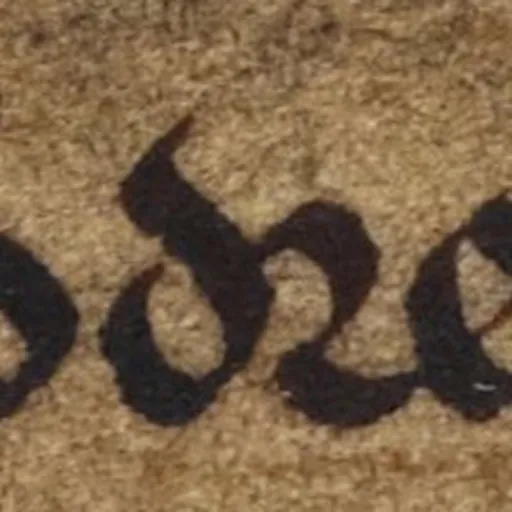
Guðrøðr's name and epithet as it appears on folio 44v of British Library Cotton Julius A VII: "". The epithet refers to the colour brown.
The death of Alan's ally did not deter Gallovidian interests in the Isles. In fact, it is apparent that Alan and members of the Clann Dubhghaill branch of Clann Somhairle upheld pressure upon Óláfr. Reports of open warfare in the Isles reached the royal court of Hákon Hákonarson, King of Norway in the summer of 1229. The thirteenth-century Hákonar saga Hákonarsonar specifically singles out Alan as one of the principal perpetrators of unrest in the Isles, along with several members of Clann Somhairle: Dubhghall mac Dubhghaill, Donnchadh mac Dubhghaill, and a certain Somhairle. Although Óláfr arrived at the Norwegian court early in 1230, having been forced from the Isles by Alan and his allies, it is evident that Hákon had already decided upon a course of action.
The name of Óspakr-Hákon, an apparent Clann Somhairle dynast, as it appears on folio 163v of AM 47 fol: "".
The Icelandic annals, the Chronicle of Mann, the saga, and the Chronicle of Lanercost all reveal that Hákon handed over the kingship of the Isles to Óspakr, an apparent member of Clann Dubhghaill who had long served outside the Isles in Norway. Other Islesmen in Norway before Óláfr's arrival were Páll and Guðrøðr, #tag:ref|Whilst this man is probably identical to Guðrøðr, there is reason to suspect that he could have been an otherwise unrecorded like-named brother. For example, it is only at about this point that the Chronicle of Mann accords Guðrøðr an epithet. Guðrøðr is accorded several epithets by numerous sources. For instance, the chronicle gives , an epithet derived from the Gaelic ("brown"), and means "brown" or "brown-haired". Such names partly evidence the significant Gaelic influence upon the Scandinavian aristocracy of the Isles. Hákonar saga Hákonarsonar accords Guðrøðr an epithet meaning "black". Whether this source has confused the Gaelic for ("black"), or confused Guðrøðr with another man, is unknown. Much like the saga, the Sleat History identifies Guðrøðr as "the black". Within days of Óláfr's arrival in Norway, the saga reveals that Óspakr's fleet set sail for the Isles, and swelled in number after reaching Orkney. Whilst the Eirspennill version of the saga numbers the fleet in Norway at twelve ships, the Flateyjarbók, Frísbók, and Skálholtsbók versions give the number eleven; and whilst the former version relates that the fleet gained twenty ships from Orkney, the latter three versions state that the fleet numbered twenty when it left Orkney. #tag:ref|Hákonar saga Hákonarsonar exists in several mediaevel redactions. The most authoritative of these is the Eirspennill version. Whilst the fleet was Orkney, the saga reports that a detachment of ships, led by Páll's son, Bálki, and a certain Óttarr Snækollr, journeyed to Skye where they fought and killed Þórkell Þórmóðarson, in what may have been the culmination of a family feud. If word of Óspakr's royal fleet had not reached Alan and the Scots at the time of its arrival at Orkney, news of it could well have been passed on from Fearchar when the Islesmen clashed at Skye.
Ruinous Rothesay Castle. According to saga accounts, Óspakr's forces attacked the castle's soft stone walls, whilst the Scots poured boiling pitch down upon them. Later in the century, the castle appears to have undergone considerable reconstructional enhancement.
News of the gathering Norwegian fleet soon reached Alexander II, who appears to have made straight for the western coast, diverting his attention to the now rapidly developing crisis. On 28 May, Alan is recorded in Alexander II's presence at Ayr, where the Scottish royal forces appear to have assembled. It was probably May or June when Óspakr's fleet rounded the Mull of Kintyre, entered the Firth of Clyde, and made landfall on Bute, where his forces successfully stormed and captured a fortress that is almost certainly identical to Rothesay Castle. The Flateyjarbók, Frísbók, and Skálholtsbók versions of the saga specify that the castle fell after three days of battle, and that three hundred Norwegians and Islesmen fell in the assault. By this stage in the campaign, the fleet is stated to have reached a size of eighty ships, a tally which may indicate that Óspakr's fighting force numbered over three thousand men. Reports that Alan was in the vicinity, at the command of a massive fleet, are stated to have forced the Norwegians to withdraw to Kintyre. Whilst the Eirspennill version of the saga numbers Alan's fleet at almost two hundred ships, the Flateyjarbók, Frísbók, and Skálholtsbók versions give a tally of one hundred and fifty. These totals suggest that Alan commanded a force of two thousand or three thousand men.
Coat of arms of Hákon Hákonarson as depicted on folio 216v of Cambridge Corpus Christi College Parker Library 16II (Chronica majora).
Having withdrawn his fleet to Kintyre, Óspakr took ill and died, presumably succumbing to injuries sustained from the assault on Bute. According to the saga, the king's death was bitterly lamented amongst his followers. In consequence of Óspakr's fall, the Chronicle of Lanercost, the Chronicle of Mann, and the saga reveal that command of the fleet was assumed by Óláfr, who successfully eluded Alan's forces, and capitalised upon the situation by diverting the armada to Mann. Although Óláfr succeeded in being reinstated as king after overwhelming some initial opposition, he was nevertheless forced to partition the realm with Guðrøðr, who took up kingship in the Hebrides.
Despite Óspakr's elevation as king, it is uncertain how Hákon envisioned the governance of the Kingdom of the Isles. On one hand, it is possible that Hákon intended for Óspakr and Guðrøðr to divide the kingdom at Óláfr's expense. On the other hand, the fact that Óláfr's struggle against Alan and Clann Somhairle is acclaimed by the saga could be evidence that Hákon did not intend to replace Óláfr with Óspakr. Instead, Hákon may have planned for Óspakr to reign over the sprawling domain of Clann Somhairle as a way to ensure the kindred's obedience. Óspakr's prospective realm, therefore, seems to have comprised Argyll, Kintyre, and the Inner Hebrides. If correct, the fleet's primary design would appear to have been the procurement of Óspakr's domain, whilst a secondary objective—adopted very late in the campaign—seems to have been the restoration of Óláfr on Mann.
Don’t just read it —
keep it.
Full-length biographies made to live with: read them, listen on the way to work, watch them tonight.
- E-book
- Audio
- Video
Instant download · yours to keep · every purchase keeps this site free
Important facts
more
Godfrey Donn, Godred Don, Godred Dond, Godred the Brown-haired, Guðrøð the Black, Guðrøðr Don, Guðrøðr Dond, Godred Ranaldson, Godred Rognvaldsson, Guðrøð Rǫgnvaldsson, Guðrøðr Rögnvaldarson, Guðrǫðr Rǫgnvaldsson, Gofraid, Gofraid Donn, Godfrey the Black, Guðrøðr 'Don'People in Guðrøðr Rǫgnvaldsson's life
Named in this biography and alive at the same time
Contemporaries
People whose lives overlapped Guðrøðr Rǫgnvaldsson's





Frequently asked questions
Who was Guðrøðr Rǫgnvaldsson?
King of the Isles
When was Guðrøðr Rǫgnvaldsson born?
Guðrøðr Rǫgnvaldsson was born in 1200.
When did Guðrøðr Rǫgnvaldsson die?
Guðrøðr Rǫgnvaldsson died in 1231 in Isle of Lewis.
Sources & further reading
· Wikipedia: Guðrøðr Rǫgnvaldsson
· DBpedia: Guðrøðr Rǫgnvaldsson
Cite this page
APA: Biography.guide. (2026). Guðrøðr Rǫgnvaldsson. https://biography.guide/gudrodr-rognvaldsson/
MLA: "Guðrøðr Rǫgnvaldsson." Biography.guide, https://biography.guide/gudrodr-rognvaldsson/.
Chicago: "Guðrøðr Rǫgnvaldsson." Biography.guide. https://biography.guide/gudrodr-rognvaldsson/.
Data last updated: 2026-09-20 · Spot an error? Report a correction.
Portrait: Wikimedia Commons · author & licence
Page generated 2026-09-27 04:57 UTC