
About Grigory Langsdorff
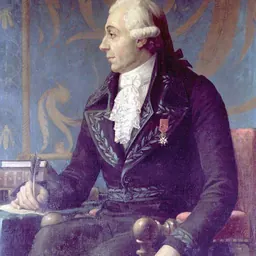
Lived 1774 – 1852 (aged 78). Grigory Langsdorff was a German explorer, writer, naturalist, botanist, physician and diplomat.
Georg Heinrich Freiherr von Langsdorff (8 April 1774 – 9 June 1852) was a German naturalist and explorer, as well as a Russian diplomat, better known by his Russian name, Grigori Ivanovich Langsdorf.
He was a naturalist and physician on the First Russian circumnavigation from 1803 to 1806. Later Langsdorff was nominated consul general of Russia in Rio de Janeiro, Brazil. From there he organized expeditions to Minas Gerais (1813 to 1820) and the Langsdorff Expedition to the Amazon rainforest, which lasted from 1825 to 1829.
Life Georg Heinrich Langsdorff was born in April 1774 at Wöllstein, in the Electoral Palatinate, Holy Roman Empire. He studied medicine and natural history at the University of Göttingen, Germany, under Johann Friedrich Blumenbach and graduated with a doctorate in medicine and surgery in 1797.
That same year he accompanied Christian August, Prince of Waldeck and Pyrmont, Field Marshal of the Portuguese land army, to Lisbon. However, after Prince Christian died in 1798, he set up a private medical practice, and subsequently accepted the post of surgeon to English troops in Portugal. After the Treaty of Amiens he visited London and Paris, and returned to Göttingen.
He was appointed a member and correspondent of the Russian Imperial Academy of Sciences on 29 January 1803. He requested to join the scientific crew of the First Russian voyage of circumnavigation but received a polite rejection letter; the expedition's ships would take on board the official naturalist at Copenhagen. The day he received the letter he left Göttingen and reached Copenhagen in seven days, where the Russian ships were still docked. He implored with ambassador to Japan Nikolai Rezanov, and supported by Captain Adam Johann von Krusenstern, his petition to join the expedition was granted.
Brazil
In 1813 Langsdorff was nominated consul general of Russia in Rio de Janeiro, Brazil. He acquired a farm (named "Mandioca", or manioc) in the north of Rio and collected plants, animals and minerals. He hosted and entertained foreign naturalists and scientists, such as Johann Baptist von Spix (1781–1826) and Carl Friedrich Philipp von Martius (1794–1868), and explored the flora, fauna and geography of the province of Minas Gerais with French naturalist Augustin Saint-Hilaire from 1813 to 1820.
The Langsdorff Expedition
In 1821 he proposed to the Tsar Alexander I and to the Academy of Sciences to lead an ambitious exploratory and scientific expedition from São Paulo to Pará, in the Amazon, via a fluvial route. In March 1822, he returned to Rio in the company of scientists Édouard Ménétries (1802–1861), Ludwig Riedel (1761–1861), Christian Hasse and (1799–1874), who would take care of zoological, botanical, astronomical and cartographical observations during the expedition. With the aim of illustrating and documenting his findings, the Baron hired painters Hércules Florence, Johann Moritz Rugendas and Adrien Taunay. The inventor of the bicycle Karl von Drais was also a participant in the expedition.
After extensive preparations, the Langsdorff Expedition departed with 40 people and 7 boats from Porto Feliz, by the Tietê River on 22 June 1826 and reached Cuiabá, in Mato Grosso on 30 January 1827. The expedition was then divided into two groups: the first one, with Langsdorff and Florence, was able to reach Santarém on the Amazon River on 1 July 1828, with enormous difficulties and suffering. Most of the members of the expedition became ill with tropical fevers (most probably yellow fever), including the Baron de Langsdorff. As a consequence of the febrile attacks, he became insane at the Juruena River in May 1828. Adrien Taunay died by drowning in the Guaporé River and Rugendas abandoned the expedition before its fluvial phase. Therefore, only Florence remained during the whole expedition. The expedition was joined again in Belém and returned by ship to Rio de Janeiro, arriving on 13 March 1829, almost three years and 6,000 km after its departure.
Huge scientific collections were deposited into Kunstkamera and later formed basis for South American collections of Russian museums. However, the rich scientific records of the expedition, comprising many descriptions and discoveries in zoology, botany, mineralogy, medicine, linguistics and ethnography, that were sent to Saint Petersburg by the expedition, were not published and were lost in the archives for a century. They were found again by Soviet researchers in funds of the USSR Academy of Sciences archive in 1930. Due to the travel's hardships, Langsdorff team was unable to collect many biological specimens or study them in detail, so most of their account is geographic and ethnographic, being particularly interesting on the many indigenous people of Brazil they met, many of which became extinct. Today, a large part of the material has been recovered and is in the Ethographic Museum, the Zoological Museum and in the repositories of the Academy of Sciences of St. Petersburg.
Langsdorff returned to Europe shortly after the Langsdorff Expedition to the Amazon, and died in Freiburg, Germany, of typhus, in 1852.
A recent study found that Langsdorff has 1,500 descendants in Brazil, among them the most famous is Luma de Oliveira, a Brazilian carnival queen.
Legacy A species of venomous South American coral snake, Micrurus langsdorffi, is named in his honor.
The fish Carassius langsdorfii Temminck & Schlegel 1846 is named after him.
Media A film documentary, featuring Adriana Florence, a great-great-granddaughter of Hércules Florence living in Campinas, Brazil, has been made by the Discovery Channel and retraces part of the expedition's itinerary. It also visited St. Petersburg's Langsdorff museum collections. The director was Mauricio Dias.
Don’t just read it —
keep it.
Full-length biographies made to live with: read them, listen on the way to work, watch them tonight.
- E-book
- Audio
- Video
Instant download · yours to keep · every purchase keeps this site free
Important facts
more
G.H. Langsdorff, Langsd.People in Grigory Langsdorff's life
Named in this biography and alive at the same time
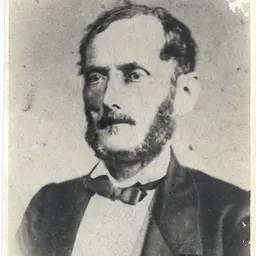

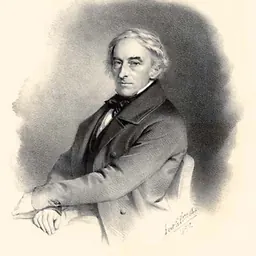
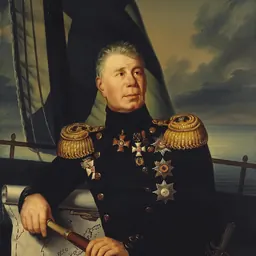

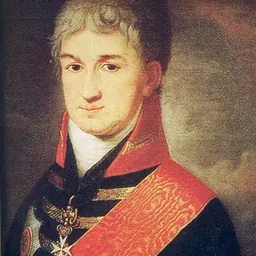
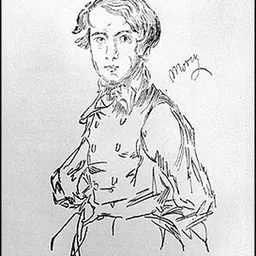
Related people
Same field, nearest in time


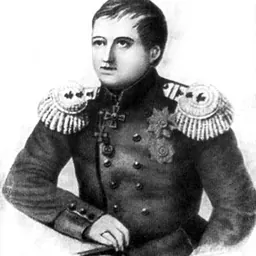
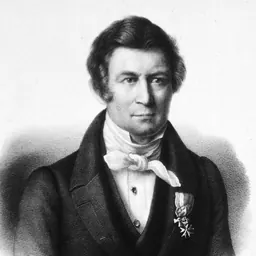
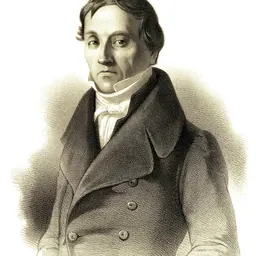
Contemporaries
People whose lives overlapped Grigory Langsdorff's


Frequently asked questions
Who was Grigory Langsdorff?
Russian-German naturalist and explorer (1774-1852)
When was Grigory Langsdorff born?
Grigory Langsdorff was born on 18 April 1774 in Wöllstein.
When did Grigory Langsdorff die?
Grigory Langsdorff died on 29 June 1852 in Freiburg im Breisgau.
What was Grigory Langsdorff's occupation?
Grigory Langsdorff was an explorer, writer, naturalist, botanist, physician and diplomat.
What nationality was Grigory Langsdorff?
Grigory Langsdorff was German.
Sources & further reading
· Wikipedia: Grigory Langsdorff
· DBpedia: Georg von Langsdorff
Cite this page
APA: Biography.guide. (2026). Grigory Langsdorff. https://biography.guide/grigory-langsdorff/
MLA: "Grigory Langsdorff." Biography.guide, https://biography.guide/grigory-langsdorff/.
Chicago: "Grigory Langsdorff." Biography.guide. https://biography.guide/grigory-langsdorff/.
Data last updated: 2026-09-26 · Spot an error? Report a correction.
Page generated 2026-09-27 05:14 UTC