
About Grigor Syuni
Lived 1876 – 1939 (aged 63). Grigor Syuni was a Russian composer, musicologist, musician and conductor.
Grikor Mirzaian Suni (; originally Grikor Mirzaian, also Grigor; September 10, 1876 – December 18, 1939) was an Armenian composer and choirmaster.
In his hometown of Shushi, Suni became famous for his musical talents and organized his first concert. This would get him in trouble with Russian authorities forcing his chorus out of Shushi where they went on to spread Armenian cultural music around the world. Suni was an instrumental figure in establishing the national identity of Armenian music and considered one of the many founders of modern Armenian music.
Biography
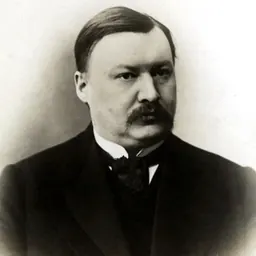
Grikor Suni came from a family of Armenian meliks (princes) from Syunik. He was the son of the singer and miniaturist Hovhannes Varandetsi and the grandson of the once famous ashug (folk singer) Melik Hovhannes Mirzabekyan. Suni spent much of his childhood in Shushi where he first started to study music. There in the regionally famous Armenian Khandamiryan theater, he gave his first concert with his chorus composed of folk songs he collected from the region. With the money he made from the concert, he moved to St. Petersburg, where he studied music from 1895 to 1904 with Nikolai Rimsky-Korsakov, Alexander Glazunov and Anatoly Lyadov. Following this, he lived periodically in Tehran before returning back to Tbilisi in 1921.
Music and legacy
The work of Grikor Suni developed in two directions of Armenian music: folk music and Opera. The music written by Suni - choral works, songs, several operas, symphonic and piano compositions - are examples of Armenian classical music based on the traditions of Armenian folk and the musical culture of the Armenian church. The composer collected Armenian folklore material both in Armenia and in the territory of modern-day Turkey and Iran. His opera Asli and Kyaram is based on Middle Eastern folk legend. In 1907, through the efforts of the Armenian Dramatic Society, the operetta Aregnazan was staged in Tiflis (Tbilisi). Suni's music evoked a lot of folk symbolism such as in his work Alagyaz (Ալագյազ) where he draws a relationship to the melody and the mountainside of the Aragats mountains for which the song is named. His musical works influenced the direction of Armenian music in the early 20th century towards a harmonic and polyphonic style and the construction of Armenian national identity in Armenian music.
Political activity Suni was known as an outspoken politician figure during his time. At a young age, Suni was influenced by socialist ideals spreading in the Russian Empire. Initially, Suni was part of the Armenian Revolutionary Federation, the Dashnaktsutyun, which was a socialist party. However, he had a falling out with the Dashnaks and later became an avid spokesperson for the Bolsheviks. Because of this, he was frequently persecuted for the political nature of his works by fellow Armenian nationalists and under constant threat of arrest. Along with the folk songs he collected, he also wrote militaristic songs that had strong communist themes. This would culminate into his eventual exile into the United States where he spent the rest of his life and joined the Armenian communist party of America, the Harajdimakan.
Selected works
Don’t just read it —
keep it.
Full-length biographies made to live with: read them, listen on the way to work, watch them tonight.
- E-book
- Audio
- Video
Instant download · yours to keep · every purchase keeps this site free
Important facts
more
Krikor Mirzayean, Grikor Mirzoeff, Gr. Siwni, Grigor Siwni, Grikor Siwni, Krikor Siwni, Gregor Süni, Grikor Mirzoeff Süni, K. Suni, Grikor Mirzaian Suny, Grigor Hovhannesi SyuniPeople in Grigor Syuni's life
Named in this biography and alive at the same time

Related people
Same field, nearest in time




Contemporaries
People whose lives overlapped Grigor Syuni's
Frequently asked questions
Who was Grigor Syuni?
Armenian and American composer (1876–1939)
When was Grigor Syuni born?
Grigor Syuni was born on 10 September 1876 in Gadabay District.
When did Grigor Syuni die?
Grigor Syuni died on 18 December 1939 in Philadelphia.
What was Grigor Syuni's occupation?
Grigor Syuni was a composer, musicologist, musician and conductor.
What nationality was Grigor Syuni?
Grigor Syuni was Russian.
Sources & further reading
Cite this page
APA: Biography.guide. (2026). Grigor Syuni. https://biography.guide/grigor-syuni/
MLA: "Grigor Syuni." Biography.guide, https://biography.guide/grigor-syuni/.
Chicago: "Grigor Syuni." Biography.guide. https://biography.guide/grigor-syuni/.
Data last updated: 2026-09-20 · Spot an error? Report a correction.
Page generated 2026-09-27 05:29 UTC