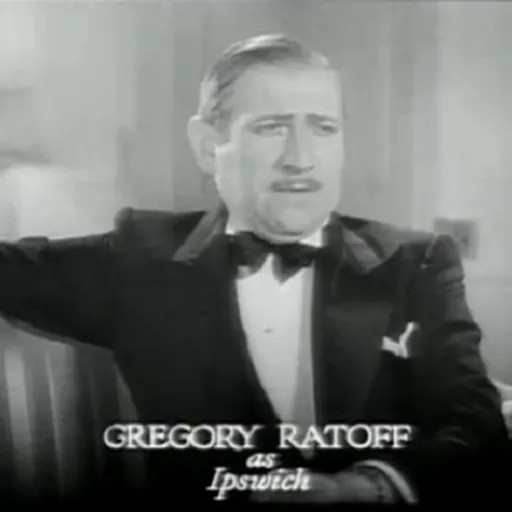
Gregory Ratoff
Russian-American actor, director and producer
About Gregory Ratoff
Lived 1897 – 1960 (aged 63). Gregory Ratoff was an American and Russian film director, film producer, screenwriter, film actor and director.
Gregory Ratoff (born Grigory Vasilyevich Ratner; ; April 20, c. 1893 – December 14, 1960) was a Russian-American film director, actor and producer. As an actor, he was best known for his role as producer "Max Fabian" in All About Eve.
Early life Ratoff was born in Samara, Russia, to Jewish parents. His mother was Sophie (née Markison) who claimed to have been born on September 1, 1878, but was married on June 14, 1894, when she would have been 15, to Benjamin Ratner (born 1864), with whom she had four children, the eldest of whom was Grigory, whose date of birth she gave as April 7, 1895
Ratoff was pursuing a law degree at the University of St. Petersburg until his education was interrupted by service in the Czar's army in World War I. After the war, he abandoned law to join the Moscow Art Theater, where he began to make a name for himself as an actor. An eyewitness to the chaos of the Bolshevik Revolution, Ratoff fled Russia with his parents in 1922 and settled in Paris, where he wooed Evgenia Konstantinovna Leontovich (later known as actress Eugenie Leontovich), the daughter of a Czarist army officer, who, too, had escaped to Paris. They were both performing in a Paris production of the Russe Revue in 1922 when the New York impresario, Lee Shubert, founder of the Shubert Theaters, brought this show to Broadway, and the young couple along with it. They decided to stay in the United States, and the couple married on January 19, 1923. Leontovich gave Ratoff's year of birth as 1896 in her naturalization papers but did not include the month or day. A border crossing manifest, dated September 23, 1922, gives both her age and that of Gregory Ratner as 29, indicating 1893 as the year of birth of both. His role as the beloved immigrant father who dies on his son's operating table led to five more jobs in quick succession, ranging from a George Kaufman comedy to a prestigious Selznick production, What Price Hollywood? (1932) directed by George Cukor. With these early critical and box-office winners, Ratoff was in constant demand as a character actor throughout the 1930s, many in B-pictures but increasingly with young directors who later had important careers. His role as a comic showbiz caricature was also popular, especially in such pre-Code films as I'm No Angel (1933), as Mae West's character's lawyer. Due to his large frame and uncertain command of English, he was often typecast as a villain in an American setting or as a foreigner in the dozens of 1930s films that recreated a glamorous fictional Europe on the Hollywood backlot. In Frank Lloyd's Under Two Flags (1936), he was in the French Foreign Legion. In Howard Hawks' The Road to Glory (1936), he was a Russian sergeant in World War I France.
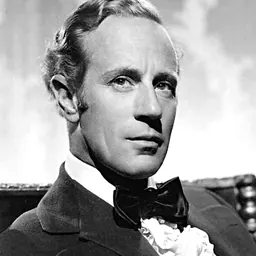
In 1936, although he acted in six films, he first moved behind the camera, co-directing (with Otto Brower) Sins of Man for Twentieth Century-Fox. He followed with his first screenwriting effort, Cafe Metropole (1937), and soon directed on his own with Lancer Spy (1937), starring Peter Lorre, Dolores del Río and George Sanders. Ratoff directed five movies by 1939, all under contract for Fox, while still also acting. He directed Intermezzo: A Love Story (1939), when David O. Selznick was loaned Ratoff by Fox to direct his new Swedish protege Ingrid Bergman in her American debut. The original director, William Wyler, had walked out after a quarrel with Selznick. The story was a remake of the Swedish film that had made Bergman a star, a tale of doomed love between a celebrated but married violin virtuoso (Leslie Howard) and his brilliant young piano accompanist (Bergman). Bergman was none too impressed with Ratoff, reportedly because she was struggling with English herself and found Ratoff difficult to follow. Ratoff, however, saw her as "sensational", as he told Life. Leslie Howard had been talked into the part with the promise of a co-producer credit. Ratoff never reached such heights again, and he never entered the top ranks of Hollywood directors. He dropped acting and left Fox in 1941 for a Columbia directing contract.
Later years For the next decade, Ratoff directed comedies, musicals, crime dramas, war films, thrillers and swashbucklers—all solid but unspectacular fare in the wide range of genres then given to directors under contract. Song of Russia (1944), another love story between musical performers (Robert Taylor and Susan Peters), was set in Russia at the beginning of the Nazi invasion. Ratoff had been lent out for this MGM project because the musical romance had become one of his specialties after his work in Intermezzo. He collapsed near the end of shooting and had to be replaced by another emigre, Hungarian Laszlo Benedek. Taylor was a friendly witness for the House Un-American Activities Committee, and the film's two writers were hauled before the committee, questioned and harassed. Ratoff's directing career in Hollywood never recovered, and he returned to acting, playing his most famous role as the befuddled producer Max Fabian in All About Eve.
He directed a Broadway play The Fifth Season which was a hit.
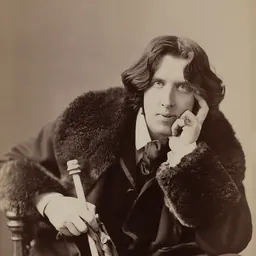
Ratoff found his remaining opportunities outside of the U.S. The English comedy Abdulla the Great (1955), which he produced, directed, and starred in as a Middle Eastern potentate, proved a complete failure, but his low-budget film of Jo Eisinger's play Oscar Wilde (1960) won plaudits for Robert Morley in the title role, while Ralph Richardson was commended for his role as the barrister who destroys Wilde on the witness stand.
He was one of the two producers (with Michael Garrison ) to have purchased and developed the original rights to the James Bond franchise from Ian Fleming in 1955, which subsequently became the subject of a bitter legal dispute.
Ratoff was awarded a star on the Hollywood Walk of Fame in February 1960, just months before his death in Switzerland. One of his last roles as an actor was in the epic film Exodus (1960), for Otto Preminger, a director with whom he had first worked in the early 1930s.
Death Ratoff died on December 14, 1960, in Solothurn, Switzerland from leukemia, aged 67. His body was returned to the United States for burial at Mount Hebron Cemetery, Flushing, New York. Divorced from Leontovich since 1949, he had remarried and was survived by his widow, Maria Ratoff. He was interred under a gravestone marked "Beloved Husband". His death was reported in the U.S. Reports of Deaths of American Citizens Abroad, 1835-1974 (Basel, Switzerland, December 16, 1960).
Filmography Director
Sins of Man (1936) Lancer Spy (1937) Wife, Husband and Friend (1939) Rose of Washington Square (1939) Hotel for Women (1939) Intermezzo (1939) Day-Time Wife (1939) Barricade (1939) I Was an Adventuress (1940) Public Deb No. 1 (1940) Adam Had Four Sons (1941) The Corsican Brothers (1941) The Men in Her Life (1941) Two Yanks in Trinidad (1942) Footlight Serenade (1942) Something to Shout About (1943) The Heat's On (1943) Song of Russia (1944) Irish Eyes Are Smiling (1944) Where Do We Go from Here? (1945) Paris Underground (1945) Do You Love Me (1946) Carnival in Costa Rica (1947) Moss Rose (1947) That Dangerous Age (1949) Black Magic (aka Cagliostro) (1949) My Daughter Joy (1950) Taxi (1953) Abdulla the Great (1955) Oscar Wilde (1960)
Actor
Dubrowsky, der Räuber Ataman (1921) (film debut) Symphony of Six Million (1932) — Meyer Klauber What Price Hollywood? (1932) — Julius Saxe Skyscraper Souls (1932) — Vinmont Once in a Lifetime (1932) — Herman Glogauer Under-Cover Man (1932) — H.L. Martoff Secrets of the French Police (1932) — Han Moloff Sweepings (1933) — Abe Ullman Professional Sweetheart (1933) — Samuel 'Sam' Ipswich Headline Shooter (1933) — Hermie Gottlieb I'm No Angel (1933) — Benny Pinkowitz Broadway Through a Keyhole (1933) — Max Mefoofski Sitting Pretty (1933) — Tannenbaum Girl Without a Room (1933) — The General / Grand Duke Serge Alexovich Let's Fall in Love (1933) — Max George White's Scandals (1934) — Nicholas Mitwoch Falling in Love (1934) — Oscar Marks Forbidden Territory (1934) — Alexei Leshki 18 Minutes (1935) — Nikita Hello, Sweetheart (1935) — Joseph Lewis Remember Last Night? (1935) — Faronea King of Burlesque (1936) — Kolpolpeck Here Comes Trouble (1936) — Ivan Petroff Under Two Flags (1936) — Ivan The Road to Glory (1936) — Russian Soldier Sing, Baby, Sing (1936) — Nicholas K. Alexander Under Your Spell (1936) — Petroff Seventh Heaven (1937) — Boul the Cab Driver Top of the Town (1937) — J.J. Stone Café Metropole (1937) — Paul Sally, Irene and Mary (1938) — Baron Alex Zorka Gateway (1938) — Prince Michael Boris Alexis The Great Profile (1940) — Boris Mefoofsky My Daughter Joy (1950) — Marcos All About Eve (1950) — Max Fabian O. Henry's Full House (1952) — Behrman (segment "The Last Leaf") The Moon Is Blue (1953) — Taxi Driver Die Jungfrau auf dem Dach (1953) — Taxi Fahrer The Jack Benny Program (1953) — Himself Abdulla the Great (1955) — Abdulla The Sun Also Rises (1957) — Count Mippipopolous Once More, with Feeling! (1960) — Maxwell Archer Exodus (1960) — Lakavitch The Big Gamble (1961) — Kaltenberg (posthumously released, final film)
Don’t just read it —
keep it.
Full-length biographies made to live with: read them, listen on the way to work, watch them tonight.
- E-book
- Audio
- Video
Instant download · yours to keep · every purchase keeps this site free
Important facts
Family & relationships
People in Gregory Ratoff's life
Named in this biography and alive at the same time


Related people
Same field, nearest in time


Contemporaries
People whose lives overlapped Gregory Ratoff's



Frequently asked questions
Who was Gregory Ratoff?
Russian-American actor, director and producer (1897–1960)
When was Gregory Ratoff born?
Gregory Ratoff was born on 20 April 1897 in Saint Petersburg.
When did Gregory Ratoff die?
Gregory Ratoff died on 14 December 1960 in Solothurn.
What was Gregory Ratoff's occupation?
Gregory Ratoff was a film director, film producer, screenwriter, film actor and director.
What nationality was Gregory Ratoff?
Gregory Ratoff was American and Russian.
Sources & further reading
Cite this page
APA: Biography.guide. (2026). Gregory Ratoff. https://biography.guide/gregory-ratoff/
MLA: "Gregory Ratoff." Biography.guide, https://biography.guide/gregory-ratoff/.
Chicago: "Gregory Ratoff." Biography.guide. https://biography.guide/gregory-ratoff/.
Data last updated: 2026-09-23 · Spot an error? Report a correction.
Portrait: Wikimedia Commons · author & licence
Page generated 2026-09-27 05:06 UTC