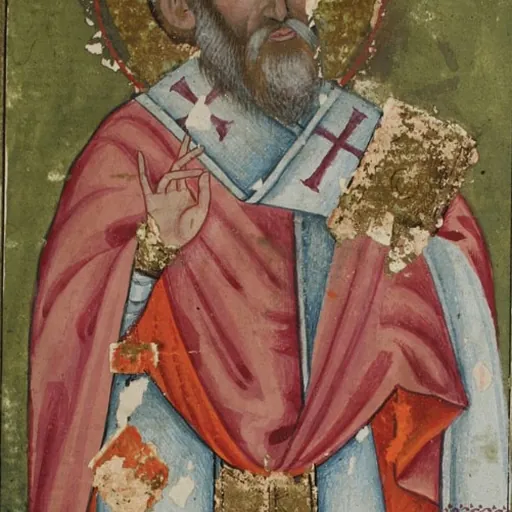
About Gregory of Khandzta
Lived 759 – 861 (aged 102). Gregory of Khandzta was a monk, religious leader and writer.
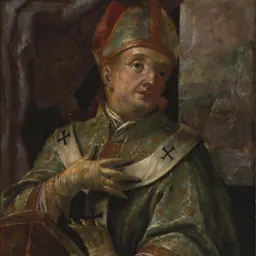
Gregory of Khandzta (; 5 October 759 – 18 October 861) was a Georgian monk, ecclesiastical leader, and cultural figure in the historical region of Tao‑Klarjeti. He is regarded as a central figure in the revival of Georgian monasticism and the establishment of numerous monasteries that became centres of learning, manuscript production, and spiritual life.
Biography Gregory was born into an aristocratic family in Kartli and was the nephew of the wife of the Eristavi of Kartli, Nerse. He was raised at the noble household where he received a broad education, including ecclesiastical sciences, liturgical chant, Georgian literature, philosophy, and foreign languages. Despite his family’s intentions to prepare him for the priesthood and episcopal office, Gregory chose the ascetic life. He fled with his cousin Savva, later Bishop of Ishkhani, and two companions to the Opiza Monastery, joining the monastic community there.
After two years at Opiza, Gregory moved to the Khandzta region and lived with the hermit Evodius. Around 782, he and his disciples built a church, refectory, and monastic cells at the site of what became the Khandzta Monastery. The local feudal lord Gabriel Dapanchuli supported their work with food, labor, and building materials. Gregory’s reputation reached Ashot I the Great, who granted him land at Shatberdi. There, he founded a monastery that became a major centre of manuscript copying and illustration, some of which survive today.
Gregory trained several disciples who went on to establish additional monasteries: Theodore founded Nedzvi Monastery, Christofor founded Kviriketsminda Monastery, and Hilarion of Jerusalem founded Ubisi Monastery. He also oversaw the establishment of the women’s monastery at Mere and contributed to the restoration of the Ishkhani and other churches. His monastic rule followed strict ascetic principles inspired by the Lavra of Saint Sabbas the Sanctified.
Gregory enjoyed the respect of both Georgian nobility and clergy. He played an influential role in the election of Arsenius I of Iberia as Catholicos of Kartli (860–887). His hagiography recounts numerous miracles, including healing the sick, calming animals, and controlling natural phenomena. Saint Gregory of Khandzta died as a centenarian in 861, surrounded by followers and disciples. The Eastern Orthodox Church marks his memory on the day of his death, October 18. His life was compiled in the hagiographic work written by Giorgi Merchule in 951.
Don’t just read it —
keep it.
Full-length biographies made to live with: read them, listen on the way to work, watch them tonight.
- E-book
- Audio
- Video
Instant download · yours to keep · every purchase keeps this site free
Important facts
Related people
Same field, nearest in time



Contemporaries
People whose lives overlapped Gregory of Khandzta's




Frequently asked questions
Who was Gregory of Khandzta?
Christian saint
When was Gregory of Khandzta born?
Gregory of Khandzta was born on 5 October 759.
When did Gregory of Khandzta die?
Gregory of Khandzta died on 18 October 861 in Khandzta.
What was Gregory of Khandzta's occupation?
Gregory of Khandzta was a monk, religious leader and writer.
What nationality was Gregory of Khandzta?
Gregory of Khandzta's recorded nationality: Principality of Iberia.
Sources & further reading
· Wikipedia: Gregory of Khandzta
· DBpedia: Gregory of Khandzta
Cite this page
APA: Biography.guide. (2026). Gregory of Khandzta. https://biography.guide/gregory-of-khandzta/
MLA: "Gregory of Khandzta." Biography.guide, https://biography.guide/gregory-of-khandzta/.
Chicago: "Gregory of Khandzta." Biography.guide. https://biography.guide/gregory-of-khandzta/.
Data last updated: 2026-09-22 · Spot an error? Report a correction.
Portrait: Wikimedia Commons · author & licence
Page generated 2026-09-27 05:04 UTC