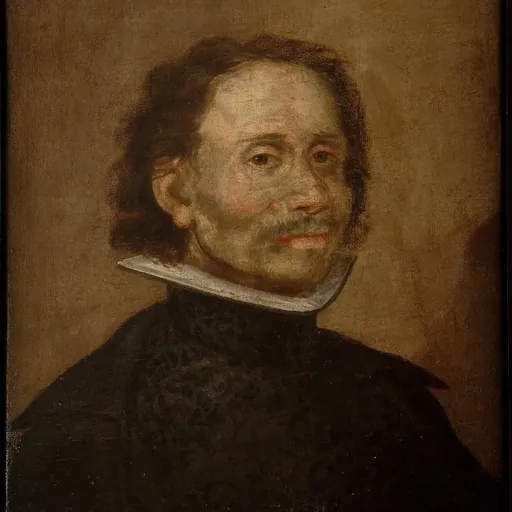
About Gregorio Fernández
Lived 1576 – 1636 (aged 59–60). Gregorio Fernández was a Spanish sculptor and architect.
Gregorio Fernández (April 1576 – 22 January 1636) was a Spanish Baroque sculptor. He belongs to the Castilian school of sculpture, following the style of other great artists like Alonso Berruguete, Juan de Juni, Pompeyo Leoni, and Juan de Arfe.
Biography Gregorio Fernández was born in Sarria, in what is now the province of Lugo, Galicia. Later in his life he travelled to Valladolid, lured by the royal household. After working as an assistant in other studios, Gregorio Fernández founded his own, where he received many apprentices and collaborators and developed a huge activity thanks to his wide clientele.
After his death, Gregorio Fernández left many pupils who followed his style, but he did not have any significant disciples. He achieved great reputation during his life, a good example of this would be the fact that in his tomb in the convent of the Carmen Calzado a portrait of him was placed, painted by his friend Diego Valentín Díaz, accompanied by a text praising his work.
Gregorio Fernández was a great expert on his trade, which he practiced with high technical perfection. His extensive knowledge of the human body allowed him to create highly detailed anatomies with the hardness of bones, the tension of muscles, the tenderness of flesh or the smoothness of skin. Compared to the extreme expressiveness of the bodies, the robes are heavy, cardboard like, arranged in sharp and rigid folds which produce a strong contrast of light and shadow.
The deep expressive world of his figures swings between the dramatic quality of physical and moral pain and the evasion of mystical experience, and is expressed through calm postures and restrained gesticulation, leaving the greatest expressive influence to both face and hands, all of that in a simple composition.
The quality of his works was improved thanks to the extensive collaboration of painters who developed the polychrome of the statues. The embodiments are usually matte and plain colours stand out in the cloths, except for the small borders which are more colorful. The realism is accentuated with the help of added false elements which boost the feeling of authenticity: eyes are made of glass, nails and teeth of ivory, blood clots of cork, sweat drops and tears of resin.
Fernández created sculptures for altarpieces and “pasos procesionales”, like Camino del Calvario (Spanish for “the way to Calvary”). He made many iconographic images (Cristo Yacente, La Piedad, el Ecce Homo, Pietà Ecce Homo Cristo de los Balderas (1631). Church of San Marcelo (León) Cristo Yacente of El Pardo (Madrid) Cristo Yacente for the Duke of Lerma. Church of San Pablo (Valladolid) Éxtasis de Santa Teresa. National Sculpture Museum (Valladolid) Bautismo de Cristo. National Sculpture Museum (Valladolid) Cristo de la Luz. Palacio de Santa Cruz (Valladolid) Inmaculada Concepción. Church of La Vera Cruz (Salamanca) Main Altarpiece. Huelgas Reales (Valladolid) Main Altarpiece. Plasencia Cathedral (Cáceres) Altarpice. Descalzas Reales (Valladolid) Main Altarpiece. Miranda do Douro Cathedral (Portugal) Effigies for the Holy Week processions of Valladolid: "Sed Tengo" and "Camino del Calvario" (National Sculpture Museum), "El Entierro" (La Piedad and the two thieves in the National Sculpture Museum, and La Magdalena y San Juan in the church of Las Angustias), "La Coronación de Espinas" (Cristo Ecce Hommo in the church of La Vera-Cruz, and the executioners in the National Sculpture Museum), "La Flagelación" (Cristo atado a la columna in the church of La Vera-Cruz, and the executioners in the National Sculpture Museum), "El Descendimiento" and "La Virgen de la Vera Cruz", these last four property of the Cofradía Penitencial de la Santa Vera Cruz.
Don’t just read it —
keep it.
Full-length biographies made to live with: read them, listen on the way to work, watch them tonight.
- E-book
- Audio
- Video
Instant download · yours to keep · every purchase keeps this site free
Important facts
People in Gregorio Fernández's life
Named in this biography and alive at the same time


Related people
Same field, nearest in time


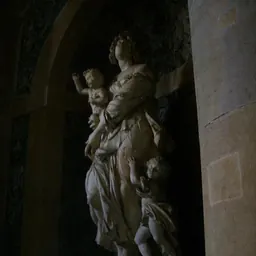
Contemporaries
People whose lives overlapped Gregorio Fernández's

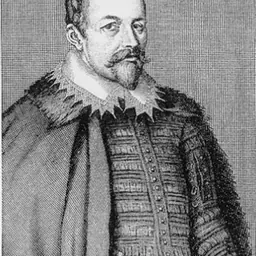


Frequently asked questions
Who was Gregorio Fernández?
Spanish artist (1576–1636)
When was Gregorio Fernández born?
Gregorio Fernández was born in 1576 in Sarria.
When did Gregorio Fernández die?
Gregorio Fernández died on 22 January 1636 in Valladolid.
What was Gregorio Fernández's occupation?
Gregorio Fernández was a sculptor and architect.
What nationality was Gregorio Fernández?
Gregorio Fernández was Spanish.
Sources & further reading
· Wikipedia: Gregorio Fernández
Cite this page
APA: Biography.guide. (2026). Gregorio Fernández. https://biography.guide/gregorio-fernandez-sculptor/
MLA: "Gregorio Fernández." Biography.guide, https://biography.guide/gregorio-fernandez-sculptor/.
Chicago: "Gregorio Fernández." Biography.guide. https://biography.guide/gregorio-fernandez-sculptor/.
Data last updated: 2026-09-22 · Spot an error? Report a correction.
Portrait: Wikimedia Commons · author & licence
Page generated 2026-09-27 05:02 UTC