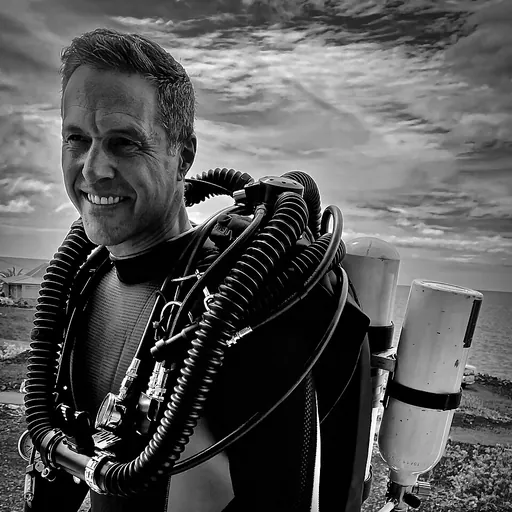
About Greg Asner
Born 2000. Greg Asner is a scientist and arizona State University.
Gregory P. Asner is an American ecologist whose global work has focused on ecosystems, conservation, and climate sciences. He has developed technology to access and analyze large amounts of data about ecosystems, including assessing carbon emissions, coral reef resilience, and biodiversity. He is the founder of the Global Airborne Observatory (GAO, formerly the Carnegie Airborne Observatory, or CAO) and the creator of Carnegie Landsat Analysis System (CLAS) and CLASlite. Since 2019, he has been the Director of Arizona State University's Center for Global Discovery and Conservation Science. He is also managing director of the Allen Coral Atlas, an online map of all the coral reefs in the world used as a reference for reef conservation.
Asner's work mapping forests and coral reefs using airplanes and satellites influenced environmental policy decisions in several countries. As a result of his work there, he published his first scientific paper, assessing damage done to forests in Kauai after Hurricane Iniki in 1992.
In 1996, NASA selected Asner, then a student at University of Colorado Boulder, as a recipient of one of its Earth System Science Graduate Student Fellowships. He earned his Ph.D. in biology in 1997.
Asner moved his laboratory and research program from the University of Colorado to the Carnegie Institution's Department of Global Ecology in 2001. – the team collected ecological data using satellite sensors and computer modeling. Popular Science named Asner to its annual "Brilliant Ten" list in 2007.
Work mapping forests and coral reefs
Asner led the team that developed, over the course of 15 years, Airborne Taxonomic Mapping System (AToMS), an advanced technology that uses sensors in a Dornier 228 airplane to map the Earth. AToMS uses spectrometers, lasers, and other tools to generate three-dimensional models of forests. For example, maps he has created have guided decisions about creating new national parks in Peru and supporting lion habitats in South Africa. Also in 2013, he and the CAO team contributed data to a carbon map of the entirety of Panama, the first time a whole country had been mapped in that way.
The next year, Asner's CAO team released a 69-page report on Peru's rainforests to its Ministry of the Environment. As a result of this research, Norway gave $300 million to Peru in late 2014 to protect Peru's forests and reduce greenhouse gas emissions. By January 2017, Asner had mapped all of the Peruvian Amazon. Asner has mapped of forests in Colombia. He has used similar technology to evaluate the health of coral reefs according to their coloring as observed from a plane. In 2015, he led a study of how the 2011–2017 California drought was affecting the state's forests, Governor Jerry Brown decided to declare a state of emergency in California partly due to this data. Their data assisted the design of the largest marine protected area in the Dominican Republic. That July, Asner's team created a website where users can report coral bleaching they have observed. , they were using data from Planet and the ICESat-2 satellite for further research on coral reef health.
In September 2021, the Allen Coral Atlas, of which Asner is managing director, announced it had completed a comprehensive map of the world's coral reefs, compiled using more than 2 million satellite images. In 2013, the National Academy of Sciences elected Asner as a member. The Remote Sensing Specialty Group of the American Association of Geographers gave him its Outstanding Contribution Award in 2014. In 2015, he became a fellow of the American Geophysical Union, and in 2016, he became a fellow of the Ecological Society of America. Asner received a $250,000 Heinz Award in 2017 for his work with the CAO mapping coral reefs and rainforests.
Selected publications
Don’t just read it —
keep it.
Full-length biographies made to live with: read them, listen on the way to work, watch them tonight.
- E-book
- Audio
- Video
Instant download · yours to keep · every purchase keeps this site free
Important facts
People in Greg Asner's life
Named in this biography and alive at the same time

Related people
Same field, nearest in time



Contemporaries
People whose lives overlapped Greg Asner's



Frequently asked questions
Who is Greg Asner?
American ecologist
When was Greg Asner born?
Greg Asner was born in 2000.
What is Greg Asner's occupation?
Greg Asner is a scientist and arizona State University.
Sources & further reading
Cite this page
APA: Biography.guide. (2026). Greg Asner. https://biography.guide/greg-asner/
MLA: "Greg Asner." Biography.guide, https://biography.guide/greg-asner/.
Chicago: "Greg Asner." Biography.guide. https://biography.guide/greg-asner/.
Data last updated: 2026-09-22 · Spot an error? Report a correction.
Portrait: Wikimedia Commons · author & licence
Page generated 2026-09-27 05:00 UTC