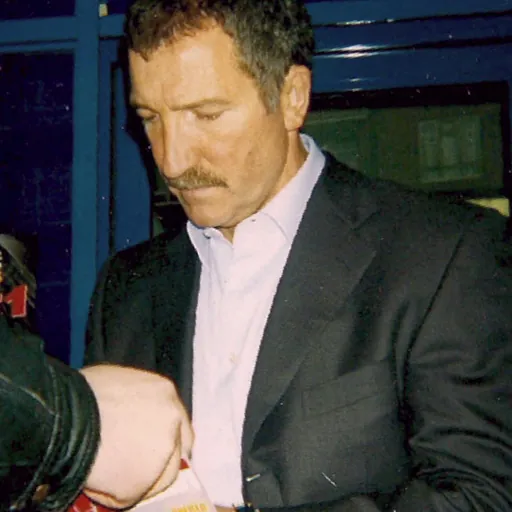
Graeme Souness
Scottish association football player and manager
About Graeme Souness
Born 1953. Graeme Souness is a British association football player and association football coach.
Graeme James Souness (; born 6 May 1953) is a Scottish former professional football player, manager and television pundit. A midfielder, Souness achieved his greatest period of success as an integral part of the Liverpool team of the late 1970s and early 1980s.
As a player, Souness established himself at Middlesbrough, where he played for six years, before moving to Liverpool in 1978. During his six years at Liverpool he won five First Division titles and three European Cups. He was named in the PFA Team of the Year every season between 1981 and 1984. Described by The Guardian as "the driving force of an all conquering side", Souness was captain for three seasons at Liverpool between 1981 and 1984. In 2026 he was ranked the club's sixth greatest ever player in an official Liverpool F.C. poll. His Liverpool teammate Mark Lawrenson, who in 2015 ranked Souness fourth in his top 10 Anfield greats, called him "a great leader of men". He moved to Sampdoria in 1984 and won the Coppa Italia the following season, and then became player-manager for Rangers, leading the club to three Scottish titles and four league cups. His final game as a player came in the closing minutes of Rangers' final match of the 1989–90 season, which was his only appearance of the season.
Souness continued as Rangers coach for a further year before joining Liverpool as manager for the 1991–92 English First Division season. Winning the FA Cup in 1992, his time as manager of Liverpool did not come close to matching his success as a player at the club, and after two substandard seasons he resigned in 1994 before he went on to have spells at Galatasaray, Southampton, Torino, Benfica, Blackburn Rovers and Newcastle United.
At international level, Souness gained 54 caps for Scotland, captaining the team on 27 occasions.
Club career Early career Graeme James Souness was born on 6 May 1953 in Edinburgh, and Glasgow-based Rangers. As a teenager, Souness played for local boys' club North Merchiston.
Souness' career began as an apprentice at Tottenham Hotspur under Bill Nicholson. He signed professional forms as a 15-year-old in 1968. Frustrated at a lack of first-team opportunities, the teenage Souness told Nicholson he should be selected for the first team. Souness made one first-team appearance for Spurs, in a UEFA Cup tie as a substitute.
During the summer of 1972, Souness played in the North American Soccer League for the Montreal Olympique. He appeared in 10 of his team's 14 matches and was named in the league's All-Star team for that season.
Middlesbrough Spurs sold Souness to Middlesbrough for £30,000 in 1972. He made his first appearance for Middlesbrough on 6 January 1973 in a 2–1 league defeat to Fulham at Craven Cottage. His first goal came on 11 December 1973 in a 3–0 league victory over Preston North End at Ayresome Park.
Souness' tenacious style began to garner acclaim during his time at Middlesbrough. His first season saw Middlesbrough finish fourth, two places and 14 points short of promotion. Jack Charlton was appointed Middlesbrough manager, his first managerial post, in May 1973. One of Charlton's first signings was experienced former Celtic midfielder Bobby Murdoch, a fellow Scot whom Souness later cited as an important influence in the development of his playing style. Promotion as champions of the Second Division followed in 1973–74. Souness' influence was demonstrated when he scored a hat-trick in the season's final fixture, an 8–0 victory over Sheffield Wednesday.
Liverpool
Sampdoria In 1984, Souness joined Sampdoria for a fee of £650,000. In doing so he became the third Scot to play in the Italian Football Championship since its re-brand to Serie A in 1929. In doing so he succeeded Denis Law and Joe Jordan (Law's Scots-raised Torino teammate Joe Baker spent the first six weeks of his life in Liverpool and was thus deemed English under international football rules of the time). Souness and England international Trevor Francis–a player at the Genoa-based club since 1982–added experience to an emerging group of future Italian internationals, including Roberto Mancini, Pietro Vierchowod and Gianluca Vialli.
In his first season, Souness succeeded Jordan to become the second Scot to play in a Coppa Italia final. Souness, in contrast to Jordan, collected a winner's medal. Sampdoria won the 1985 Coppa Italia Final 3–1 on aggregate over Serie A rivals Milan, securing the cup for the first time in club history.
Rangers Souness' career in Italy ended in 1986 as he took up the position of player-manager at Rangers. His playing career at Ibrox began inauspiciously. His competitive debut – in the opening match of the 1986–87 season, against Hibernian in his hometown of Edinburgh – saw him sent off after two yellow cards in the first 34 minutes, with the second following a high challenge on Hibernian striker George McCluskey which left a gash on his leg.
Disciplinary problems – something that had recurred periodically throughout Souness's career – resurfaced on a number of occasions during his time as a player at Rangers, and the spell was also blighted by injury. He made 73 appearances in total for Rangers (50 in the league), scoring three goals. His final appearance as a player was at Ibrox in a 2–0 victory over Dunfermline Athletic in Rangers' last home match of the 1989–90 season, when he brought himself on for the final 20 minutes.
International career While a Middlesbrough player, Souness received his first international cap for Scotland on 30 October 1974 in a 3–0 friendly victory over East Germany at Hampden Park. Souness claimed in his autobiography, The Management Years, and press interviews that this was the only time in his whole career he had been dropped. His international career ended after the 1986 World Cup. Two more Championships were to follow, this time in successive seasons (1988–89 and 1989–90), and a further two League Cup victories, over Aberdeen 3–2 in 1988–89 and Celtic 2–1 (after extra time) in 1990–91. In April 1991, Rangers were in the process of winning a fourth league title in five seasons when Souness left Rangers to take over as manager of Liverpool. He was replaced by his assistant Walter Smith four matches prior to the end of what was to become another championship-winning season. Rangers went on to win six further league titles in succession, as well as a string of domestic cups, under Smith's management.
Although Souness had been hugely successful in his time at Ibrox, his time in charge had not been without controversy. A significant act was the signing of Mo Johnston in 1989. Rangers, historically a team supported by Protestants, had for most of the 20th century a policy of refusing to sign Roman Catholics. Although there had been many Rangers players of Catholic faith, particularly before the sectarian divisions hardened after World War I, none of them were as high-profile as Johnston. He had previously played for Celtic, and had looked set to rejoin them from Nantes until Souness made an offer to sign him. Johnston publicly announced he would return to Celtic in a press conference at Celtic Park, but days later he signed for Rangers. His main consideration was that Johnston was a good player, but he also believed that the signing would damage Celtic. He was also responsible for ordering a picture of Queen Elizabeth II be hung in the Rangers dressing room, a tradition Rangers continued.
Souness also found himself under scrutiny from the Scottish Football Association (SFA) and Scottish League more than once. A succession of confrontational after-match comments pitched Souness regularly at loggerheads with both organisations, prompting touchline bans which Souness circumvented in characteristically provocative fashion by naming himself as a substitute, allowing access as a player to the dugout. In May 1990, Souness was fined £5,000 by the SFA for breaching a touchline ban after television pictures showed him in the tunnel area yelling at his players on the pitch. Souness later said that conflict with officialdom was one of the principal factors precipitating his departure from Ibrox. Another factor in 1991 was "The Storm in a teacup" when there was conflict with St Johnstone's tea lady, Aggie Moffat.
In 2009, Souness said of his time as Rangers manager, "When I look back on my actions and antics at Ibrox I bordered on being out of order. I was obnoxious and difficult to deal with." He was manager during 261 matches in all competitions for Rangers, winning 125 (64%) of 193 league fixtures.
Liverpool Kenny Dalglish, who had played alongside Souness at Liverpool, had resigned as Liverpool manager in February 1991, despite having won three league titles and two FA Cups in the previous five seasons, and with Liverpool still being in contention for both trophies when he resigned. Long-serving coach Ronnie Moran was put in temporary charge following Dalglish's sudden resignation, but he did not want the job permanently. leaving Rangers with four games of their season remaining.
Souness took over at Anfield just before Liverpool surrendered their defence of the English league title to Arsenal and finished second. He made a major reorganisation of the squad in his first six months as manager, bringing in Dean Saunders for an English record of £2.9 million as well as defenders Mark Wright and Rob Jones and midfielder Mark Walters. He also gave a regular place in the team to 19-year-old midfielder Steve McManaman, whose debut had come under Dalglish in December 1990, and a debut to one of Dalglish's last signings, teenage midfielder Jamie Redknapp. At the end of the season, he gave a professional contract to 17-year-old striker Robbie Fowler. Costly departures included Peter Beardsley and Steve Staunton in the summer, with Steve McMahon, the midfield general who Dalglish had signed in 1985 to replace Souness as a player, departing in December 1991.
During the 1991–92 season, Liverpool rarely looked like serious title contenders, and it soon became a two-horse race between Leeds United and Manchester United. Liverpool would finish sixth, and Leeds eventually won the title, which was confirmed after Liverpool defeated their arch rivals Manchester United 2–0 at Anfield. They returned to European competition that season after six years of isolation following the Heysel disaster of 1985, and reached the UEFA Cup quarter-finals, where they were eliminated by Genoa. By April 1992, they were only in contention for the FA Cup. Souness had major heart surgery that month. A controversy arose after the FA Cup semi-final against Portsmouth, which Liverpool needed a replay and penalties to win. In the event of a victory for Liverpool, an interview was due to be published in the Sun, a British tabloid, with Souness celebrating the win and his own successful surgery. The photograph which accompanied the interview was of Souness, in his hospital ward, kissing his girlfriend with joy at his own recovery and his team's win.
The following 1992–93 season was an even more frustrating one for Souness. In July 1992 he sold another key member of the title-winning sides Ray Houghton to Aston Villa, and just after the start of the season he sold Saunders, also to Villa, with the feeling he was incompatible with Ian Rush in attack. While Houghton, Staunton and Saunders all shone under Ron Atkinson at Villa and became key players in their near-successful title challenge, Saunders successor at Anfield Paul Stewart proved to be a huge disappointment, scoring just one league goal from 32 appearances over the next two seasons, struggling with injuries as well as inconsistent form. Top scorer Rush was having a difficult time scoring goals, and Liverpool spent much of the season in the bottom half of the table. They entered March still only in 15th place, but an excellent final quarter of the season, in which Rush scored 11 Premier League goals, including two in the final game, a 6–2 win over Tottenham at Anfield, saw the club finish sixth. This time there was no success in any of the cup competitions, meaning that there would be no European competition for Liverpool in the 1993–94 season. Aside from the six seasons when Liverpool were banned from European competitions, this was the first time since 1963 that Liverpool had failed to qualify for Europe. Two board meetings took place at the climax of the season over Souness's position, with the club's former star winger Steve Heighway touted as his successor, but ultimately he was backed by the chairman David Moores.
The pressure on Souness continued to mount throughout 1993, but he made another attempt at revitalising Liverpool by signing defender Julian Dicks and striker Nigel Clough for the 1993–94 season. The season began well, but the disappointing results quickly returned. In early January 1994 the club came from 3–0 down against Manchester United to draw 3–3 at Anfield, in what was the fixture's last game in front of the standing Kop.
Career after management
Media work Souness has appeared as a television analyst in the UK and Ireland regularly since his managerial career ended. He was one of the main analysts on Sky Sports coverage of the Premier League, regularly appearing on the Super Sunday programme featuring the biggest head-to-head matches, and was one of the main pundits used on their UEFA Champions League coverage until they lost the rights in 2015. He left Sky Sports on 30 April 2023.
Souness previously featured on RTÉ's live coverage of the UEFA Champions League and on their highlights show Premier Soccer Saturday, covering the Premier League. He was also regularly seen covering RTÉ's coverage of Republic of Ireland football internationals. Souness contributed to RTÉ Sport's coverage of the 2010 FIFA World Cup, alongside Johnny Giles, Eamon Dunphy, Liam Brady, Ronnie Whelan, Denis Irwin, Ossie Ardiles and Dietmar Hamann for the duration of the group stage.
During analysis of the World Cup match between Ghana and Serbia on 13 June 2010, Souness made a controversial comment involving Nemanja Vidić and Fernando Torres live on air, commenting, "Vidic got raped... sorry, taken apart by Torres at Liverpool", which forced RTÉ to censure Souness and publicly apologise after a commercial break.
As a pundit, Souness is also known for his frequent criticism of Paul Pogba. Pogba himself is unaware what he has done to warrant such criticism. Instead, he affirms he has no idea of Souness' existence.
Possible returns to management In June 2006, the chairman of Crystal Palace, Simon Jordan, said he wished to discuss with Souness a role in managing the club following the departure of Iain Dowie. However, no contract materialised.
Souness looked to be the front-runner for the Bolton Wanderers manager's job following the departure of his former Liverpool teammate Sammy Lee in October 2007, but later pulled out of the running when it became apparent the job was set to be given to Gary Megson. At around the same time, Souness was linked with taking over the Republic of Ireland national team.
In January 2008, Souness announced he would be willing to return to Newcastle United as manager, following the departure of Sam Allardyce and the arrival of the club's new ownership and board. However, United only interviewed Harry Redknapp and Kevin Keegan for the position, with Keegan soon after being appointed with the job; Souness's interest has never been publicly acknowledged by the club.
Following the sacking of Blackburn Rovers manager Paul Ince on 16 December 2008, Souness was linked with a return to the club as manager. However, Sam Allardyce was appointed as the new manager on 17 December, after Souness said he had no contact from Blackburn about the position.
Having been linked with the Scotland national team in November 2009, Souness stated he has no desire to return to management at any level.
Bid for Wolverhampton Wanderers In January 2007, it was reported by the Daily Mirror that Souness was heading a £20 million consortium to take over Football League Championship club Wolverhampton Wanderers. He attended a Wolves game as a VIP guest and made a formal offer for the club, asking to see the club's finances. The bid was rejected by the Wolves board, which felt it undervalued the club. Souness did not make a repeat offer for the club and it was later sold to another investor.
Biographies In 1985, Souness wrote an autobiography called No Half Measures. In 1999, he wrote another book chronicling his post-playing career up to and including his spell at Southampton, entitled Souness: The Management Years.
Life outside football
Personal life Souness' first wife was Danielle Wilson; they met in 1982 and married in 1984. He adopted her young daughter, and they had three more children together. They separated in 1989 and later divorced.
Souness has been married to Karen Souness, his second wife, since 1994. Together, the couple have a son and Souness has two stepchildren from Karen's previous relationship.
In 2010, Souness sold the family home in Colinton in Edinburgh for £3.5m to Fred Goodwin, and moved to a newly developed property in Sandbanks, Poole, Dorset.
During a discussion about climate change on Sky Sports Super Sunday in 2021, Souness announced that he had been following a vegan diet for the previous three years.
Political views In 1982, Souness and teammate Sammy Lee made cameo appearances, as themselves, in an episode of the BBC's Liverpudlian drama series Boys from the Blackstuff. Written by Alan Bleasdale, the series offered a critique of Thatcherism – and in particular the large-scale unemployment then evident in urban Britain – apparently at odds with Souness's own Conservative politics.
In 2007, in the lead-up to elections to the Scottish Parliament, Souness was one of 15 prominent current and former footballers named in a newspaper advertisement urging "every patriotic Scot to help maintain Scotland's place in the United Kingdom which has served Scotland well."
Prior to the 2025 Hamilton, Larkhall and Stonehouse by-election to the Scottish Parliament, in which Reform UK was expected to contend for victory, Souness blasted Reform leader Nigel Farage as a "chancer" who "doesn't care about [Scots]," encouraging voters to choose the Labour candidate and eventual winner, Davy Russell.
Charitable work Souness launched a fundraising campaign for DEBRA, a charity seeking a cure for epidermolysis bullosa, in May 2023. As part of the fundraising activities he announced plans to swim the English Channel.
Reputation
Souness was described by The Daily Telegraph as "one of the most fearsome men in the game."
Career statistics
Club
International
Scores and results list Scotland's goal tally first.
Player Tottenham Hotspur Youth FA Youth Cup: 1969–70
Middlesbrough Football League Second Division: 1973–74
Liverpool Football League First Division: 1978–79, 1979–80, 1981–82, 1982–83, 1983–84 Football League Cup: 1980–81, 1981–82, 1982–83, 1983–84 FA Charity Shield: 1979, 1980, 1982 European Cup: 1977–78, 1980–81, 1983–84
Sampdoria Coppa Italia: 1984–85
Rangers Scottish Premier Division: 1986–87, 1988–89 Scottish League Cup: 1986–87, 1987–88, 1988–89
Scotland Rous Cup: 1985
Individual Middlesbrough Player of the Year: 1973–74 European Cup Golden Boot: 1980–81 PFA Team of the Year: 1980–81 First Division, 1981–82 First Division, 1982–83 First Division, 1983–84 First Division PFA Team of the Century (1977–96): 2007
Manager Rangers Scottish Premier Division: 1986–87, 1988–89, 1989–90 Scottish League Cup: 1986–87, 1987–88, 1988–89, 1990–91
Liverpool FA Cup: 1991–92
Galatasaray Turkish Cup: 1995–96
Blackburn Rovers Football League Cup: 2001–02 Football League First Division second-place promotion: 2000–01
Individual Premier League Manager of the Month: October 1996, April 1997
Inductions Inducted into the Scotland national football team roll of honour in 1985, when he gained his 50th international cap. In 1998, Souness was included in the Football League 100 Legends list. A poll of 110,000 Liverpool supporters – 100 Players Who Shook The Kop, saw Souness placed the ninth most popular player in the club's history. Souness has been inducted into the English Football Hall of Fame (in 2007), the Scottish Football Hall of Fame (in 2004) and the Rangers F.C. Hall of Fame.
A summary of Souness's personal achievements are as follows in chronological order: Scotland national football team roll of honour Football League 100 Legends Liverpool 100 players who shook the Kop English Football Hall of Fame Scottish Football Hall of Fame Rangers Hall of Fame
Don’t just read it —
keep it.
Full-length biographies made to live with: read them, listen on the way to work, watch them tonight.
- E-book
- Audio
- Video
Instant download · yours to keep · every purchase keeps this site free
Important facts
People in Graeme Souness's life
Named in this biography and alive at the same time



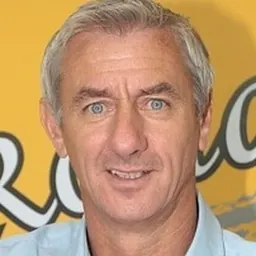
Related people
Same field, nearest in time
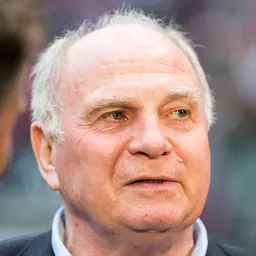

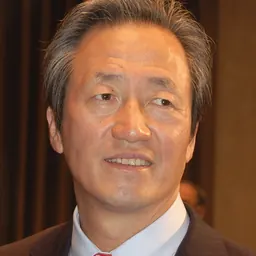


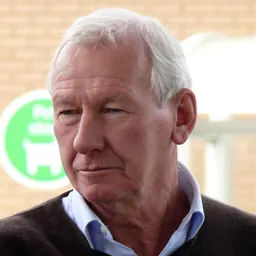
Contemporaries
People whose lives overlapped Graeme Souness's
Frequently asked questions
Who is Graeme Souness?
Scottish association football player and manager
When was Graeme Souness born?
Graeme Souness was born on 6 May 1953 in Edinburgh.
What is Graeme Souness's occupation?
Graeme Souness is an association football player and association football coach.
What nationality is Graeme Souness?
Graeme Souness is British.
Sources & further reading
Cite this page
APA: Biography.guide. (2026). Graeme Souness. https://biography.guide/graeme-souness/
MLA: "Graeme Souness." Biography.guide, https://biography.guide/graeme-souness/.
Chicago: "Graeme Souness." Biography.guide. https://biography.guide/graeme-souness/.
Data last updated: 2026-09-21 · Spot an error? Report a correction.
Portrait: Wikimedia Commons · author & licence
Page generated 2026-09-27 04:59 UTC