
Graciela Paraskevaídis
Argentine writer and composer
About Graciela Paraskevaídis
Lived 1940 – 2017 (aged 76). Graciela Paraskevaídis was an Argentine composer, music educator and musicologist.
Graciela Paraskevaidis (1 April 1940 – 21 February 2017) was an Argentine writer and composer of Greek ancestry who lived and worked in Uruguay.
Life Graciela Paraskevaidis was born in Buenos Aires. She studied composition at the National Conservatory in Buenos Aires with Roberto García Morillo and at the Instituto Torcuato Di Tella with Gerardo Gandini and Iannis Xenakis from 1965 to 1966 with a scholarship from the Centro Latinoamericano de Altos Estudios Musicales (CLAEM). She continued her studies at the Musikhochschule Freiburg/Breisgau with Wolfgang Fortner from 1968 to 1971 with a grant from the Deutscher Akademischer Austauschdienst. She studied at Darmstadt in 1972.
After completing her studies, Parakevaidis took a position at the Universidad Nacional in Montevideo where she taught from 1985 to 1992 and also worked as a composer. Her works have been performed internationally in Europe, Asia and the Americas. She has written two books La obra sinfónica de Eduardo Fabini published in 1992 and Luis Campodónico, compositor published in 1999, and a number of articles on 20th-century Latin-American music published in the journals Pauta, Mexico, and MusikTexte, Germany. She published a translation of Schoenbergs Zeichen by Jean-Jacques Dünki in 2005.
Paraskevaídis served as co-editor of World New Music Magazine and the yearbook of ISCM. She was an organizer of the Latin American Contemporary Music Courses (CLAMC) from 1975 to 1989. With Max Nyffeler, she co-founded the website latinoamérica música in 2004 and has served co-editor. She holds both Argentinean and Uruguayan citizenship, and has lived in Uruguay since 1975.
She was married to musicologist Coriún Aharonián.
Honors and awards Residency at Berliner Künstlerprogramm of the Deutscher Akademischer Austauschdienst (1984) Goethe Medal from the Goethe-Institut in Munich (1994) Attended the First Symposium of Artists and Intellectuals of Greek Origin (1985) on an invitation from the Government of Greece Award from the Argentine National Endowment for the Arts Award from the City of Buenos Aires Award from the Akademie der Künste in Berlin Award from the Young Musicians of Uruguay Morosoli Silver Award (Morosoli) from the Fundación Lolita Rubial in Minas, Uruguay (2006)
Works Paraskevaídis composes mostly for chamber ensemble, choral, vocal, and piano performance. Selected works include:
Aphorismen(text by Karl Kraus), 2 speakers, piano, percussion, tape, 1969 Mozart (text by Wolfgang Amadeus Mozart), actor, ensemble, 1970–72 magma I, 4 French horns, 2 Trumpets, 2 trombones, tuba, 1965-67 *magma II, 4 trombones, 1968 Trio, flute, clarinet, bassoon, 1969 Mellonta tauta, accordion, 1970 magma III, flute, trombone, cello, piano, 1974 magma IV, string quartet, 1974 magma V, 4 kena (Andean flutes), 1977 todavía no, 3 flutes, 3 clarinets, 1979 magma VI, 2 Trumpets, 2 Trombones, 1979 más fuerza tiene, clarinet, 1984 magma VII, 14 winds, 1984 dos piezas para pequeño conjunto, oboe, clarinet, trumpet, piano, claves, 1989 sendas, flute, oboe, clarinet, bassoon, French horn, trumpet, trombone, piano, 1992 el nervio de arnold, guitar, 1992 algún sonido de la vida, 2 oboes, 1993 ta, flute, oboe, clarinet, piano, 1994 No quiero oír ya más campanas, 14 winds, 1995 dos piezas para oboe y piano, 1995 hacen así, 6 percussion, 1996 altibajos, 2 double basses, 1996 libres en el sonido presos en el sonido, flute (+ alto flute), clarinet, 1997 La terra e la morte (text by Cesare Pavese), mixed chorus, 1968 *libertà goes by ... (Text by Dante Alighieri), mixed chorus, 1969 E Desidero only colori (text by Cesare Pavese), female chorus, 1969 Die Hand voller Stunden (text by Paul Celan), 9 mixed voices, 1970 Schattenreich (text by Hans Magnus Enzensberger), 4 mixed voices, 1972 der Weg (text from the Old Testament), 9 mixed voices, brass ensemble, 1973 the outcry, mixed chorus, 1987 discord, 9 mixed voices, 1998 replication, harpsichord, 2006 huauqui, tape, 1975 A entera revisación del público en general, tape, 1978–81
Don’t just read it —
keep it.
Full-length biographies made to live with: read them, listen on the way to work, watch them tonight.
- E-book
- Audio
- Video
Instant download · yours to keep · every purchase keeps this site free
Important facts
People in Graciela Paraskevaídis's life
Named in this biography and alive at the same time





Related people
Same field, nearest in time
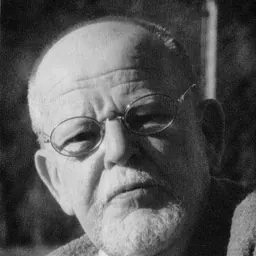



Contemporaries
People whose lives overlapped Graciela Paraskevaídis's
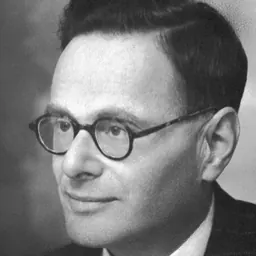
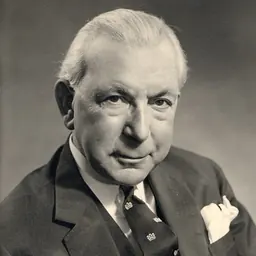
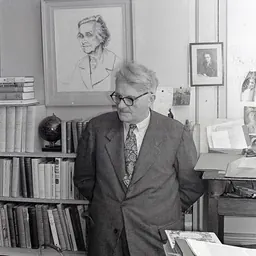


Frequently asked questions
Who was Graciela Paraskevaídis?
Argentine writer and composer (1940–2017)
When was Graciela Paraskevaídis born?
Graciela Paraskevaídis was born on 1 April 1940 in Buenos Aires, Argentina.
When did Graciela Paraskevaídis die?
Graciela Paraskevaídis died on 21 February 2017 in Montevideo.
What was Graciela Paraskevaídis's occupation?
Graciela Paraskevaídis was a composer, music educator and musicologist.
What nationality was Graciela Paraskevaídis?
Graciela Paraskevaídis was Argentine.
Sources & further reading
· Wikipedia: Graciela Paraskevaídis
· DBpedia: Graciela Paraskevaidis
Cite this page
APA: Biography.guide. (2026). Graciela Paraskevaídis. https://biography.guide/graciela-paraskevaidis/
MLA: "Graciela Paraskevaídis." Biography.guide, https://biography.guide/graciela-paraskevaidis/.
Chicago: "Graciela Paraskevaídis." Biography.guide. https://biography.guide/graciela-paraskevaidis/.
Data last updated: 2026-09-20 · Spot an error? Report a correction.
Page generated 2026-09-27 05:14 UTC