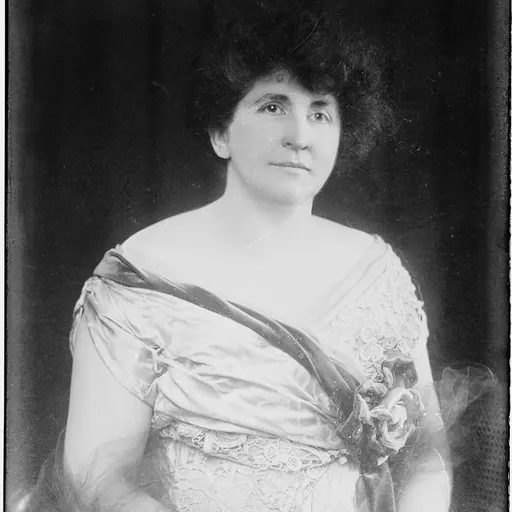
About Grace Wilbur Trout
Lived 1864 – 1955 (aged 91). Grace Wilbur Trout was an American suffragist.
Grace Belden Wilbur Trout (March 18, 1864 – October 21, 1955) was an American suffragist who was president of two prominent Illinois suffrage organizations, the Chicago Political Equality League and the Illinois Equal Suffrage Association (IESA). She was instrumental in getting the Illinois legislature to pass the presidential and municipal suffrage law, also known as the "Illinois Law," a law giving women partial suffrage by allowing them to vote in local and national elections. Though inexperienced with legislative work, she implemented a strategic lobbying plan in the state legislature that succeeded. She also organized public campaigns to build support for suffrage and secured favorable statewide media coverage.
Early life, education, and accomplishments Trout was born on March 18, 1864, in Maquoketa, Iowa. She was educated in public schools in Iowa and privately tutored in elocution. She married George William Trout in 1886 and they had four sons, one of whom died in 1912 at the age of 21. They moved to Chicago in 1884 and then to the nearby suburb of Oak Park. She wrote A Mormon Wife, a novel about women in the Mormon religion that was published in 1896.
Suffrage activities
Concerning Mrs. Trout's involvement in the woman's suffrage movement, The Gentle Force says,
"Dr. Anna Blount and Grace Wilbur Trout ... achieved state-wide reputations as leaders for the cause, and both served on the Municipal Suffrage Commission in Illinois, as did Club members Grace Hall Hemingway and Anna Lloyd Wright. Grace Wilbur Trout was president of both the Chicago and the Illinois Equal Suffrage Associations. Described as attractive, tireless and gifted, she was a fearless speaker and creative fundraiser for the cause."
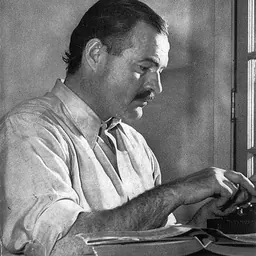
Note that Grace Hall Hemingway was the mother of author Ernest Hemingway and Anna Lloyd Wright was the mother of architect Frank Lloyd Wright.
Organizational leadership Trout was active in numerous women's clubs in her community. Her suffrage activity began in earnest in 1910, when she became president of the Chicago Political Equality League, an organization founded in 1894 by the Chicago Women's Club. During Trout's two years as president, she guided the league in increasing its membership, meeting frequency, and committee structure. The league published pamphlets and circulated petitions to lobby the state legislature to grant women voting rights. Trout and other activists such as Catharine Waugh McCulloch made speaking tours of Illinois, arguing for suffrage through campaigns such as the Suffrage Automobile Tour.
Two years later, at the annual convention of the Illinois Equal Suffrage Association (IESA, affiliated with the National Woman's Suffrage Association) on October 1–2, 1912, Trout was elected president of that association, a position she held almost every subsequent year through 1920 (except for 1915 when she took a rest and spent time in her second home in Jacksonville, Florida). As IESA president she changed the organization's tactics, setting new goals such as creating more local organizations and lobbying individual legislators to support suffrage. Launching the organization on a somewhat more conservative path, she was successful in achieving significant advances for women's suffrage.
Unexpected success A suffrage bill had been introduced to the Illinois state legislature many times over the years, often by the long-time legislative chair of IESA, Catharine McCulloch. Considering the relative inexperience of the new president and her legislative chair Elizabeth Knox Booth, there was not much expectation of success. Nonetheless, the new leaders worked with supporters in the legislature to introduce a partial suffrage bill in 1913, permitting women to vote "for Presidential electors and for all local offices not specifically named in the Illinois Constitution," but not for state representatives, Congressional representatives, or governor. She strategically planned public events throughout the state, such as automobile and speaking tours, in order to generate and highlight local support. She regularly cultivated media connections in Springfield and Chicago to get favorable newspaper coverage of IESA activities, and she cooperated with newspaper publishers to produce special sections. She wrote that she regularly "made it a point to see one or more managers of the newspapers and explain to them the difficulties we were encountering, and asked them to publish an editorial that would be helpful to the situation...We had these various newspapers containing suffrage propaganda folded so that the editorial (blue penciled) came on the outside." She would then have the newspapers placed on the relevant legislators' desks, making the support appear spontaneous and widespread.
Influencing the legislature Under Trout, IESA presence in Springfield changed in that it was much more subtle and quiet than previously. Initially, it was only Trout and legislative chair Elizabeth Booth; later two more joined them. Trout, Booth, Antoinette Leland Funk, and Ruth Hanna McCormick were called "the Big Four" by reporters. In previous campaigns, Catherine McCulloch's lobbying efforts had included trainloads of women arriving in Springfield, special hearings, and other very visible activities; McCulloch's style was "confrontational" and "militant". In contrast, Trout's team "kept the IESA’s legislative lobbying behind the scenes, so as not to arouse activity from opponents, especially the powerful liquor industry, and to leave open the possibility of converting anti-suffrage legislators.”
Significance of the Illinois Law The passage of the Illinois Suffrage Act (also known as the Illinois Law) was a turning point for suffrage. It gave women in Illinois suffrage for township officials and presidential electors, increasing the presidential electors women could now vote for from 37 to 54. Trout also encouraged women to vote and exercise their newly earned rights. She was one of the leaders of the 1916 "rainy day suffrage parade," where protesters successfully got the Republican Party to insert a suffrage plank in their platform. Trout also led the IESA effort toward creating a new state constitution, the route she thought would most expediently lead to full suffrage, and she helped in the national fight for the federal suffrage amendment, speaking at numerous Chautauquas and in a personal meeting with President Woodrow Wilson. In 1920, Trout ended her suffrage career when IESA disbanded and transformed to the League of Women Voters of Illinois.
Personal life
Trout wrote that she initially accepted the presidency of IESA because she was urged to do so by her 21-year-old son, who had seen California women fight for suffrage. He unexpectedly died shortly after she accepted her first IESA presidency.
Trout was sometimes criticized by more radical suffragists for press coverage of her designer clothes and huge hats. Yet she was widely admired as an orator and leader. As noted in 1927, "Mrs. Trout’s unusual gifts made her successful on the lecture platform, where she spoke without manuscript or notes. Her study of a theme was exhaustive, her preparation painstaking and the finished product sparkled with wit and humor."
Trout moved to Jacksonville, Florida, in 1921 and became the first president of the Planning and advisory board and president of the Jacksonville Garden Club. She resided at an estate called Marabanong. Trout died on October 21, 1955, in Jacksonville, and was buried in Evergreen Cemetery.
Published works
"Why Illinois Needs a New Constitution." Springfield, Ill. 1918.
Don’t just read it —
keep it.
Full-length biographies made to live with: read them, listen on the way to work, watch them tonight.
- E-book
- Audio
- Video
Instant download · yours to keep · every purchase keeps this site free
Important facts
People in Grace Wilbur Trout's life
Named in this biography and alive at the same time





Related people
Same field, nearest in time

Contemporaries
People whose lives overlapped Grace Wilbur Trout's






Frequently asked questions
Who was Grace Wilbur Trout?
American suffragist (1864–1955)
When was Grace Wilbur Trout born?
Grace Wilbur Trout was born on 18 March 1864 in Maquoketa.
When did Grace Wilbur Trout die?
Grace Wilbur Trout died on 21 October 1955 in Jacksonville, Florida.
What was Grace Wilbur Trout's occupation?
Grace Wilbur Trout was a suffragist.
What nationality was Grace Wilbur Trout?
Grace Wilbur Trout was American.
Sources & further reading
· Wikipedia: Grace Wilbur Trout
Cite this page
APA: Biography.guide. (2026). Grace Wilbur Trout. https://biography.guide/grace-wilbur-trout/
MLA: "Grace Wilbur Trout." Biography.guide, https://biography.guide/grace-wilbur-trout/.
Chicago: "Grace Wilbur Trout." Biography.guide. https://biography.guide/grace-wilbur-trout/.
Data last updated: 2026-09-22 · Spot an error? Report a correction.
Page generated 2026-09-27 05:10 UTC