
About Grace MacGowan Cooke
Lived 1863 – 1944 (aged 80). Grace MacGowan Cooke was an American writer and novelist.
Grace MacGowan Cooke (September 11, 1863 – June 24, 1944) was an American novelist, poet, and short-story writer. She wrote short stories and novels, often collaborating with her sister, Alice MacGowan. Throughout her career, she wrote 23 novels, 75 short stories, and more than 30 poems.
Early years
She was born in Grand Rapids, Ohio, to John E. MacGowan and Malvina Johnson MacGowan; and Katharine "Kit" (1900–1971). Both pursued acting in local theater, and Helen married writer Harry Leon Wilson. Grace and William divorced in 1908.
Career Both Cooke and her sister were school teachers, having started teaching in their teenage years. Following her marriage to Cooke, she assumed the role of bookkeeper for the printing shop, MacGowan & Cooke, which was co-owned by her father, brother, and husband.
In 1906, Cooke, her sister and her two daughters, moved to Helicon Home Colony, an experimental community formed by author Upton Sinclair in Englewood, New Jersey. Cooke contributed to The Nautilus, a magazine associated with the New Thought movement. The publication focused on self-help, wellness, and popular health trends. She authored an article titled The Spiritual Meaning of Fletcherism in 1907, delving into the concept of "Fletcherism" and its spiritual implications. She penned the children's book Son Riley Rabbit and Little Girl in 1907, with her daughter Kit posed for the book's illustrations.
In December 1908, the family moved to the art colony at Carmel-by-the-Sea, California, to one of the first homes constructed in southwest Carmel in 1905 by architect Eugenia Maybury, one of the area's first female architects.
In 1919, Cooke traveled with her daughters to the Southwest, conducting research on the lifestyle and traditions of the Hopi. The trip's experience was incorporated into her novel, The Joy Bringer: A Tale of the Painted Desert (1913). In 1910, she also wrote The Power and the Glory, a novel exploring feminist themes and the challenging working conditions in the cotton mills of the Appalachian region.
In May 1914, the Los Angeles Times and the Oakland Tribune reported that Alice had been intentionally poisoned at her home to steal her diamonds and cash. The perpetrator was never discovered.
Don’t just read it —
keep it.
Full-length biographies made to live with: read them, listen on the way to work, watch them tonight.
- E-book
- Audio
- Video
Instant download · yours to keep · every purchase keeps this site free
Important facts
People in Grace MacGowan Cooke's life
Named in this biography and alive at the same time



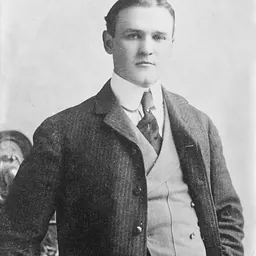
Related people
Same field, nearest in time
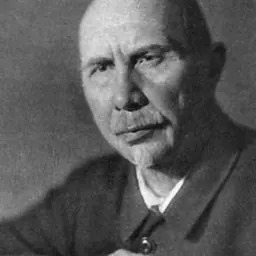

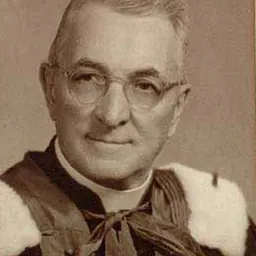

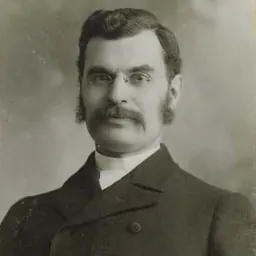
Contemporaries
People whose lives overlapped Grace MacGowan Cooke's



Frequently asked questions
Who was Grace MacGowan Cooke?
American novelist
When was Grace MacGowan Cooke born?
Grace MacGowan Cooke was born on 11 September 1863 in Grand Rapids.
When did Grace MacGowan Cooke die?
Grace MacGowan Cooke died on 24 June 1944 in Los Gatos.
What was Grace MacGowan Cooke's occupation?
Grace MacGowan Cooke was a writer and novelist.
What nationality was Grace MacGowan Cooke?
Grace MacGowan Cooke was American.
Sources & further reading
· Wikipedia: Grace MacGowan Cooke
· DBpedia: Grace MacGowan Cooke
Cite this page
APA: Biography.guide. (2026). Grace MacGowan Cooke. https://biography.guide/grace-macgowan-cooke/
MLA: "Grace MacGowan Cooke." Biography.guide, https://biography.guide/grace-macgowan-cooke/.
Chicago: "Grace MacGowan Cooke." Biography.guide. https://biography.guide/grace-macgowan-cooke/.
Data last updated: 2026-09-20 · Spot an error? Report a correction.
Page generated 2026-09-27 05:19 UTC