
About Govind Talwalkar
Lived 1925 – 2017 (aged 91). Govind Talwalkar was an Indian author and journalist.
Govind Shripad Talwalkar (22 July 1925 – 21 March 2017), also known honorifically as Govindrao Talwalkar) was an Indian journalist, the editor of Maharashtra Times, historian, scholar, intellectual with liberal views, social reformer and author of 32 books. He received the Lokmanya Tilak Award from the Government of Maharashtra, India and also the B. D. Goenka Award, Durga Ratan Award, Agarkar Award & Bhalerao Award for excellence in journalism and Ramshastri award for social justice. He received Maharashtra Government Award for his book - Navroji te Nehru; and N.C. Kelkar Award and Sahitya Paishad Award for his four volume book - Soviet Samrajyacha Uday ani Asta; and Damani Award for his book - Badalta Europe.
Early life
Talwalkar was born on 22 July 1925 in Dombivali, in the Indian state of Maharashtra. His grandfather entered this birthdate when he enrolled him in the school; however, the real birthdate might have been 23 July 1925.
Coming from a family with limited means, Talwalkar graduated from the university of Mumbai while doing odd jobs at the same time to pay for his fees. Talwalkar's family has a special place in Maharashtra. Talwalkar's uncle Gopinath Talwalkar was a well-known poet and writer. His other uncle Sharad Talwalkar was a famous actor in Marathi films and on stage.
Career
Editing Loksatta
After getting a degree, Talwalkar joined an intellectual magazine, Navbharat. After that, he was invited by Mr. H.R. Mahajani, the then editor of Loksatta, a Marathi daily of the Indian Express Group, to join as a sub-editor. Such was his influence on the social, political, economic, educational, cultural and intellectual life of Maharashtra. Several readers acknowledge that they learnt what to read and how to think rationally because of him. He was a visionary editor, a man of ideas, who gave a new direction to Marathi journalism. He believed that the pursuit of knowledge and science, public service and moral foundation were the key to achieving greatness for a national. He edited his paper with this agenda and encouraged his readers to follow these principles. In the tradition of Lokmanya Tilak & the Maharashtrian saint Samarth Ramdas, he used simple Marathi to make difficult subjects easily understandable to ordinary readers, while at the same time making all salient points with notable gravitas. Several of his editorials and articles are collected in his books, including Agralekh, Bahar, Pushpanjali, Lal gulag ('Red Gulag'), Niyatishi karar.
Shri Govind Talwalkar had been a Guiding Light for three generations of Maharashtrians. He had the greatest influence over the literary, political, educational, social, cultural and intellectual fabric of post-independence Maharashtra over fifty years. As an editor, he made his mark as an intellectual, interested in diverse subjects. He educated his readers. In the words of famous economist Nani Palkhiwala, he was an institution. Poet Kusumagraj noted that Talwalkar was doing a great public service by educating the masses through his newspaper and setting an example in excellence, promoting good reading, writing and diverse and original ideas.
He was best known for his editorials, which appealed to the reason. His hard-hitting editorials were feared but respected by the politicians and people in powerful places; and immensely admired by the masses and the scholars. In this he followed the tradition of Lokmanya Tilak. He did so selflessly, without expecting any Padma award, a seat on Rajya Sabha or anything for that matter. He had no party affiliation. He was admired by his readers across the ideological spectrum, and feared by politicians across the ideological spectrum as well. He set the tone of discussion in Maharashtra and his writings addressed topics including the land-less labour, famine conditions, dams, agriculture, banking, economic reforms, refugee problem and problems facing the universities, need to abolish superstition, need for social justice for the downtrodden and many important issues. He wrote in support of secularism. He exposed corruption in politics, universities, hospitals, social and public matters. Under his editorship Maharashtra Times was rightly regarded as a broad intellectual forum. Talwalkar was in high esteem for his honesty, integrity, courage and intellectual contribution to the society. To him goes a large share of credit for nourishing Maharashtrians' moral universe and keeping politicians on a tight leash. He stood for credibility. It is said that some politicians have blocked giving him PadmaVibhushan award, while honouring many undeserving people.
Though proud of his mother-tongue, Marathi, Talwalkar thought that his readers should know the best literature in various languages. He started a popular column introducing books in English, writing under the pseudonym Vachaspati. They were not just book reviews. He wrote a critical essay on the book and that subject, thereby enlightening the readers on that subject matter, and encouraging them to read and widening their intellectual horizon. His articles on books have been published as collections – Vachta vachta, Granthasangati, Sourabh.
On his retirement in 1996, Talwalkar and his wife Shakuntala settled with their daughters in the United States, but continued to write critical articles and essays in Marathi and English on world politics, economics, history, social issues and books. He died on 21 March 2017 at the age of 91.
He helped generously to people in need and donated for public causes over the years. He donated his precious collection of 5000 books to the Bhandarkar Oriental Research Institute in Pune, where they are placed in a special memorial hall named after him on his first birth anniversary in 2017. He had previously donated several thousand other books to libraries.
Author of books on modern history of India and the world
Talwalkar was a scholar as well as a writer. His books were based on deep research. He has written several books on the modern history of India. His book on the constitutional aspects of transfer of power in India - Sattantar:1947, vol 1,2,3 - is now in its third edition. This book as well as his other books Naoroji te Nehru, Niyatishi Karar, Gandhi Parva (vol 1 and 2) encompass the freedom movement of India, for the transfer of power from the British, with the historical, economic and cultural perspective and lucid analysis. They are considered very important for the study of that period for scholars as well as general public.
Many of Talwalkar's books are on the leaders of India's freedom movement : Justice Ranade, Tilak, Gopal Krishna Gokhale. Like Gokhale, Talwalkar was a social reformer and a patriot. The books Naoroji te Nehru; Virat dnyani:Nyaymurti Ranade; Tilak darshan; Bal Gangadhar Tilak received various awards. He translated his Marathi book Nek Namdar Gokhale into English, entitled, Gopal Krishna Gokhale: Life and Times, published by Rupa and Co. The Tribune'''s review of Gopal Krishna Gokhale: Life and Times praises Talwalkar as "a versatile journalist", and describes the book as a "comprehensive study" with a "lucid and straightforward" narrative. Talwalkar made further changes to this book in English. This new book entitled Gopal Krishna Gokhale:Gandhi's Political Guru was published by the Pentagon Press. The Hindu's review of Gopal Krishna Gokhale:Gandhi's political guru notes that in addition to being a classic biography of Gokhale, it is also an in-depth study of the country's freedom struggle in the early stages; and skillfully locates Gokhale's work in the context of his times.
Talwalkar's book Bharat Ani Jag is a scholarly analysis of India's foreign policy and economic and political situation in the post-independence era (i.e. since 1947). It is a valuable reference book.
Talwalkar was the author of books on the wars in Iraq & Afghanistan – Iraqdahan, Agnikand.
Freethinker, writer on the Soviet empire, China and communism
From the 1950s, India sought economic and technological help from the Soviet Union. When it was fashionable to be a communist, Talwalkar remained an independent and wrote against the totalitarianism of the Right as well as the Left. He was steeped in the humanist thoughts of M. N. Roy, George Orwell, Karl Pauper, Arthur Koestler, and Kolakowsky. In fact, he had predicted the fall of Soviet Union long before other experts.
After the collapse of the Soviet Union, Talwalkar toured Eastern Europe and wrote journalistic essays on the changing scene. These are collected in his book – Badalta Europe. He was a scholar of Russian studies. He wrote a four volume book in Marathi on the rise and fall of the Soviet empire: Soviet Samrajyacha Uday Ani Asta, winning the Kelkar prize.
Journalist
Talwalkar contributed articles in English to newspapers including The Times of India, The Telegraph (of Calcutta), The Illustrated Weekly of India, Frontline magazine, The Mainstream and the Deccan Herald, The Tribune (Chandigarh), Outlookindia and Asian Age .
He regularly wrote articles in Marathi for a literary magazine Lalit. After retirement he wrote a regular column – Saurabh – in Lalit each month on books & other topics such as 400th anniversary of saint Ramdas Swami. These articles are published by Majestic prakashan under the title Sourabh, vol. 1 & 2. Grantha Sangati is another collection of his book reviews published by Popular Prakashan.
He has received the Durga Ratan and B.D. Goenka Awards for excellence in journalism, and the Ramshatri Award for social justice.
After retirement, Talwalkar wrote regularly for the daily, Divya Marathi and weekly Sadhana and occasionally for Maharashtra Times and other Marathi newspapers, and in English for The Tribune (Chandigarh), The Asian Age. Bose's grand nephew Ashis Ray uploaded this very important information on the website he specially created and devoted to Subhas Bose.
Don’t just read it —
keep it.
Full-length biographies made to live with: read them, listen on the way to work, watch them tonight.
- E-book
- Audio
- Video
Instant download · yours to keep · every purchase keeps this site free
Important facts
People in Govind Talwalkar's life
Named in this biography and alive at the same time

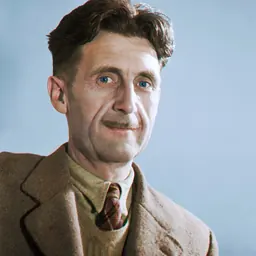




Related people
Same field, nearest in time

Contemporaries
People whose lives overlapped Govind Talwalkar's


Frequently asked questions
Who was Govind Talwalkar?
Journalist, author (1925–2017)
When was Govind Talwalkar born?
Govind Talwalkar was born on 22 July 1925.
When did Govind Talwalkar die?
Govind Talwalkar died on 22 March 2017.
What was Govind Talwalkar's occupation?
Govind Talwalkar was an author and journalist.
What nationality was Govind Talwalkar?
Govind Talwalkar was Indian.
Sources & further reading
Cite this page
APA: Biography.guide. (2026). Govind Talwalkar. https://biography.guide/govind-talwalkar/
MLA: "Govind Talwalkar." Biography.guide, https://biography.guide/govind-talwalkar/.
Chicago: "Govind Talwalkar." Biography.guide. https://biography.guide/govind-talwalkar/.
Data last updated: 2026-09-22 · Spot an error? Report a correction.
Page generated 2026-09-27 05:31 UTC