
Gouyi
Noblewoman; consort of Emperor Wu of Han
About Gouyi
Lived 110 BC – 88 BC (aged 21–22). Gouyi was a Chinese empress consort.
Lady Gouyi (; 113–88 BC), also known as Zhao Jieyu (; Consort Zhao), or Zhao Gouyi (趙鉤弋), was a consort of Emperor Wu of the Chinese Han dynasty, and the mother of Emperor Zhao of Han.
Near the end of his long reign, Emperor Wu made her young son Liu Fuling his heir apparent, but ordered the death of Lady Gouyi to prevent her from usurping power from the boy emperor. After Fuling acceded to the throne, he posthumously named her as empress dowager and built for her the Yunling mausoleum, which is now a Major Historical and Cultural Site of China.
Life Lady Gouyi was a native of Hejian Commandery, born into the Zhao family. Her given name is unknown. Her father was castrated after committing an offence and served as a minor eunuch in Chang'an (now Xi'an), the capital of the Han empire.
It was said that Lady Gouyi's fists were always clenched. When Emperor Wu of Han was having a hunting expedition in Hejian, Zhao was summoned to his presence. When the emperor touched her hands, her fists miraculously opened up, revealing a jade hook in one of them. Emperor Wu was pleased and took her as a consort, naming her Lady Quan ("fist") and Lady Gouyi ("hook"). Awarded the consort rank of (jieyu, meaning "handsome fairness"), she was also known as Zhao Jieyu.
After her death, Emperor Wu explained to his attendants that a child emperor with a young mother would lead to unrest, and the empress dowager would wield unchecked and absolute power as Empress Lü did, although he acknowledged that his action might be misunderstood by "children and fools".
Legends Over the centuries, many legends grew out of the death of Lady Gouyi. It was said that her body did not become cold in death and emitted a fragrance, and that when her coffin was later opened, there was nothing inside but a silk slipper. She became revered as a Taoist immortal. Another legend, recorded in the Yunyang ji, says that Emperor Wu built a rostrum in the Ganquan Palace to communicate with Lady Gouyi's spirit. A blue bird often perched on the rostrum, but disappeared after Emperor Xuan acceded to the throne in 73 BC.
Don’t just read it —
keep it.
Full-length biographies made to live with: read them, listen on the way to work, watch them tonight.
- E-book
- Audio
- Video
Instant download · yours to keep · every purchase keeps this site free
Important facts
People in Gouyi's life
Named in this biography and alive at the same time

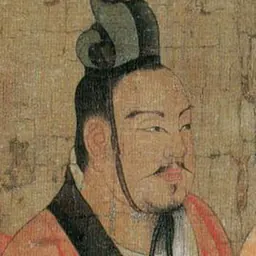
Related people
Same field, nearest in time
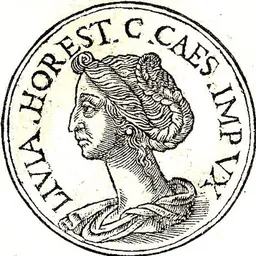
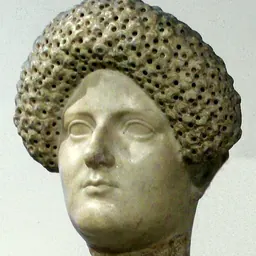
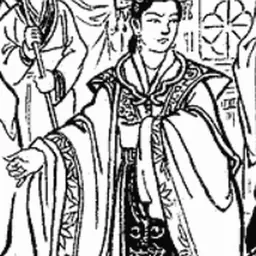

Contemporaries
People whose lives overlapped Gouyi's



Frequently asked questions
Who was Gouyi?
noblewoman; consort of Emperor Wu of Han
When was Gouyi born?
Gouyi was born in 110 BC.
When did Gouyi die?
Gouyi died in 88 BC.
What was Gouyi's occupation?
Gouyi was an empress consort.
What nationality was Gouyi?
Gouyi was Chinese.
Sources & further reading
Cite this page
APA: Biography.guide. (2026). Gouyi. https://biography.guide/gouyi/
MLA: "Gouyi." Biography.guide, https://biography.guide/gouyi/.
Chicago: "Gouyi." Biography.guide. https://biography.guide/gouyi/.
Data last updated: 2026-09-20 · Spot an error? Report a correction.
Page generated 2026-09-27 05:18 UTC