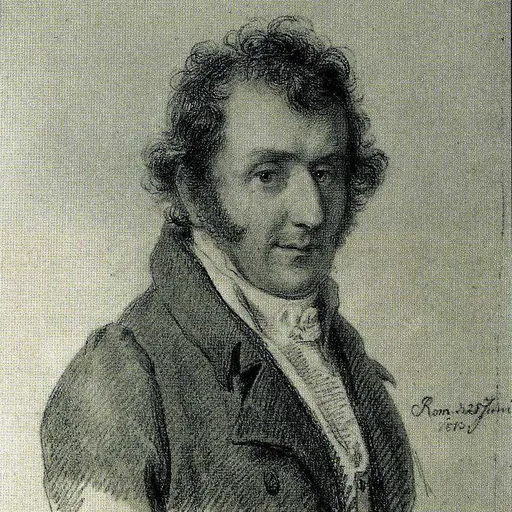
About Gottlob Friedrich Thormeyer
Lived 1775 – 1842 (aged 66). Gottlob Friedrich Thormeyer was an architect.
Gottlob Friedrich Thormeyer (23 October 1775 - 11 February 1842) was a German representative of neoclassical architecture.
Life and artwork
Education and early work Thormeyer was born in the Protestant Kreuzkirche parish, Dresden. He started to study painting in very early years at the Dresden Academy of Fine Arts under Giovanni Battista Casanova, but changed to architecture in 1791. Friedrich August Krubsacius and Gottlob August Hölzer were his professors there. Since 1800, he belonged to the royal staff as Hofbaukondukteur. Thormeyer created some well known drawings depicting sights of Dresden and its surrounding, e.g. Dom Meißen, Schloss Pillnitz and Katholische Hofkirche (drawn 1807). Many of them were later etched by Christian Gottlob Hammer. Some neo-classical buildings arose in little towns and villages around Dresden, like the Vorwerk Kleindrebnitz.
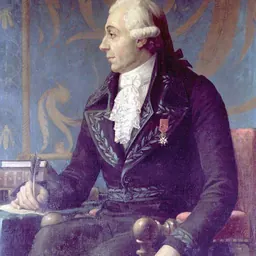
Traces of the War of the Sixth Coalition King Frederick Augustus I of Saxony appointed Thormeyer royal court architect in 1812. Afterwards, Thormeyer went on a study trip, which led him e.g. to Switzerland and Italy, thus avoiding direct involvement in the War of the Sixth Coalition. The portrait above was drawn by Carl Christian Vogel von Vogelstein during Thormeyer's stay 1813 in Rome. Many of his works, however, are in close connection to this war: 1812: Etching of the decoration on occasion of the visit of Napoleon to Dresden 1814: Design of memorials for Jean Victor Moreau in Dresden and Theodor Körner in Wöbbelin 1815 - 1818: Rebuilding of Bischofswerda, burned down during occupation by Napoleonic troops.
Reconstruction of Dresden After the war, Thormeyer led the demolishing of the historical fortification in Dresden as architect in-chief. This reconstruction was finished in 1830, integrating the baroque city center with the surrounding and thus creating room for Dresden to grow rapidly during the following decades. In 1814, Russian governor Nikolai Grigorjewitsch Repnin Wolkonski ordered the long-planned outside-staircase to Brühl's Terrace, Thormeyer's best-known masterpiece. About 1823, Thormeyer accomplished the classicizing tower of the Annenkirche, a church of the late baroque era. Moreover, he initiated a memorial statue of Frederick Augustus I of Saxony, finally designed by Ernst Friedrich August Rietschel.
Don’t just read it —
keep it.
Full-length biographies made to live with: read them, listen on the way to work, watch them tonight.
- E-book
- Audio
- Video
Instant download · yours to keep · every purchase keeps this site free
Important facts
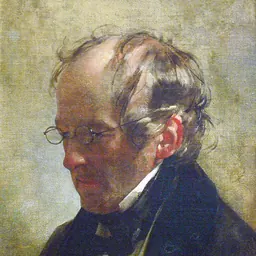
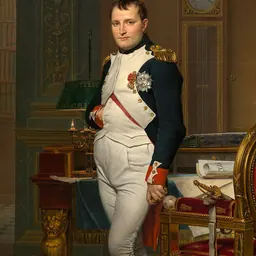
People in Gottlob Friedrich Thormeyer's life
Named in this biography and alive at the same time




Related people
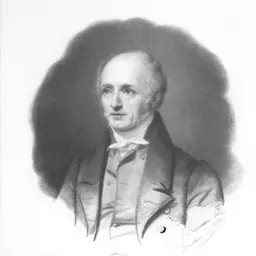
Same field, nearest in time
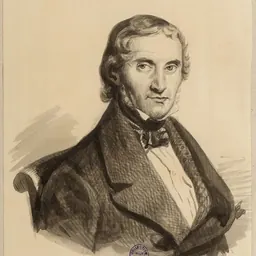

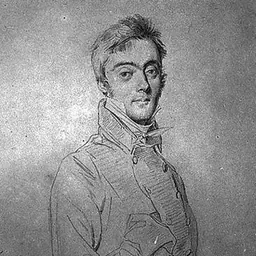

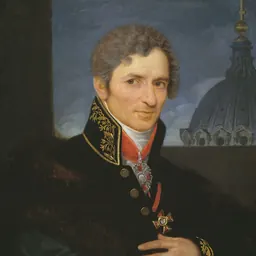
Contemporaries
People whose lives overlapped Gottlob Friedrich Thormeyer's


Frequently asked questions
Who was Gottlob Friedrich Thormeyer?
German architect (1775-1842)
When was Gottlob Friedrich Thormeyer born?
Gottlob Friedrich Thormeyer was born on 23 October 1775 in Dresden.
When did Gottlob Friedrich Thormeyer die?
Gottlob Friedrich Thormeyer died on 11 February 1842 in Dresden.
What was Gottlob Friedrich Thormeyer's occupation?
Gottlob Friedrich Thormeyer was an architect.
What nationality was Gottlob Friedrich Thormeyer?
Gottlob Friedrich Thormeyer's recorded nationality: Kingdom of Saxony.
Sources & further reading
· Wikipedia: Gottlob Friedrich Thormeyer
· DBpedia: Gottlob Friedrich Thormeyer
Cite this page
APA: Biography.guide. (2026). Gottlob Friedrich Thormeyer. https://biography.guide/gottlob-friedrich-thormeyer/
MLA: "Gottlob Friedrich Thormeyer." Biography.guide, https://biography.guide/gottlob-friedrich-thormeyer/.
Chicago: "Gottlob Friedrich Thormeyer." Biography.guide. https://biography.guide/gottlob-friedrich-thormeyer/.
Data last updated: 2026-09-20 · Spot an error? Report a correction.
Portrait: Wikimedia Commons · author & licence
Page generated 2026-09-27 04:58 UTC