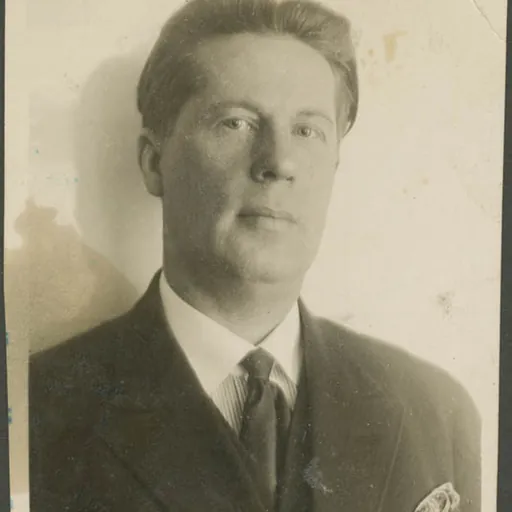
About Gori
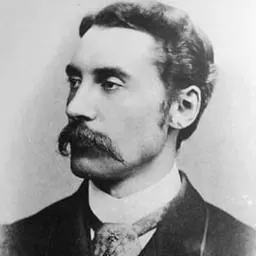
Lived 1894 – 1944 (aged 50). Gori was an Estonian caricaturist.
Vello Agori (until 1935 Grigori Tõnisson, also known as Georg Tõnisson, pen name Gori; February 20, 1894 – October 7, 1944) was an Estonian caricaturist.
Early life and education Vello Agori's father Jüri (1844–?) was a janitor at Pärnu boys' high school, and his mother Anna (née Blumenfeldt, 1860–1955) was a laundress. He came from an Orthodox family and was baptized Grigori, but among the children he was called Gori, which was the origin of his future pseudonym as a cartoonist.
Career Initially, Gori submitted his caricatures widely, but they were not published. To support himself, he mainly worked as a bricklayer. In 1911, Gori's first twenty works were published in the magazines Sädemed and . In 1913, he settled in Tallinn and started working for the newspaper Leek. Gori was mobilized into the Russian Tsarist Army and sent to Poland. In 1915, in his first battle near Danzig, One of the best-known drawings in Knock-out, "Demokraatia kaks palet" (The Two Faces of Democracy), has been highlighted by both and . The drawing shows a poor woman with two children looking at wealthy people drinking wine, and she says "Darling, I don't have much money to buy acetic acid" (Kuld mul pole niigi palju raha, et äädikahapet võiksin osta). Tiitus believes that "the drawings may not always be related to laughter, that the social scope of the drawings may reach deep tragedy." Tiitus says that if Gori had written the caption to say 'I don't have money to buy bread' the reader would have quickly forgotten this caricature because life offered many such contrasts. Instead of the demand for a means of livelihood, which we would normally expect, there is suddenly a desire—for a means of death! From eternal misery, the only consolation—death—has shrunk, and even this cannot be fulfilled because of the appointed means of living."
In 1930 and 1931, Gori participated with Otto Krusten in an international traveling exhibition, in which Gori presented ten caricatures and Krusten presented 40 caricatures. It was thanks to this traveling exhibition that Estonian caricature art rose to a respectable position in Europe.
The Era of Silence that began in Estonia in 1934 ended Gori's free activities. Several of his cartoons were not published due to censorship, and some of them caused trouble in newspapers. In 1941, the Soviet occupation authorities arrested Gori, but they released him on the condition that he would criticize private traders ("speculators") and slackers in his published cartoons, and he was also forced to draw political cartoons against Estonian independence and politicians, which were published in Rahva Hääl and Sirp ja Vasar.
During the German occupation, Gori was imprisoned twice. During his first imprisonment (August 9, 1941 – September 7, 1942), They were published in 1911 in the Postimees supplement Sädemed (Tartu) and in the newspaper Eesti Kodu. During the First World War, the artist's characteristic pictorial satire developed, penetrating all aspects of social life. and Stockholm (1932), and general exhibitions of Estonian art in Paris, Lübeck, and Kiel (1929), Cologne, and Copenhagen (1929–1930).
Published works Gori Lori. Kerge genre. Monoloogid ja dialoog (Gori Lori. A Light Genre. Monologues and Dialogue). Tallinn, 1920. Jänes-Koljat. Muinasjutt lastele (The Hare Goliath. A Fairy Tale for Children). Tallinn, 1920. Kaluri Miku. Lastejutt piltidega (Miku the Fisherman. An Illustrated Children's Story). Tallinn, 1921. Kiisu-Kiisu! Lastenaljad (Kitty-Kitty! Jokes for Children). Tallinn, 1920. Knock-out. Karikatuurid ja vested (Knock-Out. Caricatures and Satires). Tallinn, 1928; 2. trükk Faatum 1999. Kollane, must, valge. Lastelugu piltidega (Yellow, Black, White. An Illustrated Children's Story). Pärnu, 1920. Kriimustused. Naljandid (Scratches. Jokes). Tallinn, 1921. Lood lastele (Stories for Children). Tallinn, 1921. Lõbus ABD lastele (A Fun ABC for Children). Pärnu, 1922. Lõbus lumememm. Laste jõululeht (The Funny Snowman. A Children's Christmas Booklet). Pärnu, 1921. Miku imelikud juhtumised tähestikuga. Lastelugu – piltidega (Miku's Peculiar Events with the Alphabet. A Children's Story—Illustrated). Tallinn, 1922. Muiked wingus. Naljandid (Sullen Smiles. Jokes). Tallinn, 1921. Nipet-Näpet. Lastenaljad (Odds and Ends. Children's Jokes). Tallinn, 1920. Sõdur Sass. Lastelugu (Sass the Soldier. A Children's Story). Tallinn, 1919. Uudishimuline pärdik. Lastelugu piltidega (A Curious Curmudgeon. An Illustrated Children's Story). Tallinn, 1923. Vorstivalmistaja Haim. Hirmus ja õudne naljakas lugu kõvade närvidega lastele (Haim the Sausage Maker. A Scary and Spooky Funny Story for Children with Strong Nerves). Pärnu, 1920.
Commemoration In 2023, the animated documentary was released.
Personal life On June 21, 1920, Gori married Lydia Viitpom (a.k.a. Viiu Agori, 1898–?), and they had sons, Vello (1921–1974) and Olev (1925–1985). Even when naming his sons, Gori made a joke: Olev is essentially Vello written backwards. Both sons had a talent for drawing and a sense of humor, but difficult times did not favor the development of their talent. Olev became a tram driver, and Vello was a radio repairman.
Don’t just read it —
keep it.
Full-length biographies made to live with: read them, listen on the way to work, watch them tonight.
- E-book
- Audio
- Video
Instant download · yours to keep · every purchase keeps this site free
Important facts
People in Gori's life
Named in this biography and alive at the same time
Related people
Same field, nearest in time



Contemporaries
People whose lives overlapped Gori's


Frequently asked questions
Who was Gori?
Estonian caricaturist (1894–1944)
When was Gori born?
Gori was born on 20 February 1894 in Pärnu.
When did Gori die?
Gori died on 7 October 1944 in Tallinn.
What was Gori's occupation?
Gori was a caricaturist.
What nationality was Gori?
Gori was Estonian.
Sources & further reading
Cite this page
APA: Biography.guide. (2026). Gori. https://biography.guide/gori/
MLA: "Gori." Biography.guide, https://biography.guide/gori/.
Chicago: "Gori." Biography.guide. https://biography.guide/gori/.
Data last updated: 2026-09-21 · Spot an error? Report a correction.
Portrait: Wikimedia Commons · author & licence
Page generated 2026-09-27 04:59 UTC