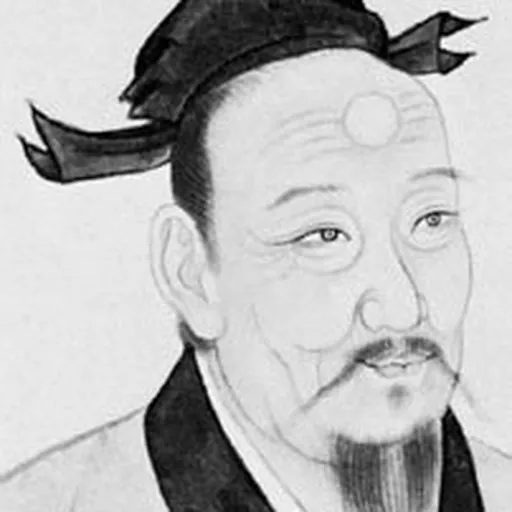
Gongsun Long
Chinese philosopher of the 3rd century BCE of the School of Names
About Gongsun Long
Lived 325 BC – 250 BC (aged 74–75). Gongsun Long was a philosopher.
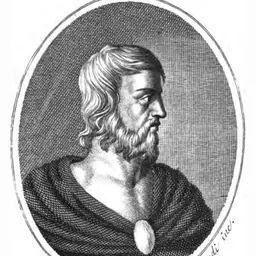
Gongsun Long (250 BC ), courtesy name Zibing, was a Chinese philosopher, writer, and member of the School of Names, also known as the Logicians, of ancient Chinese philosophy. Gongsun ran a school and received patronage from rulers, advocating peaceful means of resolving disputes amid the martial culture of the Warring States period. His collected works comprise the anthology. Comparatively few details are known about his life, and much of his work has been lost—only six of the fourteen essays he originally authored are still extant.
In book 17 of the Zhuangzi, Gongsun speaks of himself:
When young, I studied the way of the former kings. When I grew up, I understood the practice of kindness and duty. I united the same and different, separated hard from white, made so the not-so and admissible the inadmissible. I confounded the wits of the hundred schools and exhausted the eloquence of countless speakers. I took myself to have reached the ultimate.
He is best known for a series of paradoxes in the tradition of Yin Wen and Hui Shi, including "white horses are not horses", "when no thing is not the pointed-out, to point out is not to point out", and "there is no 1 in 2". These paradoxes seem to suggest a similarity to the discovery in Greek philosophy that pure logic may lead to apparently absurd conclusions.
Rectification of names
Although not done justice by English translation, professor Zhenbin Sun considers Gongsun Long’s work on ming-shi, or name and reality, the most "profound and systematic" of the School of Names. As Gongsun Long enjoys the favor or rulers, his work also concerns social order.
The Gongsun Long Zi reads: Heaven, earth, and their products are all things . When things possess the characteristics of things without exceeding them, there is actuality . When actuality actually fulfills its function as actuality, without wanting, there is order . To be out of order is to fall into disorder. To remain in order is to be correct. What is correct is used to rectify what is incorrect. doubt what is correct. To rectify is to rectify actuality, and to rectify the name corresponding to it.
White Horse dialogue
In the White Horse Dialogue , one interlocutor (sometimes called the "sophist") defends the truth of the statement "White horses are not horses," while the other interlocutor (sometimes called the "objector") disputes the truth of this statement. This has been interpreted in a number of ways.
Possibly the simplest interpretation is to see it as based on a confusion of class and identity. The argument, by this interpretation, plays upon an ambiguity of the negative copula "is not" . The expression "X is not Y" can mean either "X is not a member (or subset) of set Y" "X is not identical to Y"
The sentence "White horses are not horses" would normally be taken to assert the obviously false claim that white horses are not part of the group of horses. However, the "sophist" in the dialogue defends the statement under the interpretation, "Not all horses are white horses". The latter statement is actually true, since—as the "sophist" explains—"horses" includes horses that are white, yellow, brown, etc., while "white horses" includes only white horses, and excludes the others. A.C. Graham proposed this interpretation and illustrated it with an analogy. The "Objector" assumes that "a white horse is not a horse" is parallel to "a sword is not a weapon," but the "Sophist" is treating the statement as parallel to "a sword is not a blade." Other interpretations have been put forward by Fung Yu-lan and Chad Hansen, among others.
Other works He was also responsible for several other essays , as short as 300 characters. "On Pointing at Things" : An enigmatic discussion on reference and the referent, or designation and the designated. "On Understanding Change" "On Hardness and Whiteness" : based on the example of a stone that is both hard and white. "On Name and Substance" "Storehouse of Traces"
Don’t just read it —
keep it.
Full-length biographies made to live with: read them, listen on the way to work, watch them tonight.
- E-book
- Audio
- Video
Instant download · yours to keep · every purchase keeps this site free
Important facts
People in Gongsun Long's life
Named in this biography and alive at the same time


Related people
Same field, nearest in time




Contemporaries
People whose lives overlapped Gongsun Long's


Frequently asked questions
Who was Gongsun Long?
Chinese philosopher of the 3rd century BCE of the School of Names
When was Gongsun Long born?
Gongsun Long was born in 325 BC in Zhao.
When did Gongsun Long die?
Gongsun Long died in 250 BC.
What was Gongsun Long's occupation?
Gongsun Long was a philosopher.
Sources & further reading
Cite this page
APA: Biography.guide. (2026). Gongsun Long. https://biography.guide/gongsun-long/
MLA: "Gongsun Long." Biography.guide, https://biography.guide/gongsun-long/.
Chicago: "Gongsun Long." Biography.guide. https://biography.guide/gongsun-long/.
Data last updated: 2026-09-21 · Spot an error? Report a correction.
Portrait: Wikimedia Commons · author & licence
Page generated 2026-09-27 04:58 UTC