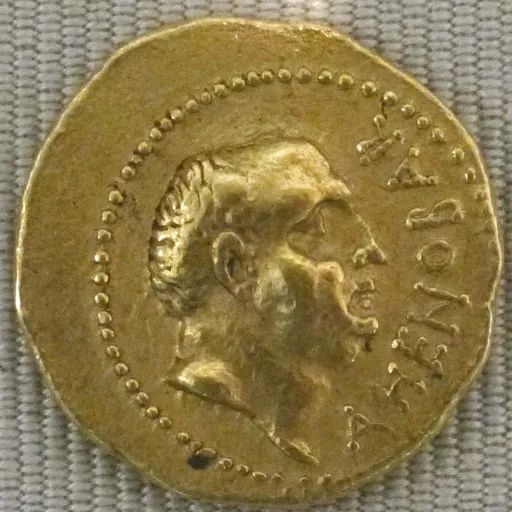
Gnaeus Domitius Ahenobarbus
Roman consul 96 BC
About Gnaeus Domitius Ahenobarbus
Lived 139 BC – 89 BC (aged 49–50). Gnaeus Domitius Ahenobarbus was a Roman politician, military personnel, mintmaster and consul.
Gnaeus Domitius Ahenobarbus (died c. 89 BC) was tribune of the people in 104 BC. He was the son of Gnaeus Domitius Ahenobarbus, and brother of Lucius Domitius Ahenobarbus.
As tribune, he brought forward a law (lex Domitia de Sacerdotiis) by which the priests of the superior colleges were to be elected by the people in the Tribal Assembly (seventeen of the tribes voting) instead of by co-optation. Suetonius suggests there were personal reasons for enacting this legislation: he writes that Domitius was "enraged" after he failed to be appointed pontifex maximus, a position both Domitius' father and grandfather held. Elected tribune in 104, Domitius democratized the selection process for the pontificate, and was elected pontifex the following year (succeeding Lucius Caecilius Metellus Dalmaticus). The lex Domitia was later repealed by Sulla, but revived under Caesar.
Both during his tribunate and afterwards, he prosecuted several of his private enemies, such as Marcus Aemilius Scaurus (whom he blamed for not having been elected to the pontificate in the first place) and Marcus Junius Silanus.
He was elected consul in 96 BC and censor in 92 BC with Lucius Licinius Crassus the orator, with whom he was frequently at variance. They took joint action, however, in suppressing the recently established Latin rhetorical schools, which they regarded as injurious to public morality; in the words of Cicero, these were seen as 'schools of impudence'.
Their censorship was long celebrated for their disputes. Domitius was of a violent temper, and was moreover in favor of the ancient simplicity of living, while Crassus loved luxury and encouraged art. Among the many sayings recorded of both, we are told that Crassus observed, "that it was no wonder that a man had a beard of brass, who had a mouth of iron and a heart of lead." Cicero wrote that Domitius was not to be reckoned among the orators, but that he spoke well enough and had sufficient talent to maintain his high rank.
Ahenobarbus apparently died in 89 or early 88 BC, during the consulship of Sulla, and was succeeded as pontifex by Quintus Mucius Scaevola.
Children He had two sons: Gnaeus Domitius Ahenobarbus and Lucius Domitius Ahenobarbus.
Don’t just read it —
keep it.
Full-length biographies made to live with: read them, listen on the way to work, watch them tonight.
- E-book
- Audio
- Video
Instant download · yours to keep · every purchase keeps this site free
Important facts
People in Gnaeus Domitius Ahenobarbus's life
Named in this biography and alive at the same time
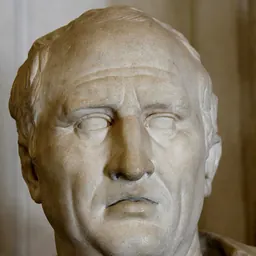
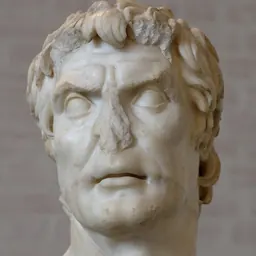
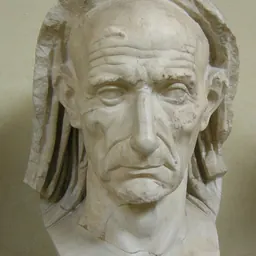

Related people
Same field, nearest in time
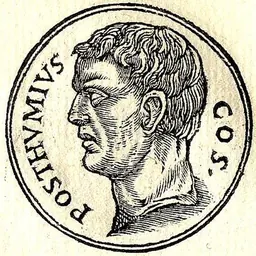


Contemporaries
People whose lives overlapped Gnaeus Domitius Ahenobarbus's



Frequently asked questions
Who was Gnaeus Domitius Ahenobarbus?
Roman consul 96 BC
When was Gnaeus Domitius Ahenobarbus born?
Gnaeus Domitius Ahenobarbus was born in 139 BC in Ancient Rome.
When did Gnaeus Domitius Ahenobarbus die?
Gnaeus Domitius Ahenobarbus died in 89 BC.
What was Gnaeus Domitius Ahenobarbus's occupation?
Gnaeus Domitius Ahenobarbus was a politician, military personnel, mintmaster and consul.
What nationality was Gnaeus Domitius Ahenobarbus?
Gnaeus Domitius Ahenobarbus was Roman.
Sources & further reading
· Wikipedia: Gnaeus Domitius Ahenobarbus
· DBpedia: Gnaeus Domitius Ahenobarbus (consul 96 BC)
Cite this page
APA: Biography.guide. (2026). Gnaeus Domitius Ahenobarbus. https://biography.guide/gnaeus-domitius-ahenobarbus/
MLA: "Gnaeus Domitius Ahenobarbus." Biography.guide, https://biography.guide/gnaeus-domitius-ahenobarbus/.
Chicago: "Gnaeus Domitius Ahenobarbus." Biography.guide. https://biography.guide/gnaeus-domitius-ahenobarbus/.
Data last updated: 2026-09-22 · Spot an error? Report a correction.
Portrait: Wikimedia Commons · author & licence
Page generated 2026-09-27 05:03 UTC