
About Gligor Sokolović
Lived 1870 – 1910 (aged 39–40). Gligor Sokolović was a Turkish revolutionary.
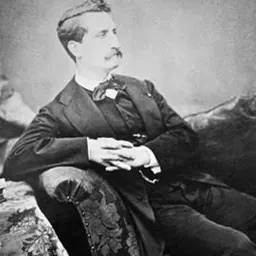
Gligor Sokolović (; 17 or 5 January 1870 or 1872 – 30 July 1910]) was one of the supreme commanders (Great Voivode) of the Serbian Chetnik Movement, that fought the Ottoman Empire, Bulgarian, and Albanian armed bands during the Macedonian Struggle. He was one of the most famous Chetniks, and the foremost in Western Povardarie. In Bulgaria he is considered a Bulgarian renegade who switched sides, i.e. (sic) Serboman.
After murdering a local Ottoman lord, Sokolović went into the woods with some friends and formed a guerrilla unit which would target Ottomans. He then joined the Bulgarian revolutionary organizations of SMAC and IMRO, and fought throughout the wider Macedonia region. After the Ottomans' suppression of the Ilinden–Preobrazhenie Uprising in 1903, he, like many others, fled to Serbia. He was acquainted with Dr. Gođevac, one of the founders of the Serbian revolutionary organization that sought liberation of Macedonia, and became one of its supreme commanders that would fight in the Prilep region. With the Young Turk Revolution, he became a deputy of the National Assembly of the Serbs in Turkey. He was killed in 1910 by the Ottoman government.
Life
Early life Sokolović was born in 1870 in the village of Nebregovo, near Prilep, under the Ottoman Empire (now part of Dolneni, North Macedonia) . His father was Sokol Lamević (1833–1903). He grew up without education.
At a young age, Sokolović killed a noted Turk from Prilep, Ali-Aga, the property intendant of Avdi-Pasha, who held villages around Babuna, and was a notorious persecutor of Christians. When they entered Sokolović's house, he quietly waited while they found nothing. One day, the begs (honorary title, "sir") arrived in Drenovci to a shepherd who told them that there were none left, but the one beg, unbelieving, went into the hut to inspect. Hearing of his father's death, he gathered a band and turned to repay his father, but he only reached Vardar, which was cut off by the Ottoman army.
He turned towards Kyustendil, but when he reached Gyueshevo, the first village after the Bulgarian border, a group of Bulgarians tried to disarm them, and Sokolović began to fight them. Dr. Gođevac quickly contacted the borough manager, and the band was immediately released. The Stara Bogoslovija quarter served as a barrack for komiti.
Serb Committee sends first bands On Đurđevdan (23 April), 1904, Bulgarian students travelled to Belgrade to hold a congress. This was after negotiations between the Bulgarian and Serbian committees about a joint Serb-Bulgarian uprising had failed after more than 50 meetings in a period of 4–5 months. The Bulgarian students and the Serbian side constantly stressed the need for Serb-Bulgarian brotherhood. Vasilije Trbić, who guided them, told them that the best way was to go through the Kozjak and then down to the Vardar. The two voivodes however, wanted the fastest route, through the Kumanovo plains and then to Četirac.
Second wave Sokolovic (2nd row, third from left) with a group of Chetniks during Macedonian Civil War 1903-08. After receiving the news in Belgrade, the Chetnik activity did not stop; four new bands were prepared for crossing the border. Velko Mandarchev, from the Skopje field, became the voivode of a band that moved into Skopska Crna Gora.
In the village of Solpa, they dried their clothes on the warm summer morning, and rested in the boxwood shrubs and ate wet bread. The hungry and tired band of Đorđe Cvetković arrived at the village of Gornji Divjaci, where they were hosted by the villagers who had brought cheese and rakija. On the same day, 14 August, the Bulgarians had killed Serbian priest Stavro Krstić, which the Chetniks later learnt from the villagers. Far from the other bands, without help, tricked and surrounded, the band understood their situation.
However, the Young Turks changed politics and turned against the Serbs. On the night of 6 August, Bulgarian major Atanas Babata and his band entered the Serbian village of Kokošinje, where they were searching for people that were condemned to death by the Bulgarian Committee. Babata's soldiers awaited his further commands, he turned to the teacher: "Come on, tell me that you are Bulgarian, and you can continue be a Serb, and I will spare your life", but he refused. After Babata and his band had disappeared, the houses opened and the women screeched, and the silent villagers moved the bodies. In the dawn of 11 August, Jordan Spasev and his 30 komiti surrounded the waqf mill of the Vakov-Nenovce village. The villagers were tortured and killed by the komite.
Don’t just read it —
keep it.
Full-length biographies made to live with: read them, listen on the way to work, watch them tonight.
- E-book
- Audio
- Video
Instant download · yours to keep · every purchase keeps this site free
Important facts
People in Gligor Sokolović's life
Named in this biography and alive at the same time

Related people
Same field, nearest in time


Contemporaries
People whose lives overlapped Gligor Sokolović's




Frequently asked questions
Who was Gligor Sokolović?
Anti-Ottoman rebel
When was Gligor Sokolović born?
Gligor Sokolović was born on 17 January 1870 in Ottoman Empire.
When did Gligor Sokolović die?
Gligor Sokolović died in 1910 in Macedonia.
What was Gligor Sokolović's occupation?
Gligor Sokolović was a revolutionary.
What nationality was Gligor Sokolović?
Gligor Sokolović was Turkish.
Sources & further reading
Cite this page
APA: Biography.guide. (2026). Gligor Sokolović. https://biography.guide/gligor-sokolovic/
MLA: "Gligor Sokolović." Biography.guide, https://biography.guide/gligor-sokolovic/.
Chicago: "Gligor Sokolović." Biography.guide. https://biography.guide/gligor-sokolovic/.
Data last updated: 2026-09-20 · Spot an error? Report a correction.
Page generated 2026-09-27 05:26 UTC