
About Giuseppe Terragni
Lived 1904 – 1943 (aged 39). Giuseppe Terragni was an Italian architect, designer and urban planner.
Giuseppe Terragni (; 18 April 1904 – 19 July 1943) was an Italian architect who worked primarily under the fascist regime of Benito Mussolini and pioneered the Italian modern movement under the rubric of Rationalism. His most famous work is the Casa del Fascio built in Como, northern Italy, which was begun in 1932 and completed in 1936;
Biography Giuseppe Terragni was born to a prominent family in Meda, Lombardy. He attended the Technical College in Como then studied architecture at the Polytechnic University of Milan. In 1927 he and his brother Attilio opened an office in Como. They remained in practice until Giuseppe's death during the war years.
A pioneer of the modern movement in Italy, Terragni produced some of its most significant buildings. A founding member of the fascist Gruppo 7 and a leading Italian Rationalist, Terragni fought to move architecture away from neo-classical and neo-baroque revivalism. In 1926 he and other progressive members of Gruppo 7 issued the manifesto that made them the leaders in the fight against revivalism.
In a career that lasted only 13 years, Terragni created a small but remarkable group of designs; most of them were built in Como, which was one of the centers of the Modern Movement in Italy. These works form the nucleus of the language of Italian rationalist or modernistic architecture. Terragni was also one of the leaders of the artistic group called "astrattisti comaschi" with Mario Radice and Manlio Rho, one of the most important events in Italian Modern Art. He also contributed to the 1932 Exhibition of the Fascist Revolution.
In his last designs, Terragni achieved a more distinctive Mediterranean character through the fusion of modern theory and tradition.
His brother, Attilio, was the Fascist Podestà (mayor) of Como when the Casa del Fascio was commissioned, and his chief architectural patron was one of Mussolini's mistresses. His career was sidetracked by Italy's entry into World War II, where he was part of the Italian army sent to the Eastern Front. After the Italians collapsed near Stalingrad, Terragni produced drawings of the suffering around him and suffered a nervous breakdown. Terragni returned to Como where he died of thrombosis in 1943.
Don’t just read it —
keep it.
Full-length biographies made to live with: read them, listen on the way to work, watch them tonight.
- E-book
- Audio
- Video
Instant download · yours to keep · every purchase keeps this site free
Important facts
People in Giuseppe Terragni's life
Named in this biography and alive at the same time



Related people
Same field, nearest in time
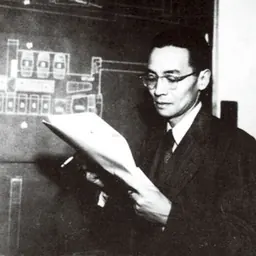
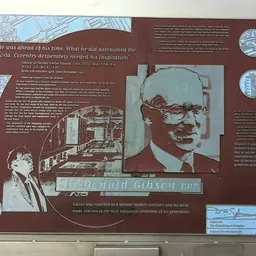
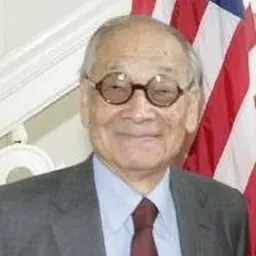
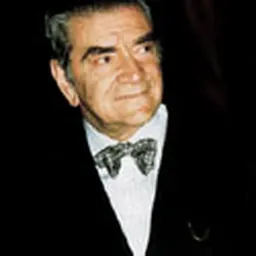
Contemporaries
People whose lives overlapped Giuseppe Terragni's





Frequently asked questions
Who was Giuseppe Terragni?
Italian architect (1904-1943)
When was Giuseppe Terragni born?
Giuseppe Terragni was born on 18 April 1904 in Meda.
When did Giuseppe Terragni die?
Giuseppe Terragni died on 19 July 1943 in Como, Pavia.
What was Giuseppe Terragni's occupation?
Giuseppe Terragni was an architect, designer and urban planner.
What nationality was Giuseppe Terragni?
Giuseppe Terragni was Italian.
Sources & further reading
· Wikipedia: Giuseppe Terragni
Cite this page
APA: Biography.guide. (2026). Giuseppe Terragni. https://biography.guide/giuseppe-terragni/
MLA: "Giuseppe Terragni." Biography.guide, https://biography.guide/giuseppe-terragni/.
Chicago: "Giuseppe Terragni." Biography.guide. https://biography.guide/giuseppe-terragni/.
Data last updated: 2026-09-26 · Spot an error? Report a correction.
Page generated 2026-09-27 05:13 UTC