
Giulia Farnese
Mistress to Pope Alexander VI
About Giulia Farnese
Lived 1474 – 1524 (aged 49–50).
Giulia Farnese (; 1474 – 23 March 1524) was an Italian noblewoman, a mistress to Pope Alexander VI, and the sister of Pope Paul III. Known as , she was a member of the noble Farnese family, who were prominent leaders in the Italian regions of Parma and Piacenza.
Biography Family Giulia Farnese was born in Canino, then within the Papal States, to Pier Luigi I Farnese (c. 1435 - November 1487), Lord of Capodimonte, Musignano, Valentano, Gradoli, Piansano, Canino and Abbazia al Ponte, Papal Vicar of Canino in 1466, and his wife (Ischia, March 1464) Giovanna called Giovannella Caetani of the Dukes of Sermoneta, a member of the Caetani family which had produced Pope Gelasius II and Pope Boniface VIII, and paternal granddaughter of Ranuccio Farnese the Elder, and wife Agnese Monaldeschi. Giulia had four siblings. Her older brother, Alessandro, was a notary who embarked on an ecclesiastical career. Her granduncle, Bartolomeo, became Lord of Montalto in Alessandro's place, married Iolanda Monaldeschi, and had issue. Her eldest brother, Angelo, was a lord, married Lella Orsini, and had female issue. Her other siblings were sisters, Girolama and Beatrice (Canino, 1469 - Viterbo, 1507), Benedictine nun in 1480, Abbess of San Bernardino Monastery of Viterbo in 1490.
At the age of fourteen, Giulia was sent to Rome by her mother in order to complete an education in the hopes of integrating herself into the Roman aristocracy.
First marriage and papal concubinage Pope Alexander VI kneeling in front of the Madonna, said to be a likeness of Giulia Farnese. On 21 May 1489, Giulia married Orsino Orsini in Rome (the signing of the marriage contract had taken place the previous day). Her dowry for the match was 3,000 gold florins (around US$500,000). Orsini, who was described as being squint-eyed and devoid of any meaningful self-confidence, was the son of Adriana de Milà, a third cousin of Cardinal Rodrigo Borgia, who was then Vice-Chancellor of the Church. According to Maria Bellonci, it is uncertain when Rodrigo Borgia (Pope Alexander VI) fell in love with Giulia and decided to make her his mistress. What is known is that Adriana de Mila eventually gave her approval to Rodrigo Borgia and Giulia Farnese's relationship in order to win a higher status for her son within the Vatican. By November 1493, Giulia was living with Adriana de Mila and the Pope's daughter Lucrezia Borgia, who she became a friend of, in a recently built palace next to the Vatican from where the Pope could easily make his clandestine visits. The affair was widely rumored among gossips of the time, and Giulia was referred to as "the Pope's whore" or sarcastically as "the bride of Christ".
Giulia enriched herself as a result of her relationship with the Pope. For instance, Lorenzo Pucci noted in 1494 that "she has an intent goldsmith that makes rings for one thousand ducati".
Giulia remained close to the Pope until 1499 or 1500. At this time, she seems to have fallen out of his favour. Bellonci believes that the break between the two was probably made amicably with the help of Adriana de Mila.
Second marriage and later life Giulia Farnese depicted in the painting, A Virgin with a Unicorn, by Domenichino, c. 1604–05, Palazzo Farnese. Giulia returned to Rome in 1505 for the wedding of her daughter Laura to Niccolò Franciotti della Rovere, Lord of Gallese, who was the brother of Cardinal Galeotto Franciotti della Rovere and the son of Laura della Rovere, sister of the then-incumbent Pope Julius II. For Giulia, the time of love was not over. In the first years of her widowhood, after a series of lovers whose names have not been recorded, she married Giovanni Capece-Bozzuto, Baron of Afragola and Lord of Balsorano, Patrician of Naples, a member of the lower ranking Neapolitan nobility. In 1506, Giulia became the governor of Carbognano. Giulia took up residence in the citadel of the castle; years later, her name was inscribed on its gate. The chronicle of the castle states that Giulia was an able administrator who governed in a firm and energetic manner. Her second husband died there in 1517. Giulia stayed in Carbognano until 1522; she then returned to Rome.
Death In early 1524, Giulia, apparently sensing that death was near, had her testament written on 14 March in her room, overlooking the church of San Girolamo, in the Arenula district of Rome. Giulia died there, in the house of her brother, Cardinal Alessandro. She was 50 years old. The cause of her death is unknown. Ten years later her brother ascended the papal throne as Pope Paul III. Laura and Niccolò had three children, a son Giulio (d. 1550) and two daughters Lavinia (1521–1601), who inherited the possessions of the Orsini family, and Elena, who married Stefano Colonna, prince of Palestrina.
In popular culture In the 2011 Showtime television series The Borgias, Giulia is played by Lotte Verbeek.
In the 2011 Canal+ television series Borgia, Giulia is played by Marta Gastini.
Giulia is the protagonist of Kate Quinn's book series, The Borgia Chronicles.
Ancestry
Don’t just read it —
keep it.
Full-length biographies made to live with: read them, listen on the way to work, watch them tonight.
- E-book
- Audio
- Video
Instant download · yours to keep · every purchase keeps this site free
Important facts
more
Giulia Capece Bozzato, Julia Farnese, Giulia Bozzuto, Giulia la bella, Giulia Farnese 'La Bella Giulia'Family & relationships
People in Giulia Farnese's life
Named in this biography and alive at the same time

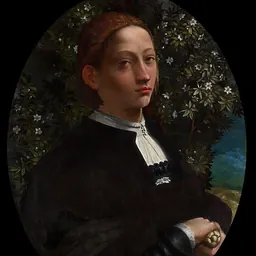

Contemporaries
People whose lives overlapped Giulia Farnese's
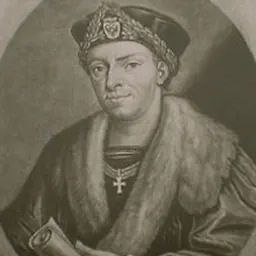



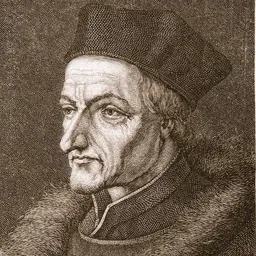
Frequently asked questions
Who was Giulia Farnese?
mistress to Pope Alexander VI
When was Giulia Farnese born?
Giulia Farnese was born in 1474 in Canino.
When did Giulia Farnese die?
Giulia Farnese died on 23 March 1524 in Rome.
Sources & further reading
Cite this page
APA: Biography.guide. (2026). Giulia Farnese. https://biography.guide/giulia-farnese/
MLA: "Giulia Farnese." Biography.guide, https://biography.guide/giulia-farnese/.
Chicago: "Giulia Farnese." Biography.guide. https://biography.guide/giulia-farnese/.
Data last updated: 2026-09-20 · Spot an error? Report a correction.
Page generated 2026-09-27 05:22 UTC