
About Gita Sahgal
Born 1950. Gita Sahgal is an Indian author, journalist, human rights defender, film producer and human rights activist.
Early life and education
Gita Sahgal was born in India, the daughter of the novelist Nayantara Sahgal. She was raised as a Hindu, and says she is now an atheist. She returned to India in 1977, and began working in the civil rights movement. She moved back to England in 1983.
In 1989, she co-founded "Women against Fundamentalism".
Prostitution and peacekeeping efforts Sahgal spoke out in 2004 regarding the increase of prostitution and sex abuse associated with humanitarian intervention forces. She observed: "The issue with the UN is that peacekeeping operations unfortunately seem to be doing the same thing that other militaries do. Even the guardians have to be guarded."
Invasion of Iraq; Views on Guantanamo Bay Sahgal, who was against the United States and allies' invasion of Iraq, also condemned the extrajudicial detention and torture of Muslim men at Guantanamo Bay. She told Moazzam Begg, a British citizen and former Guantanamo Bay detainee, that she was "horrified and appalled" by the treatment he and other detainees received. and an honorary associate of the National Secular Society.
Writing and film producer Among her various writings, in 1992, she contributed to, and co-edited, Refusing Holy Orders: Women and Fundamentalism in Britain, with Nira Yuval-Davis.
In 2002, she produced Tying the Knot. The film was commissioned by the U.K.'s Foreign and Commonwealth Office's Community Liaison Unit, set up to handle the problem of British victims of forced marriage who have been, or may be, taken abroad to marry against their will. Sahgal said she was not opposed to arranged marriages, unless the persons involved were abducted or subjected to physical or emotional abuse.
Saghal also made Unprovoked, a film about the case of Kiranjit Ahluwalia, for Channel 4's Dispatches documentary series. Ahluwalia was a Punjabi woman brought to the UK for an arranged marriage who was repeatedly abused by her husband. To survive, she killed him, setting him on fire, while he was drunk and asleep.
In addition, Sahgal produced the British documentary film, The War Crimes File, about atrocities committed during the Bangladesh Liberation War of 1971. "To be appearing on platforms with Britain’s most famous supporter of the Taliban Begg, whom we treat as a human rights defender, is a gross error of judgment," she said. Sahgal argued that by associating with Begg and Cageprisoners, Amnesty was risking its reputation on human rights. "As a former Guantanamo detainee, it was legitimate to hear his experiences, but as a supporter of the Taliban it was absolutely wrong to legitimise him as a partner", Sahgal said. She said that Cageprisoners' Asim Qureshi spoke supporting global jihad at a Hizb ut-Tahrir rally. She said that Begg's bookshop had published The Army of Madinah, which she characterised as a jihad manual by Dhiren Barot.
Amnesty responses Amnesty responded on its website with a statement by its interim Secretary General, Claudio Cordone:
Widney Brown of Amnesty also spoke on the NPR program with Sahgal.
Denis MacShane, a Member of the British Parliament and former Labour government minister, wrote to Amnesty protesting its suspension of Gita Sahgal: "one of its most respected researchers because she rightly called into question Amnesty’s endorsement of Mozzam Begg whose views on the Taliban and on Islamist jihad stand in total contradiction of everything Amnesty has fought for." He called "Kafkaesque" the fact that Amnesty—"the very organisation meant to defend human rights"—would threaten the career of Sahgal for her having exposed "an ideology that denies human rights". The Times wrote: "In an extraordinary inversion of its traditional role, Amnesty has stifled its own still small voice of conscience." Journalist Nick Cohen wrote in The Observer that "Amnesty is living in the make-believe world ... where it thinks that liberals are free to form alliances with defenders of clerical fascists who want to do everything in their power to suppress liberals, most notably liberal-minded Muslims." Antara Dev Sen wrote in Daily News and Analysis: "It was a gutsy stand, given the dread of political correctness that cripples our thought and makes us bend over backwards till we almost topple over. ... Suspending Sahgal was an illiberal knee-jerk response unbecoming of this cherished human rights organisation." Farrukh Dhondy wrote in her support, in The Asian Age, as did The Herald (Scotland), columnist and author Mona Charen in Australia's The Daily Advertiser, commentator Jonathan Power in Dubai's Khaleej Times, journalist and author Terry Glavin in the National Post, Spectator contributor Rod Liddle, columnist Jay Nordlinger in National Review, and David Aaronovitch in a column in The Times entitled "How Amnesty Chose the Wrong Poster-boy". Feminist historian Urvashi Butalia also spoke up in her support. Douglas Murray wrote in The Telegraph that "Amnesty is no longer an organisation worth listening to, let alone supporting", and The Wall Street Journal wrote: "it's a pity that a group that was born to give voice to the victims of oppression should now devote itself to sanitizing the oppressors".
Sahgal's mother, Nehru's niece novelist Nayantara Sahgal, said she was proud of Gita:
An organisation called Human Rights for All formed in her defence. They have been joined by many notable supporters.
The Observer wrote in April 2010 that Amnesty had faced few stickier periods since it was founded in 1961, and Oliver Kamm wrote in The Times that Amnesty had shown a "grudging and euphemistic explanation for its behaviour" and that "Disastrously for itself and those who depend on its support, Amnesty is no longer the friend of liberty". In the memo Zarifi said Amnesty had made a mistake in not making it clearer they did not support Begg's views. Zarifi said Amnesty "did not always sufficiently distinguish between the rights of detainees to be free from torture, and the validity of their views", adding that the organisation "did not always clarify that while we champion the rights of all—including terrorism suspects, and more important, victims of terrorism—we do not champion their views". In a subsequent letter to The Sunday Times, Zarifi said he agreed with Amnesty's actions with regard to Sahgal.
Amnesty decided not to hire Begg for their South Asia campaigns,
Co-author of Enemy Combatant, Victoria Brittain wrote: "Ms Sahgal has contributed to the current climate of intolerance and islamophobia in Britain."
Andy Worthington, critic of Guantanamo Bay detention camp, and friend of Begg, also cited Islamophobia, and then defended Begg. He said, "I know from personal experience that Moazzam Begg is no extremist. We have met on numerous occasions, have had several long discussions, and have shared platforms together at many events."
Select writings
Book Refusing holy orders: women and fundamentalism in Britain, co-editor with Nira Yuval-Davis, and contributor, Virago Press (1992), WLUML (2002),
Chapters Looking at class: film, television and the working class in Britain, Sheila Rowbotham, Huw Beynon, "Chapter: Struggle Not Submission", Rivers Oram Press, 2001, Feminist postcolonial theory: a reader, Reina Lewis, Sara Mills, Chapter: "The Uses of Fundamentalism", with Nira Yuval-Davis, Taylor & Francis, 2003, The situated politics of belonging, Nira Yuval-Davis, Kalpana Kannabirān, Ulrike Vieten, "Chapter: Legislating Utopia? Violence Against Women: Identities and Interventions", SAGE, 2006, ISBN Ch1412921015
Don’t just read it —
keep it.
Full-length biographies made to live with: read them, listen on the way to work, watch them tonight.
- E-book
- Audio
- Video
Instant download · yours to keep · every purchase keeps this site free
Important facts
Family & relationships
People in Gita Sahgal's life
Named in this biography and alive at the same time
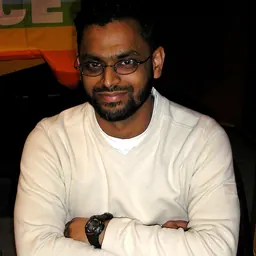
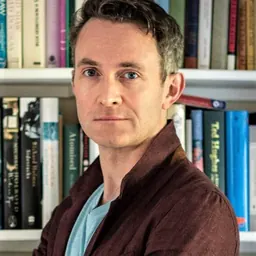
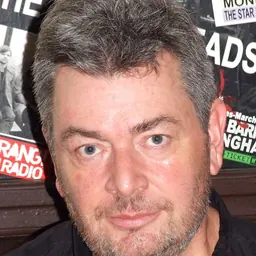
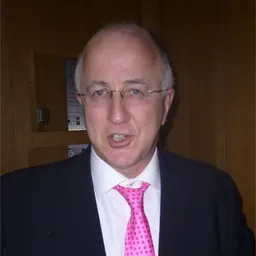


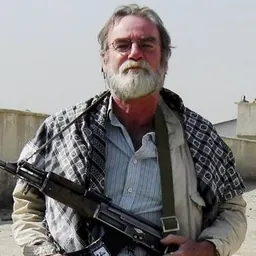
Related people
Same field, nearest in time



Contemporaries
People whose lives overlapped Gita Sahgal's


Frequently asked questions
Who is Gita Sahgal?
Indian writer and activist
When was Gita Sahgal born?
Gita Sahgal was born in 1950 in Mumbai.
What is Gita Sahgal's occupation?
Gita Sahgal is an author, journalist, human rights defender, film producer and human rights activist.
What nationality is Gita Sahgal?
Gita Sahgal is Indian.
Sources & further reading
Cite this page
APA: Biography.guide. (2026). Gita Sahgal. https://biography.guide/gita-sahgal/
MLA: "Gita Sahgal." Biography.guide, https://biography.guide/gita-sahgal/.
Chicago: "Gita Sahgal." Biography.guide. https://biography.guide/gita-sahgal/.
Data last updated: 2026-09-22 · Spot an error? Report a correction.
Page generated 2026-09-27 05:33 UTC