
About Gita Mittal
Born 1958. Gita Mittal is an Indian academic and judge.
Justice Gita Mittal (born 9 December 1958) is a retired Indian judge. She is a former Chief Justice of the Jammu and Kashmir High Court and the first woman to serve in that capacity. She was also the Acting Chief Justice of Delhi High Court.
Early life and education Mittal was educated at Lady Irwin School in Delhi, graduating in 1975 with a focus on science. As a school student she was a member of the Girl Guides in India, and represented the organisation internationally at several events. She went on to obtain a Bachelor of Arts in Economics with Honours from the Lady Shriram College for Women, Delhi, in 1978, and also participated actively in athletics, acting as Sports President of the Lady Shri Ram College (1977–1978).
Judicial career
High Court of Delhi Mittal was appointed an additional judge to the Delhi High Court on 16 July 2004, and was confirmed as a permanent judge on 20 February 2006.
On 14 April 2017, Mittal was appointed the Acting Chief Justice of the Delhi High Court. The Times of India reported that they had verified the numbers presented by the litigant and confirmed them. and thirty-four senior advocates wrote a letter to the Times of India calling on the newspaper to issue an apology to Justice Mittal for inaccuracies in their report, and attesting to her work at the Delhi High Court in disposing of disputes. On 31 May 2016, it was reported that the Delhi High Court had accepted an unconditional apology from Times of India for the report.
Jurisprudence at the Delhi High Court Mittal wrote a number of significant judgments as a judge at the Delhi High Court, many of which concern the conditions of service and recruitment in military and para-military forces in India. In 2011, along with Justice R. Midha she passed a significant ruling concerning the rights of transgender individuals, holding that a woman with a congenital hormonal anomaly had been unfairly discriminated against when she was prohibited from joining the Sashastra Seema Bal (a border patrol organisation) as a female constable. In 2013, along with Justice Deepa Sharma, she held that colour-blindness could not be grounds for discrimination in the context of promotion in the Central Reserve Police Force. In 2018, she held that advertisements prohibiting women from applying for recruitment to the Indian Territorial Army violated the Territorial Army Act, 1948, which allows men and women to apply.
She has also served on the benches of several significant cases concerning political figures. In 2013, she held that Congress leader N.D. Tiwari could not be compelled to provide a blood sample against his will, in a paternity suit filed against him, although an adverse inference could be drawn from his refusal to provide the sample. Her order was later reversed by a different High Court bench, which compelled him to provide a sample. However, in 2016, along with Justice IS Mehta, she laid down principles that courts should follow in hearing cases concerning pleas for court-ordered paternity tests. In 2014, along with Justice J.R. Midha, she dismissed an appeal filed in the Nitish Katara murder case, upholding the trial court's conviction of Vikas Yadav, the son of Uttar Pradesh politician D.P. Yadav. In 2017, along with Justice C. Hari Shankar, she dismissed an appeal filed by retired Calcutta High Court judge C.S. Karnan, in which he had challenged the constitutionality of the Indian Contempt of Courts Act.
Mittal has also contributed to jurisprudence that focuses on constitutional rights. In 2013 she ruled that the Delhi High Court could not prohibit entry to persons who didn't have identity cards, noting that access to justice would be impeded by such a rule. In August 2018, she and Justice C. Hari Shankar found that the provisions of the Bombay Prevention of Begging Act, 1959 were largely unconstitutional, and struck it down.
High Court of Jammu and Kashmir and Ladakh On 3 August 2018, Mittal was appointed Chief Justice of the High Court of Jammu and Kashmir.
Appointment of additional judges
In 2019, Mittal wrote to the Supreme Court of India calling for the appointment of additional judges to handle the caseload at the Jammu and Kashmir High Court, noting that the Court was functioning at half its judicial capacity with only ten judges serving instead of the allocated seventeen. Justice Mittal forwarded seven names for the consideration of the Supreme Court collegium, which appoints judges to the High Courts in India.
Creation of CAT Bench in Jammu and Kashmir In May 2020, Mittal wrote to the Government of India in her capacity as Chief Justice of the Jammu and Kashmir High Court, calling for the establishment of a bench of the Central Administrative Tribunal in Jammu and Kashmir, to hear cases concerning the service conditions of officers in the Indian Administrative Service. In her letter she noted that the passing of the Jammu and Kashmir Reorganisation Act 2019 had resulted in the need to transfer a number of pending service matters from the High Court to such tribunals. In April 2020, the Central Government issued a notification extending the jurisdiction of the Chandigarh bench of the Central Administrative Tribunal to Jammu and Kashmir; however, following criticisms that this would cause difficulties in access, the Government modified its order to create a separate Central Administrative Tribunal bench in Jammu and Kashmir and Ladakh.
Jurisprudence at the High Court of Jammu and Kashmir On 25 October 2019, Mittal authored a significant judgment in Suhail Rashid Bhat v State of Jammu and Kashmir, striking down the Jammu & Kashmir Prevention of Beggary Act, 1960, a law drawing from colonial legal principles to penalise poverty and public movement. Along with Justice Rajesh Bindal, she held that the criminalisation of beggary violated constitutional principles and constituted a “disproportionate infringement of the right to meaningful life, dignity, privacy and liberty guaranteed under Article 21”.
Tribunals and regulatory bodies Mittal has served as a member of the Advisory Board constituted under the Conservation of Foreign Exchange & Prevention of Smuggling Act, 1974 (COFEPOSA). Her decision was stayed soon after by the Supreme Court, allowing the ban on SIMI to continue.
Other activities and awards Mittal has served on the governing boards of several educational institutions. She has been a member of the Governing Council of the National Law University, Delhi since 2008, and Governing Council of the Indian Law Institute, New Delhi since 2013. She was a member of the Delhi University Court from 1999 to 2004, and was nominated to the governing body of Ram Lal Anand College in Delhi from 1997 to 1999.
In 2008, the Vice President of India, Mohammad Hamid Ansari, awarded Mittal the 'Distinguished Alumna Award' from Lady Shriram College, recognising her contributions to jurisprudence.
Criticism concerning Nari Shakti Puraskar In 2017, Mittal was one of the recipients of the Nari Shakti Puraskar, a civilian honour presented by the Ministry of Women and Child Development of the Government of India to individuals and organisations contributing to female empowerment. Her acceptance of a government award while serving as a judge led to public criticism and concerns about conflicts of interest and the independence of the judiciary, particularly as it was the first instance of a sitting judge accepting an award from the government. Several advocates and retired judges noted that prior to this, only retired judges had accepted government awards, and argued that her acceptance of a government award ought to disqualify her from hearing cases in which the government is a litigant.
Don’t just read it —
keep it.
Full-length biographies made to live with: read them, listen on the way to work, watch them tonight.
- E-book
- Audio
- Video
Instant download · yours to keep · every purchase keeps this site free
Important facts
People in Gita Mittal's life
Named in this biography and alive at the same time

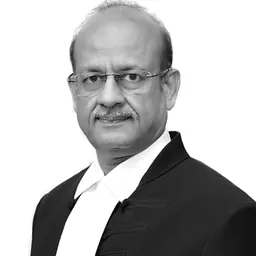

Related people
Same field, nearest in time





Contemporaries
People whose lives overlapped Gita Mittal's

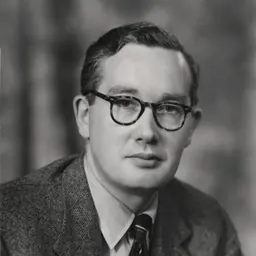



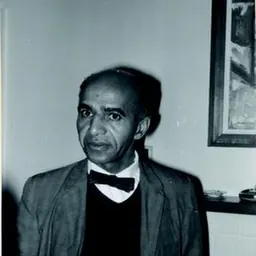
Frequently asked questions
Who is Gita Mittal?
Chief Justice of Jammu & Kashmir and Ladakh High Court
When was Gita Mittal born?
Gita Mittal was born on 9 December 1958.
What is Gita Mittal's occupation?
Gita Mittal is an academic and judge.
What nationality is Gita Mittal?
Gita Mittal is Indian.
Sources & further reading
Cite this page
APA: Biography.guide. (2026). Gita Mittal. https://biography.guide/gita-mittal/
MLA: "Gita Mittal." Biography.guide, https://biography.guide/gita-mittal/.
Chicago: "Gita Mittal." Biography.guide. https://biography.guide/gita-mittal/.
Data last updated: 2026-09-20 · Spot an error? Report a correction.
Page generated 2026-09-27 05:23 UTC