
About Gisela Bock
Lived 1942 – 2025 (aged 83). Gisela Bock was a German historian of Modern Age, university teacher and historian.
Gisela Bock (28 July 1942 – 7 November 2025) was a German historian, a pioneer of history of women and gender. She taught at the Free University Berlin, the European University Institute in Florence, Bielefeld University and again in Berlin until 2007.
Life and career Bock was born in Karlsruhe on 28 July 1942. Her father was a physicist. She grew up in a small town where only few girls made an academic career. Her excellent grades in mathematics and physics at a secondary school for girls earned her a scholarship. She then spent time as an exchange student at a secondary school in California, during which she became interested in history as a science about people. . She received a Kennedy fellowship at Harvard University in 1974/75. She attended, with around 2000 others, a formative event, the 1975 Berkshire Conference of Women Historians, where historians such as Gerda Lerner and Natalie Zemon Davis spoke. Bock became one of the pioneers in the emergence and establishment of "women and gender" history also in Germany. The sterilisations seemed to concern men and women equally, but the surgery for women was more dangerous; among the around 5000 deaths caused by the surgery, 90% were women; most of them died when they trying to resist forced infertility.
Bock died on 7 November 2025, at the age of 83.
Works German , Tübingen: Niemeyer, 1974. München: Trikont, 1976. co-written with Barbara Duden: in , 1977. , Opladen: Westdeutscher Verlag, 1986. Reprint 2010. , München: C.H.Beck 2000, 2005. (edited with Margarete Zimmermann), , Stuttgart; Weimar: Metzler, 1997. , (editor), , Frankfurt am Main/New York: Campus 2005. edited with Daniel Schönpflug, , Stuttgart 2006. edited with Gerhard A. Ritter, , München: Oldenbourg Wissenschaftsverlag 2012.
English "Women's History and Gender History: Aspects of an International Debate," in Gender and History, Volume 1, 1989, pp. 7– co-edited with Quentin Skinner and Maurizio Viroli, Machiavelli and Republicanism, Cambridge University Press 1990. co-edited with Pat Thane, Maternity and Gender Policies: Women and the Rise of the European Welfare States, 1880s–1950s, London 1991. co-edited with Susan James, Beyond Equality and Difference: Citizenship, Feminist Politics and Female Subjectivity, London 1992. Women in European history Oxford; Malden, Mass.: Blackwell, 2002. "Challenging Dichotomies: Perspectives on Women's History." In Writing Women's History: International Perspectives, ed. Karen Offen, Ruth Roach Pierson, and Jane Rendall, Bloomington: Indiana University Press, pp. 1–23. , Ordinary Women in Nazi Germany: Perpetrators, Victims, Followers, and Bystanders. In Women in the Holocaust, ed. Dalia Ofer and Lenore J. Weitzman, New Haven & London 1998, pp. 85–100.
Don’t just read it —
keep it.
Full-length biographies made to live with: read them, listen on the way to work, watch them tonight.
- E-book
- Audio
- Video
Instant download · yours to keep · every purchase keeps this site free
Important facts
People in Gisela Bock's life
Named in this biography and alive at the same time

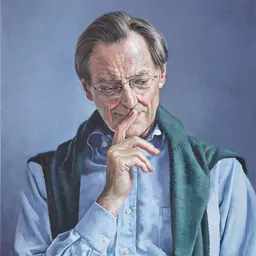
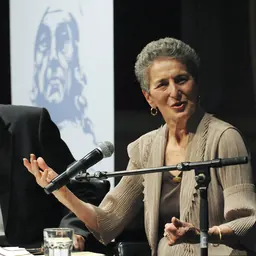
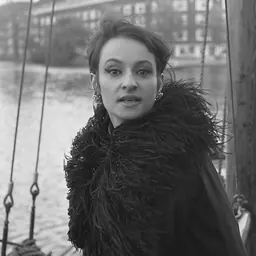




Related people
Same field, nearest in time

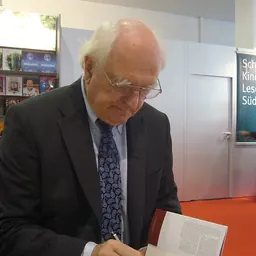
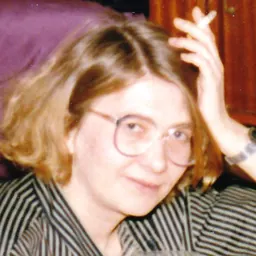
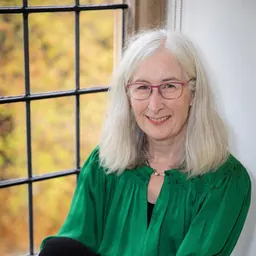
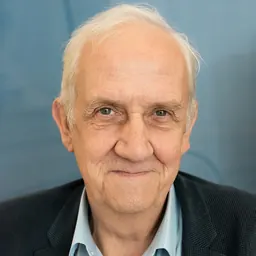
Contemporaries
People whose lives overlapped Gisela Bock's

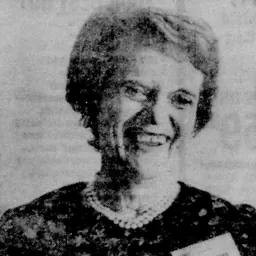
Frequently asked questions
Who was Gisela Bock?
German historian
When was Gisela Bock born?
Gisela Bock was born on 28 February 1942 in Karlsruhe.
When did Gisela Bock die?
Gisela Bock died on 7 November 2025.
What was Gisela Bock's occupation?
Gisela Bock was a historian of Modern Age, university teacher and historian.
What nationality was Gisela Bock?
Gisela Bock was German.
Sources & further reading
Cite this page
APA: Biography.guide. (2026). Gisela Bock. https://biography.guide/gisela-bock/
MLA: "Gisela Bock." Biography.guide, https://biography.guide/gisela-bock/.
Chicago: "Gisela Bock." Biography.guide. https://biography.guide/gisela-bock/.
Data last updated: 2026-09-20 · Spot an error? Report a correction.
Page generated 2026-09-27 05:16 UTC