
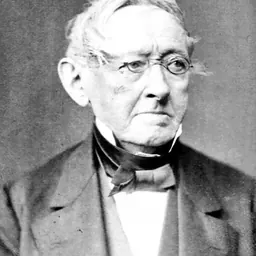
Giovanni Schiaparelli
Italian astronomer and science historian
About Giovanni Schiaparelli
Lived 1835 – 1910 (aged 75). Giovanni Schiaparelli was an Italian astronomer, politician, discoverer of asteroids and mathematician.
Giovanni Virginio Schiaparelli (14 March 1835 – 4 July 1910) was an Italian astronomer and science historian. Schiaparelli established the Martian system of nomenclature still in use today; before him, features of the planet bore the names of contemporary astronomers, similar to the lunar map of van Langren that preceded that of Hevelius.
Biography
Born in Savigliano, Piedmont, on 14 March 1835, Schiaparelli graduated from the University of Turin in 1854. From 1857 to 1859, he spent a period of post-graduate study in Berlin under the guidance of the director of the Berlin Observatory Johann Franz Encke. In 1859–1860 he worked in Pulkovo Observatory near Saint Petersburg. Back in Italy, he received the appointment of second astronomer to the Brera Observatory in Milan, where he worked for over forty years. In 1862, he succeeded Francesco Carlini as director of the Observatory.
Schiaparelli became internationally famous for his studies of Mars. He was responsible for some of the best contemporary maps of Mars and was the first to locate many of the features of the planet with considerable accuracy. In his classic work on Martian observations, La Planète Mars, published in 1892, Camille Flammarion stated that Schiaparelli's was 'the greatest work which has been carried out with regard to Mars.'
Schiaparelli was a member of many academies, Italian and foreign, including the Accademia dei Lincei, the Royal Academy of Sciences of Turin and the Regio Istituto Lombardo. He was appointed a senator of the Kingdom of Italy in 1889. Schiaparelli was the recipient of many national and international honours, including the unprecedented award of two Lalande Prizes from the French Academy of Sciences. In 1872, he was awarded the Gold Medal of the Royal Astronomical Society "for his researches on the connexion between the orbits of comets and meteors". Schiaparelli was elected to the American Philosophical Society in 1901. He retired in 1900 and died in Milan on 4 July 1910.
Mars
Among Schiaparelli's contributions are his telescopic observations of Mars. In his initial observations, he named the "seas" and "continents" of Mars. During the planet's "great opposition" of 1877, he observed a dense network of what appeared to be linear structures on the surface of Mars, which Schiaparelli called in Italian, meaning "channels", but the term was mistranslated into English as "canals".
While the term "canals" indicates an artificial construction, the term "channels" connotes that the observed features were natural configurations of the planetary surface. As a result of the incorrect translation into the term "canals", various suppositions were made about life on Mars. As these suppositions were popularized, the "canals" of Mars became famous, giving rise to waves of hypotheses, speculation, and folklore about the possibility of "Martians", intelligent life forms living on Mars.
Among the most fervent supporters of the artificial-canal hypothesis was the American astronomer Percival Lowell, who spent much of his life trying to prove the existence of intelligent life on the red planet. The 2016 ExoMars' Schiaparelli lander. The latter's daughter (Giovanni's niece) Elsa became a noted designer or maker of haute couture. His cousins Luigi and Ernesto Schiaparelli were a paleographer and an Egyptologist, respectively. Via Elsa, he was a great-granduncle to actresses and models Marisa and Berry Berenson.
Selected writings
1873 – Le stelle cadenti (The Falling Stars)
1893 – La vita sul pianeta Marte (Life on Mars) 1925 – Scritti sulla storia dell'astronomia antica (Writings on the History of Classical Astronomy) in three volumes. Bologna. Reprint: Milano, Mimesis, 1997.
Don’t just read it —
keep it.
Full-length biographies made to live with: read them, listen on the way to work, watch them tonight.
- E-book
- Audio
- Video
Instant download · yours to keep · every purchase keeps this site free
Important facts
People in Giovanni Schiaparelli's life
Named in this biography and alive at the same time
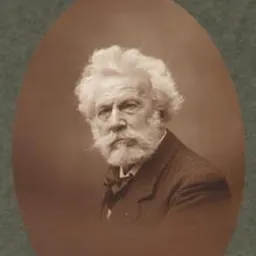
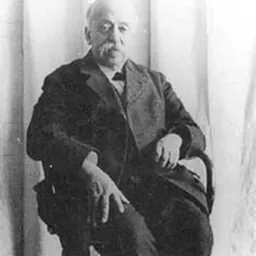

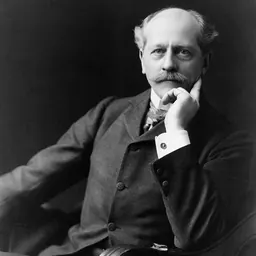

Related people
Same field, nearest in time
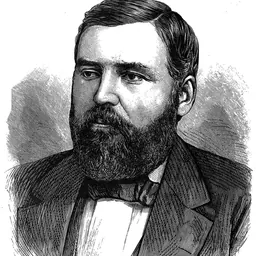
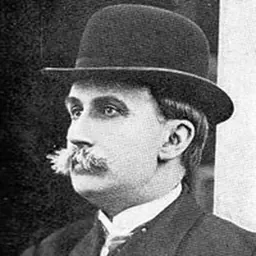
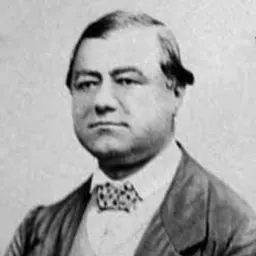
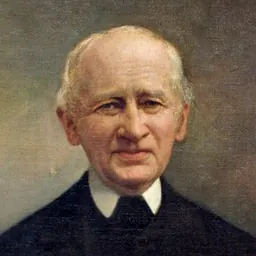
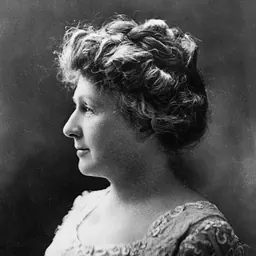

Contemporaries
People whose lives overlapped Giovanni Schiaparelli's





Frequently asked questions
Who was Giovanni Schiaparelli?
Italian astronomer and science historian (1835-1910)
When was Giovanni Schiaparelli born?
Giovanni Schiaparelli was born on 14 March 1835 in Savigliano.
When did Giovanni Schiaparelli die?
Giovanni Schiaparelli died on 4 July 1910 in Milan.
What was Giovanni Schiaparelli's occupation?
Giovanni Schiaparelli was an astronomer, politician, discoverer of asteroids and mathematician.
What nationality was Giovanni Schiaparelli?
Giovanni Schiaparelli was Italian.
Sources & further reading
· Wikipedia: Giovanni Schiaparelli
· DBpedia: Giovanni Schiaparelli
Cite this page
APA: Biography.guide. (2026). Giovanni Schiaparelli. https://biography.guide/giovanni-schiaparelli/
MLA: "Giovanni Schiaparelli." Biography.guide, https://biography.guide/giovanni-schiaparelli/.
Chicago: "Giovanni Schiaparelli." Biography.guide. https://biography.guide/giovanni-schiaparelli/.
Data last updated: 2026-09-20 · Spot an error? Report a correction.
Page generated 2026-09-27 05:27 UTC