
Giovanni Paolo Lascaris
Grand Master of the Knights Hospitaller
About Giovanni Paolo Lascaris
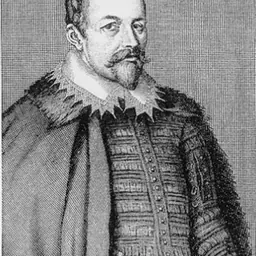
Lived 1560 – 1657 (aged 97). Giovanni Paolo Lascaris was a French warrior monk.
Giovanni Paolo Lascaris di Ventimiglia e Castellar (Maltese: Laskri) (28 June 156014 August 1657) was an Italian nobleman and Grand Master of the Knights of Malta.
Early life Lascaris was born on 28 June 1560, the second son of Giannetto Lascaris and his wife Franceschetta di Agostino Lascaris of the ancient family of the Counts of Ventimiglia, related to the Lascaris who were emperors of the Byzantine Nicaean Empire.
In 1584, he entered the Order of St. John of Jerusalem. As a member of the order he lived for over thirty years in a priory and was responsible for a range of monastic functions. He was put in charge of the order's grain supplies and later, in 1615, the order's furnaces across the island. He comported himself well and was promoted to master of the "St Anthony" prison.
In 1632 he was sent as ambassador to the Kingdom of Spain.
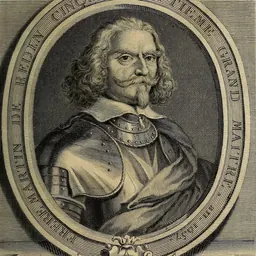
On the death of Grand Master Antoine de Paule, there were three candidates for election as Grand Master; Lascaris, Signorino Gattinara (about whom little is known) and Martin de Redin. Inquisitor Fabio Chigi (later Pope Alexander VII) attended as representative of Pope Urban VIII. Failing to secure enough votes for his own election, de Redin encouraged his supporters to instead side with Lascaris. On 16 June 1636, Lascaris was elected Grand Master of the Order of Malta, a position he held until his death.
As Grand Master
Lascaris towers
The following year, Lascaris commissioned a series of towers as fortifications around the island of Malta, now known as the Lascaris towers. The towers were designed and built by papal military architect, Vincenzo Maculani. Lascaris Battery was named in his honor.
Martin de Redin, who succeeded Lascaris as Grand Master of the Order, commissioned further towers and the combined collection of fortifications is often referred to as the De Redin towers.
Lascaris' ban
In 1639, Lascaris implemented a ban on women wearing masks or attending masked balls during carnivale. The ban was unpopular and locals blamed Lascaris' Jesuit confessor, Father Cassia. They took to the streets to poke fun at the Jesuits and Lascaris had one of the instigators arrested. A Jesuit college was ransacked as retaliation and those responsible demanded that Lascaris banish the Jesuit order from Malta, which he did for a short time while tensions abated. The incident is still remembered today as Lascaris' ban.
The common Maltese idiom "wiċċ Laskri" (lit. face of Lascaris) is used when describing a sad or frustrated person.
Wars of Castro Giuseppe Caloriti's View of Valletta and the Three Cities with the galleon "Lascara" (named in honour of Lascaris) entering the harbour of Malta's capital, Valletta.
Also in 1639, Pope Urban VIII asked Lascaris to intervene in the First War of Castro by sending naval forces owned by the order to assist papal troops against the Dukes of Parma; specifically galleons and other warships. But the Dukes of Parma, as well as the Duchy of Venice, the Duchy of Florence and Duchy of Modena (who were allied with them), appealed to Lascaris not to provide the pope with support.
Lascaris played a dangerous double game; he sent warships to aid the pope while assuring the Dukes they were there only as a show of force and would not participate in the conflict. Sure enough, conflict was limited to on-land skirmishes and Lascaris' troops did not fire a single shot.
Caribbean colonies
In 1651, the Knights, with Lascaris's approval, bought the island of Saint-Christophe, along with the dependent islands of Saint Croix, Saint Barthélemy, and Saint Martin, from the failing Compagnie des Îles de l'Amérique. The Knights' ambassador to the French court, , signed the agreement. The Order's proprietary rights were confirmed in a treaty with France two years later: while the king would remain sovereign, the Knights would have complete temporal and spiritual jurisdiction on their islands. The only limits to their rule were that they could only send French knights to govern the islands, and upon the accession of each new King of France they were to provide a gold crown worth 1,000 écus. In 1665, after Lascaris's death, the Knights sold their islands back to France, ending their brief colonial project.
The Gozo monastery In October 1652 Pope Innocent X closed a number of monasteries including one on Gozo. However, it was opened again after just four months thanks to intervention from Lascaris who was close to the monks of the order. A portrait of Lascaris still hangs in the monastery today.
Death He died on 14 August 1657 at age 97. As of 2026, Lascaris remains the oldest verified head of state in office.
Don’t just read it —
keep it.
Full-length biographies made to live with: read them, listen on the way to work, watch them tonight.
- E-book
- Audio
- Video
Instant download · yours to keep · every purchase keeps this site free
Important facts
People in Giovanni Paolo Lascaris's life
Named in this biography and alive at the same time

Related people
Same field, nearest in time



Contemporaries
People whose lives overlapped Giovanni Paolo Lascaris's




Frequently asked questions
Who was Giovanni Paolo Lascaris?
Grand Master of the Knights Hospitaller
When was Giovanni Paolo Lascaris born?
Giovanni Paolo Lascaris was born on 28 June 1560 in Castellar.
When did Giovanni Paolo Lascaris die?
Giovanni Paolo Lascaris died on 14 August 1657 in Malta.
What was Giovanni Paolo Lascaris's occupation?
Giovanni Paolo Lascaris was a warrior monk.
What nationality was Giovanni Paolo Lascaris?
Giovanni Paolo Lascaris was French.
Sources & further reading
· Wikipedia: Giovanni Paolo Lascaris
· DBpedia: Giovanni Paolo Lascaris
Cite this page
APA: Biography.guide. (2026). Giovanni Paolo Lascaris. https://biography.guide/giovanni-paolo-lascaris/
MLA: "Giovanni Paolo Lascaris." Biography.guide, https://biography.guide/giovanni-paolo-lascaris/.
Chicago: "Giovanni Paolo Lascaris." Biography.guide. https://biography.guide/giovanni-paolo-lascaris/.
Data last updated: 2026-09-20 · Spot an error? Report a correction.
Page generated 2026-09-27 05:30 UTC