
About Giovanni Battista Riccio
Lived 1570 – 1601 (aged 30–31). Giovanni Battista Riccio was a composer and organist.
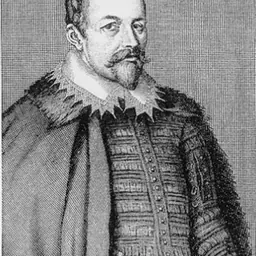
Giovanni Battista Riccio (Giambattista Riccio) (late 16th centuryafter 1621) was a musician and composer of the early Baroque era, resident in Venice, most notable for his development of instrumental forms, particularly utilizing the recorder.
Life and music No details are available regarding the early part of his life, but he must have been born in the late sixteenth century.
Records show that he was appointed as organist at the Scuola di San Giovanni Evangelista, Venice, in 1609, when he was the preferred choice over Gabriel Sponga (a nephew of Francesco Usper). He was probably also a violinist.
Riccio is known to have published three books of vocal and instrumental music in Venice. These books include his instrumental works for recorderunusual for Venetian music at the time, although Giovanni Picchi also wrote for the instrument.
The initial publication date of Riccio's Primo Libro is unknown, but the reprint dating from 1612 survives. The majority of the first book is allotted to vocal works, but in the revised edition two new instrumental canzonas are appended. One is his first known piece for recordera canzone for two flautini.
His Secondo Libro, also published in Venice, appeared in 1614.
His Terzo libro delle Divine Lodi published in 1620 and 1621 is the most widely known today. It comprises thirty-six vocal works and a further twelve instrumental pieces mostly described as canzonas. Most feature two main instruments (such as recorder, cornetto, violin, trombone or sometimes contemporary bassoon or dulcian). One canzona entitled La Grimantea con il tremolo is one of the first pieces to make use of the tremolo technique for the 'Flautin e Fagoto' (recorder and bassoon).
Dedications in his works suggest Riccio knew other composers such as Giovanni Picchi, Alessandro Grandi, Giovanni Battista Grillo and Giacomo Finetti. Some of his canzonas quote from larger-scale works by Giovanni Gabrieli.
Works Primo libro delle Divine Lodi (Venice, Revised edition 1612) Il secondo libro delle Divine Lodi (Venice, 1614) Il terzo libro delle Divine Lodi (Venice, 1620; 1621) He may also be the composer of one canzona in Valerio Bona's Otto ordini di litanie (Venice, 1619)
Don’t just read it —
keep it.
Full-length biographies made to live with: read them, listen on the way to work, watch them tonight.
- E-book
- Audio
- Video
Instant download · yours to keep · every purchase keeps this site free
Important facts
People in Giovanni Battista Riccio's life
Named in this biography and alive at the same time




Related people
Same field, nearest in time


Contemporaries
People whose lives overlapped Giovanni Battista Riccio's



Frequently asked questions
Who was Giovanni Battista Riccio?
Italian organist and composer
When was Giovanni Battista Riccio born?
Giovanni Battista Riccio was born in 1570 in Veneto.
When did Giovanni Battista Riccio die?
Giovanni Battista Riccio died in 1601.
What was Giovanni Battista Riccio's occupation?
Giovanni Battista Riccio was a composer and organist.
Sources & further reading
· Wikipedia: Giovanni Battista Riccio
· DBpedia: Giovanni Battista Riccio
Cite this page
APA: Biography.guide. (2026). Giovanni Battista Riccio. https://biography.guide/giovanni-battista-riccio/
MLA: "Giovanni Battista Riccio." Biography.guide, https://biography.guide/giovanni-battista-riccio/.
Chicago: "Giovanni Battista Riccio." Biography.guide. https://biography.guide/giovanni-battista-riccio/.
Data last updated: 2026-09-20 · Spot an error? Report a correction.
Page generated 2026-09-27 05:05 UTC