
Giovanni Battista Ferrari
Italian botanist, scholar and priest
About Giovanni Battista Ferrari
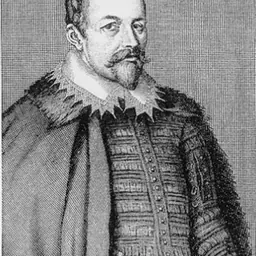
Lived 1584 – 1655 (aged 70). Giovanni Battista Ferrari was a botanist, writer, catholic priest and catholic theologian.
Giovanni Baptista (also Battista) Ferrari (1 May 1584 – 1 February 1655) was an Italian Jesuit priest, orientalist, university teacher and botanist. Linguistically highly gifted and an able scientist, at 21 years of age Ferrari knew a good deal of Hebrew and spoke and wrote excellent Greek and Latin. He became a professor of Hebrew and Rhetoric at the Jesuit College in Rome and in 1622 edited a Syriac-Latin dictionary (Nomenclator Syriacus).
Biography Giovanni Baptista Ferrari was born to an affluent Sienese family and entered the Jesuit Order in Rome at the age of 19 in April 1602. After studying metaphysics, logic and natural philosophy with Giuseppe Agostini (and after the usual four years of theology), he was sent to the Pontifical Maronite College in Rome in 1615/16 – where he learnt Syriac. The early progress reports at the Collegio Romano are complimentary about his literary and Hebraic talents, but rather critical of what appears to have been his somewhat frail state of health and melancholy character.
By the schoolyear of 1619-20 he was teaching Arabic and Hebrew at the Roman College. His first published work was a Syriac Dictionary, or Nomenclator, which he published in 1622 (but with an approval from Mutio Vitelleschi and Francesco Donati of 1619). The chief object of the author is to explain the Syriac words in the Bible, in which he was assisted by some learned Maronites. Although pretty innovative for its time, Ferrari's Nomenclator was not a very successful effort, and has not enjoyed much esteem in the subsequent literature (Bochart was especially cutting in his judgment). It is, however, interesting for its introduction, with its long list of profuse acknowledgements to various members of the Maronite college, especially Petrus Metoscita, and for its brief insight into the working procedures and resources of a Syriac scholar of those days.
His Orationes, first printed in Lyons in 1625, and several times reprinted, including two London editions in the 1650s and 1660s, are especially remarkable for four very noteworthy orations on the subject of Hebrew language and Hebrew literary style. In the oration on Hebraicae linguae suavitas Ferrari asserts the stylistic capabilities of Hebrew, and defends it against charges that it was limited and coarse; in the chapters Hebraicae Musae sive de Disciplinarum omnium Hebraica origine and Hebraicae litteraturae securitas, sive De arguto dicendi genere usurpando he justifies the difficulties of learning the language, and puts forward the case for studying it.
His knowledge of the ancient authors, Greek and Latin, was extensive as was his command of the Semitic languages. Indeed, Ferrari was a member of the Papal Commission charged with translating the Bible into Arabic.
He was honoured in 1759, when botanist Philip Miller published Ferraria, which is a genus of monocotyledonous flowering plants in the family Iridaceae and native to tropical and southern Africa.
De Florum Cultura Ferrari's interests were not limited to Oriental languages. He devoted himself till 1632 to the study and cultivation of ornamental plants, and published De Florum Cultura, which was illustrated with copperplates by, amongst others, Anna Maria Vaiani, possibly the first female copper-engraver. The first book deals with the design and maintenance of the garden and garden equipment. The second book provides descriptions of the different flowers, while the third book deals with the culture of these flowers. The fourth book, continues with a treatise on the use and beauty of the flower species, including their different varieties and mutations.
Through his acquaintance with Cassiano dal Pozzo, secretary of Cardinal Francesco Barberini, he was appointed to manage the new garden at the Barberini Palace. The plants featured in Ferrari's research came from Cardinal Francesco Barberini's private botanical garden, the Horti Barberini, a garden which was under the care of Ferrari.
Ferrari dedicated the Latin edition of De Florum Cultura to Cardinal Francesco Barberini. Ludovico Aureli translated the book into Italian and dedicated this edition, which is entitled Flora, overo Cultura di Fiori (1638) or simply Flora, to Barberini's sister-in-law, Anna Colonna. Ferrari became Horticultural Advisor to the Papal family.
Both works are important as they display accurate representations.
Ferrari was the first scientist to provide a complete description of the limes, lemons and pomegranates. He also described medical preparations, the details on citron and prescribed limes, lemons and pomegranates as medicinal plants against scurvy.
Gallery
Works Striatus amalphitanus. Handcoloured copper plate engraving from Giovanni Baptista Ferrari's Hesperides, 1646.
Hesperides siue de malorum aureorum cultura et vsu Libri quator Io. Baptistae Ferrarii Senensis e Societate Iesu, Romae: Sumptibus Hermanni Scheus, 1646. In funere Marsilij Cagnati medici praestantissimi laudatio Ioannis Baptistae Ferrarij Senensis e Societate Iesu: habita in aede S. Mariae in Aquiro 5. Kal. Augusti 1612, Romae: apud Iacobum Mascardum, 1612. Io. Bapt. Ferrarii ... De florum cultura libri 4, Romae: excudebat Stephanus Paulinus, 1633. Io. Bapt. Ferrarii Senen. Societatis Iesu Orationes, Lugduni: sumptibus Ludouici Prost, haeredis Rouille, 1625. Io. Bapt. Ferrarii Senensis ... Orationes, Venetiis: apud Beleonium, 1644. Io. Bapt. Ferrarii Senensis e Soc. Iesu Orationes, Romae: apud Franc. Corbellettum, 1627. Io. Bapt. Ferrarii Senensis e Societate Iesu Orationes quartum recognitae et auctae, (Romae: typis Petri Antonij Facciotti, 1635). Io. Baptistae Ferrarii senensis ... Orationes, Mediolani: apud haer. Pacifici Pontij, & Io. Baptistam Piccaleum, impressores archiepiscopales, 1627. Io. Bapt. Ferrarii Senensis e Societ. Iesu Orationes, Nouissima editio iuxta exemplar, Coloniae: apud Cornel. Egmont, imprim. 1634. Io. Baptistae Ferrarii Senensi, S.I. Flora, seu De florum cultura lib. 4, Editio nova. Accurante Bernh Rottendorffio, Amstelodami: prostant apud Joannem Janssonium, 1664. Io. Baptistae Ferrarii Senensi, S.I. Flora, seu de florum cultura lib. 4, Editio nova. Accurante Bernh Rottendorffio ..., Amstelodami: Prostant apud Joannem Janssonium, 1664.
Don’t just read it —
keep it.
Full-length biographies made to live with: read them, listen on the way to work, watch them tonight.
- E-book
- Audio
- Video
Instant download · yours to keep · every purchase keeps this site free
Important facts
People in Giovanni Battista Ferrari's life
Named in this biography and alive at the same time


Related people
Same field, nearest in time


Contemporaries
People whose lives overlapped Giovanni Battista Ferrari's



Frequently asked questions
Who was Giovanni Battista Ferrari?
Italian botanist, scholar and priest (1584-1655)
When was Giovanni Battista Ferrari born?
Giovanni Battista Ferrari was born on 1 May 1584 in Siena.
When did Giovanni Battista Ferrari die?
Giovanni Battista Ferrari died on 1 February 1655 in Siena.
What was Giovanni Battista Ferrari's occupation?
Giovanni Battista Ferrari was a botanist, writer, catholic priest and catholic theologian.
Sources & further reading
· Wikipedia: Giovanni Battista Ferrari
· DBpedia: Giovanni Baptista Ferrari
Cite this page
APA: Biography.guide. (2026). Giovanni Battista Ferrari. https://biography.guide/giovanni-battista-ferrari-botanist/
MLA: "Giovanni Battista Ferrari." Biography.guide, https://biography.guide/giovanni-battista-ferrari-botanist/.
Chicago: "Giovanni Battista Ferrari." Biography.guide. https://biography.guide/giovanni-battista-ferrari-botanist/.
Data last updated: 2026-09-20 · Spot an error? Report a correction.
Page generated 2026-09-27 05:13 UTC