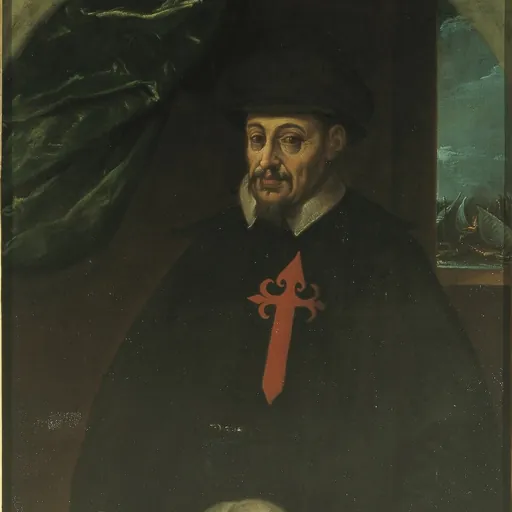
About Giovanni Andrea Doria
Lived 1539 – 1606 (aged 66). Giovanni Andrea Doria was a military officer, sailor and admiral.
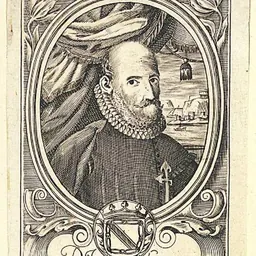
Giovanni Andrea Doria (1539 – 1606), also known as Gianandrea Doria, was an Italian admiral and shipbuilder from Genoa. He was Marquis of Tursi and Prince of Melfi, which he inherited from his great-uncle, the famous Andrea Doria.
Like Andrea, he built a long career in the service of Spain, but lacking his ancestor's military talent, he stood out more as a businessman and statesman. He was one of the main naval contractors of the Spanish navy.
Italian Wars During the restart of the last Italian War in 1557, Giovanni Andrea and his relative and rival Antonio Doria came out with their respective galley squads. Very little action took place in the sea, as their French and Papal enemies barely had navies of their own, so the two Genoese had little to do, focusing especially in transporting land troops and helping against the Corsican revolt. Giovanni helped carrying the army of the Duke of Alba to invade the Papal States.
Djerba In 1560, being only nineteen years old, he was put in command of a Christian fleet of 100 ships for a projected reconquest of Tripoli. However, despite the help of his grand-uncle Andrea, who was unable to participate due to his advanced age, the expedition's launch was marked by a combination of bad preparation and questionable decisions. After arriving in Africa, Giovanni fell gravely ill of an epidemic caused by the swampy terrain. When it was later found that Ottoman admiral Piali Pasha was coming with 80 ships, panic spread in the Christian camp in Djerba, where they had built a fortress. Doria called to escape to avoid risking the Christian ships, against others' advice to stay and fight the Ottomans off with their superior artillery.
The Christian fleet failed to set off due to hostile winds, so the Ottoman fleet found them still there. Instead of giving orders, Giovanni lost his nerve and abandoned his flagship to flee by land, leaving the Christian fleet headless and confused, which translated into a disastrous loss in the subsequent battle. He was rescued by Álvaro de Sande in the fort, where Doria suggested to gather the surviving ships and bring reinforcements from Sicily, but it was not possible to do so. The result was the complete failure of the operation. He barely escaped with his life as his troops suffered a crushing defeat, the stress and shame supposedly caused the older Andrea Doria to die.
Further battles Three years after Djerba, he was called to relief the Ottoman siege of Oran. Giovanni still expected to be handed command of the Christian fleet, but command was given to Francisco de Mendoza, leading Doria to protest to King Philip II, who convinced him to comply. Doria decided to take no risk and handed command of the Genoese squad to his brother Pagano, electing to participate entirely as a volunteer. In any case, the operation was a success, surprising the Ottoman fleet of Dragut when it had divided itself to bring supplies from Algiers, eventually forcing it to withdraw. After Mendoza died of illness, although Doria requested the command again, Philip gave the job to the renowned veteran García de Toledo, which was deemed much fitter.
In 1564, Doria served under Toledo during the conquest of the Peñón de Vélez de la Gomera, where he was tasked with placing the terrestrial artillery. He also explored the fortress and climbed it after it had been finally abandoned by its Ottoman garrison. This new success made him receive praise for his performance. He was later sent again to the Genoese colony of Corsica to help against the French-aligned revolt of Sampiero Corso, which was eventually drowned. Doria participated in the relief of the Great Siege of Malta in 1565, where he and Álvaro de Bazán led the Spanish fleet to Sicily.
Holy League
Doria then participated in the Holy League of 1571, leading to the Battle of Lepanto. According to some sources, he was who advised Christian admiral John of Austria to saw off thelong bow of the galleys in order to fire their guns at a lower angle. During the battle, he commanded the right wing of the Christian coalition. However, Doria allowed a gap to be formed in the Holy League's battle line, which was exploited by his counterpart, Ottoman admiral Occhiali, before Bazán could close it. The battle was ultimately won by the Holy League, and signaled the first defeat of the Ottomans at sea since Preveza. while others believe the blunder was caused by factors largely beyond his control, including Occhiali's superior skill and much bigger galley squad. It has also been pointed out that Doria's immediate help to those closing the gap was instrumental in neutralizing Occhiali.
Late career Although mainly retired by then, Doria also organized an expedition against the Barbary states in 1601, but it was ultimately aborted. He died in 1606, leaving an impressive fortune and a successful shipbuilding business to his children.
Doria was a knight commander of the Order of Santiago. He was also the Marquis of Tursi and 6th (or 2nd) Prince of Melfi (both titles inherited from his relation and adoptive father, the famed Genoese admiral Andrea Doria).
Marriages and children He married firstly in 1558 with Zenobia del Carretto (1540–1590) and had: Andrea Doria (born and died 1565). Andrea Doria (born and died 1566). Andrea Doria (born and died 1567). Andrea Doria (born and died 1568). Vittoria Doria (1569–1618), married Ferrante II Gonzaga, Duke of Guastalla, had issue. Andrea II Doria (1570–1629), 3rd prince of Melfi, married Giovanna Colonna and had issue. Giovanni Doria (1573–1642) called Giannettino; Cardinal, Archbishop of Thessalonica and Palermo, Viceroy of Sicily Artemisia Doria (1574–1644), married Carlos Francisco de Borgia 7th Duke of Gandia, had issue. Carlo Doria (1576–1650), duke of Tursi, married Placidia Spinola, had issue.
He married secondly and secretly in 1590 with Baroness Katharina of Lysfelt and Harem (1564–1606), natural and legitimate daughter of Eric II, Duke of Brunswick-Lüneburg.
Don’t just read it —
keep it.
Full-length biographies made to live with: read them, listen on the way to work, watch them tonight.
- E-book
- Audio
- Video
Instant download · yours to keep · every purchase keeps this site free
Important facts
People in Giovanni Andrea Doria's life
Named in this biography and alive at the same time


Related people
Same field, nearest in time

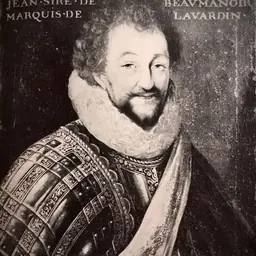
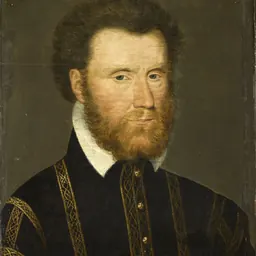

Contemporaries
People whose lives overlapped Giovanni Andrea Doria's
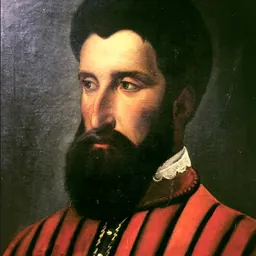
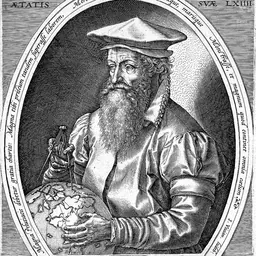


Frequently asked questions
Who was Giovanni Andrea Doria?
Italian noble and admiral (1539-1606)
When was Giovanni Andrea Doria born?
Giovanni Andrea Doria was born on 5 February 1539 in Genoa.
When did Giovanni Andrea Doria die?
Giovanni Andrea Doria died on 2 February 1606 in Genoa.
What was Giovanni Andrea Doria's occupation?
Giovanni Andrea Doria was a military officer, sailor and admiral.
What nationality was Giovanni Andrea Doria?
Giovanni Andrea Doria's recorded nationality: Republic of Genoa.
Sources & further reading
· Wikipedia: Giovanni Andrea Doria
· DBpedia: Giovanni Andrea Doria
Cite this page
APA: Biography.guide. (2026). Giovanni Andrea Doria. https://biography.guide/giovanni-andrea-doria/
MLA: "Giovanni Andrea Doria." Biography.guide, https://biography.guide/giovanni-andrea-doria/.
Chicago: "Giovanni Andrea Doria." Biography.guide. https://biography.guide/giovanni-andrea-doria/.
Data last updated: 2026-09-20 · Spot an error? Report a correction.
Portrait: Wikimedia Commons · author & licence
Page generated 2026-09-27 04:58 UTC